Can precancerous changes be detected before ovarian cancer develops–with a routine blood test? Scientists are exploring a new approach to the early detection of one of the most dangerous gynecological cancers. Its main challenge is the lack of a sufficiently reliable screening method to detect the disease at an early stage in women without symptoms.
Researchers at Hoag Family Cancer Institute found that even microscopic precancerous changes in the fallopian tubes may be accompanied by changes in RNA signals detectable in the blood. The marker they developed, Tu-stroma, performed better than the traditional tumor marker CA125 at distinguishing precancerous lesions from benign masses.
The team, led by Rajan Gogna and Esha Madan, analyzed blood samples from 506 people. The study, published on November 10, 2026, in Nature Medicine, points to the potential for developing new methods to detect precancerous changes associated with ovarian cancer early.
However, this is not yet a ready-to-use blood test for diagnosing ovarian cancer. The marker was studied using previously collected samples from patients with known diagnoses. Before it can be used to screen women who have no symptoms, its accuracy must be tested in large prospective studies, including how well it detects changes in people without symptoms.
We explore how the new RNA marker works, how it differs from CA125, and whether a blood test might one day help detect dangerous changes before a malignant tumor appears.
Why researchers study the fallopian tubes in ovarian cancer
The name “ovarian cancer” does not always indicate where the disease began. Many high-grade serous tumors classified in this group originate in the fallopian tube epithelium. This is the pathway of disease development that the study authors investigated.
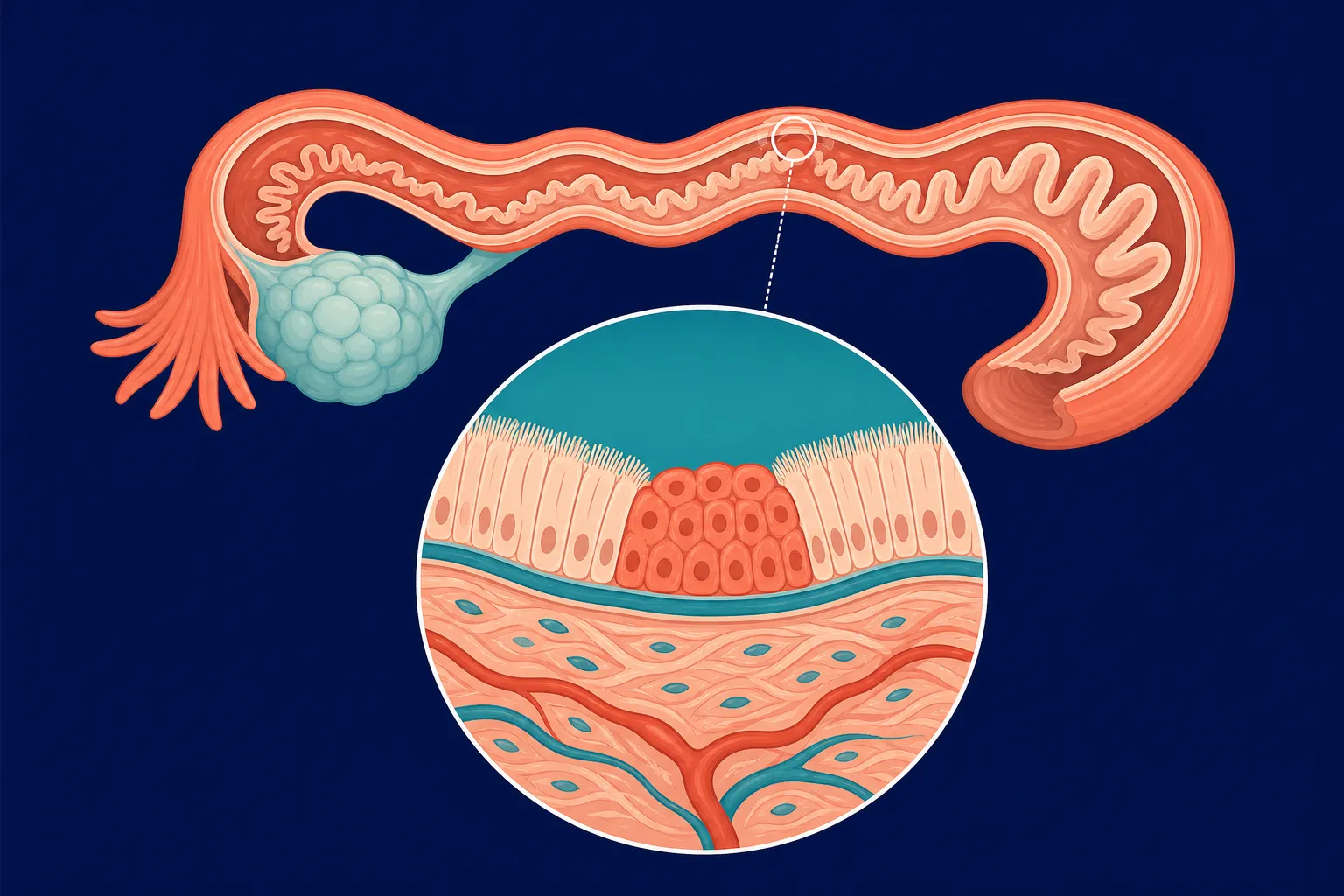
A possible precursor is called STIC, or serous tubal intraepithelial carcinoma. It is a microscopic focus of altered cells that are still confined to the epithelium and have not invaded the underlying tissue. It is usually found during the histological examination of removed fallopian tubes.
If this type of lesion can be reliably detected in the blood, it may become possible to identify the process before an invasive tumor forms. This is the main reason Tu-stroma is of interest: the marker produced a signal as early as the STIC stage.
What Tu-stroma measures and what the researchers found
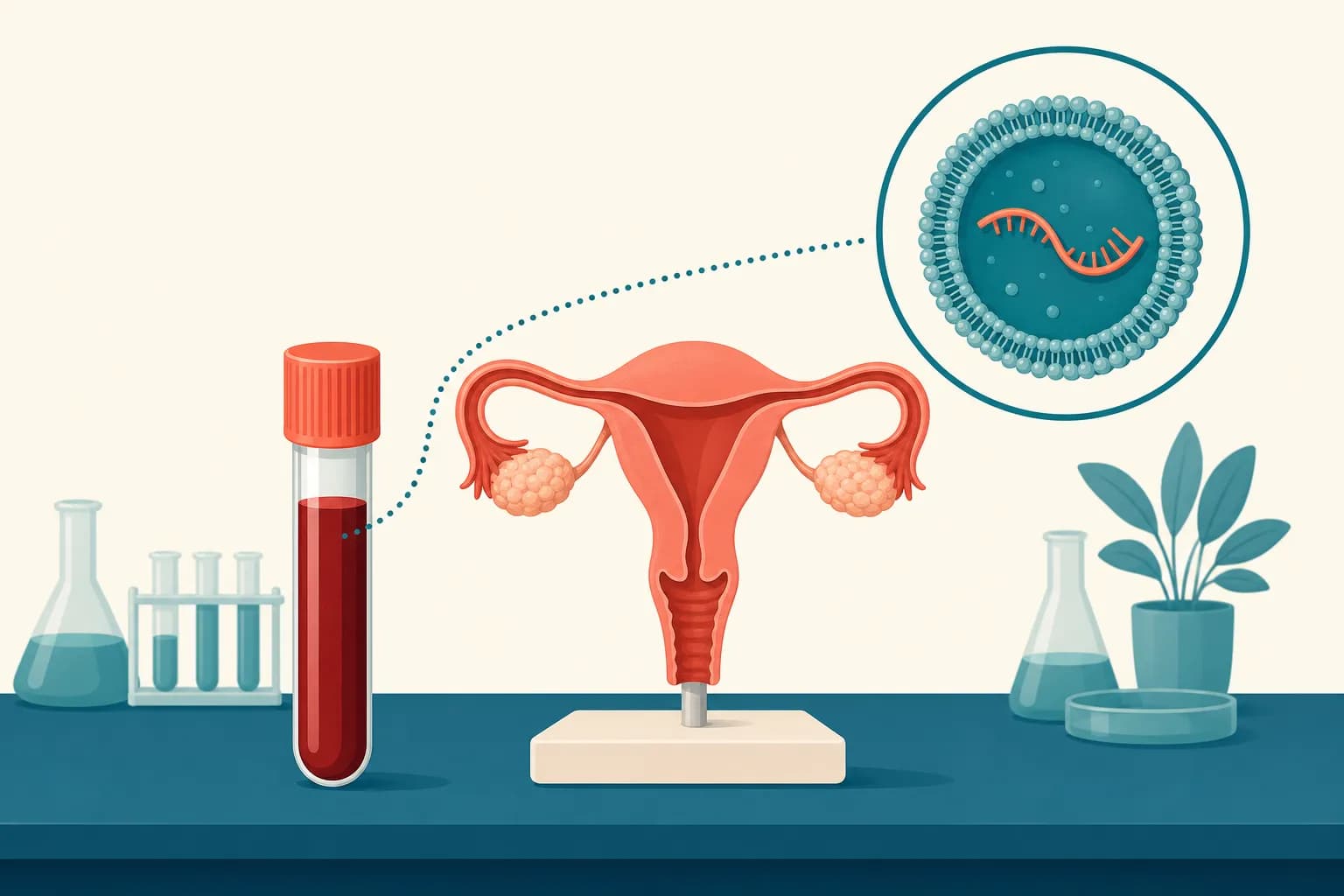
Tu-stroma is a long non-coding RNA. These molecules do not provide instructions for building proteins, but they may be involved in regulating cellular processes. In the study, Tu-stroma was measured in extracellular vesicles in blood serum. These are small, membrane-bound particles released by cells; they can carry RNA and other biological material.
The main sample included 43 people with isolated STIC, 232 with stage I–IV high-grade serous cancer, 88 with benign adnexal masses, and 143 participants with histologically normal adnexa. This comparison made it possible to test whether the marker could distinguish between several clinically important conditions.
The most notable result was for precancerous lesions. When STIC was compared with benign masses, the AUC was 0.99 for Tu-stroma and 0.31 for CA125. AUC describes how well a measure separates groups across different thresholds: the closer it is to one, the better the separation. An AUC of 0.99 does not mean the test correctly diagnosed 99% of cases.
According to a report from Hoag research center, in a separate validation group, sensitivity for STIC was about 92%, and specificity among healthy participants was about 98%. The first measure describes the proportion of lesions the test detects. The second shows how often it correctly returns a negative result in people without the lesion.
For early detection, comparison with benign masses is especially valuable: clinicians need to know which signals warrant further investigation and which may be linked to another condition.
Diagram: in STIC, altered cells are confined to the fallopian tube epithelium and have not yet grown into the underlying tissue.
Why CA125 does not yet solve the problem of early detection
CA125 measures the level of a protein that may rise in ovarian cancer. But its levels can also increase with other conditions, including endometriosis and pelvic inflammatory disease. In addition, ovarian cancer does not always cause CA125 levels to rise. These limitations are described by the American Cancer Society.
It is also important to distinguish diagnosis from screening. Diagnosis helps determine the cause of symptoms or the nature of a mass that has already been found. Screening means testing people who have no symptoms. The bar is especially high here: ovarian cancer is rare, so even a small proportion of false-positive results can lead to many unnecessary tests and surgeries.
Detecting more early tumors does not necessarily mean reducing deaths. In the randomized UKCTOCS trial involving more than 200,000 women, neither multimodal screening nor transvaginal ultrasound led to a statistically significant reduction in deaths from ovarian and fallopian tube cancer over approximately 16 years of follow-up.
What needs to be checked before the new test can be introduced
The next step for Tu-stroma is prospective research: blood will be collected over time, and participants will then be followed to see who develops which changes. Hoag has reported plans for such studies among women both with and without an elevated inherited risk. This approach will help establish whether the signal appears before the disease is detected clinically, and how far in advance.
The results also need to be replicated in larger independent groups. The main sample included only 43 STIC cases. It is not yet known how well the selected test threshold will work among people without a confirmed diagnosis, where the ratio of affected to healthy people is very different.
Another question is what to do after a positive result. A safe way to confirm the finding must be determined, and researchers need to assess whether testing could lead to unnecessary surgeries. The ultimate clinical goal is to reduce deaths and the serious consequences of the disease.
For the general public, this publication does not change current screening recommendations. It is not a reason to order additional tumor markers independently or to replace prescribed diagnostic tests with this new test. If you have symptoms, consult a doctor regardless of the results of any marker tests: recommendations against mass screening do not mean that symptoms should go unchecked.
Can Tu-stroma testing replace examining tissue under a microscope?
No, this has not been established. In the published study, diagnoses had already been confirmed, and the marker was compared across groups. How a positive test result should be checked in future practice remains to be determined.
Will the test show when a precancerous lesion will turn into cancer?
No, the study did not establish this. It cannot determine either how soon STIC might progress or an individual’s likelihood of developing an invasive tumor.
Can I postpone preventive surgery if the result is negative?
No, there is no evidence to support this decision. If preventive surgery is being considered because of a high inherited risk, the result of an experimental marker cannot be used as a reason to cancel or postpone it. Discuss your prevention plan with a specialist who can assess inherited risk.