Melanoma Vaccine: Risk of Recurrence or Death Reduced by 42%
Published on: ⋄4 min read
Can a vaccine created specifically for one person’s tumor prevent cancer from returning? New clinical trial results are making this scenario increasingly realistic.
Melanoma can return after surgery, even when the visible tumor has been completely removed. In a large Phase III trial, adding Moderna and Merck’s personalized mRNA vaccine to pembrolizumab reduced the relative risk of recurrence or death by 42% compared with pembrolizumab alone. The treatment helps the immune system recognize features specific to an individual patient’s tumor.
The results of Merck’s INTerpath-001 trial were announced on October 22, 2026. This is a relative measure: it does not mean that the likelihood of the disease returning fell by 42 percentage points. The vaccine remains experimental, and its effect on overall survival has yet to be assessed.
Who took part in the trial
The trial included 1,137 patients with stage IIB–IV melanoma that had been completely removed and a high risk of recurrence. After surgery, these patients may be offered additional, or adjuvant, treatment. Its purpose is to destroy any cancer cells that may remain and reduce the chance of recurrence.
Participants were randomly assigned to two groups in a two-to-one ratio. The larger group received the personalized treatment intismeran autogene, also known as V940 and mRNA-4157, along with pembrolizumab. The control group received a placebo and the same pembrolizumab treatment. The trial was double-blind: neither the patients nor the specialists assessing treatment knew which group participants were in.
This design made it possible to test the specific benefit of adding the vaccine to immunotherapy. The control group also received active cancer treatment. The trial was funded by Merck and Moderna.
How the personalized mRNA vaccine helps the immune system
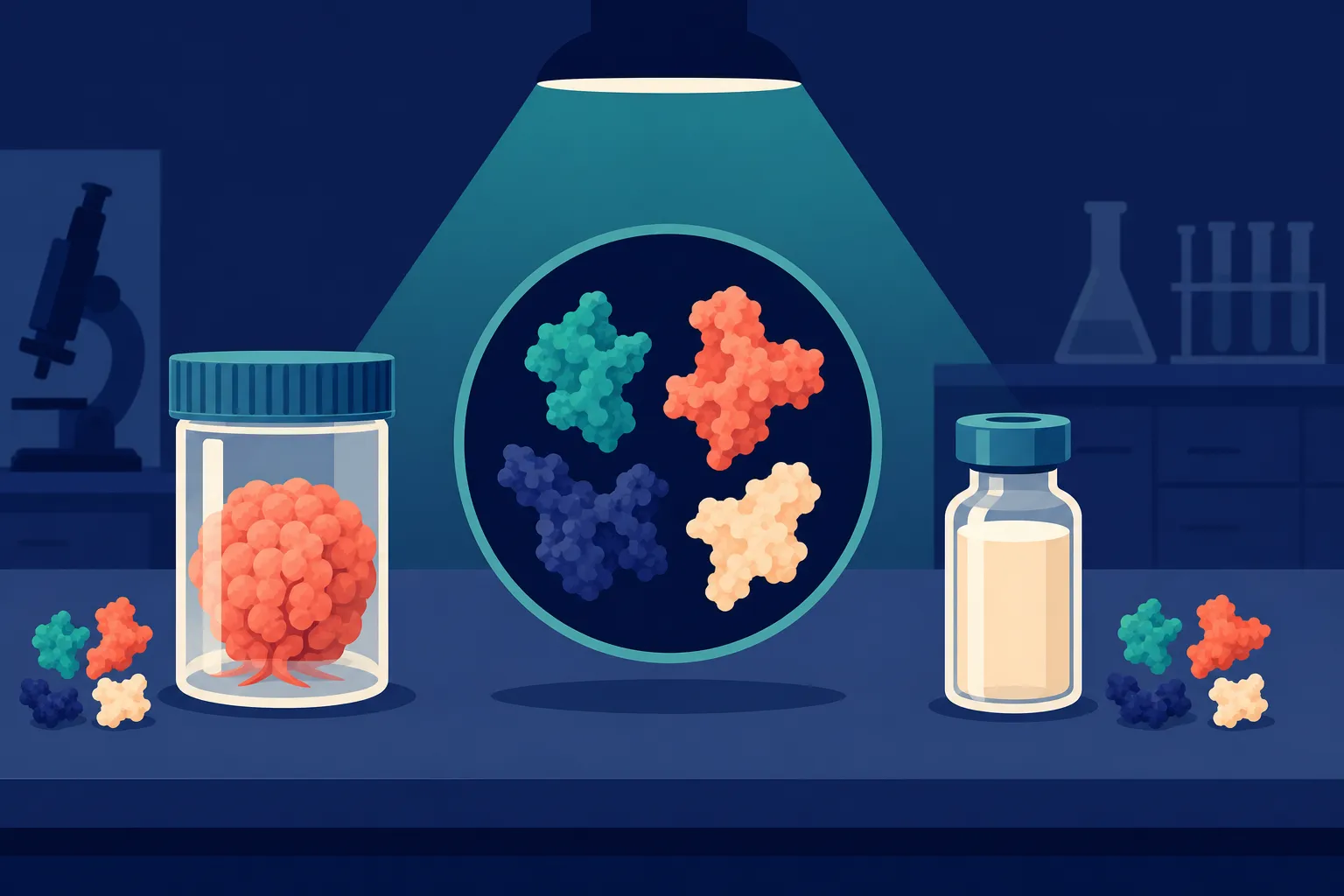
Tumor cells accumulate genetic changes. Some of these lead to altered protein fragments that the immune system can recognize as foreign. These are called neoantigens.
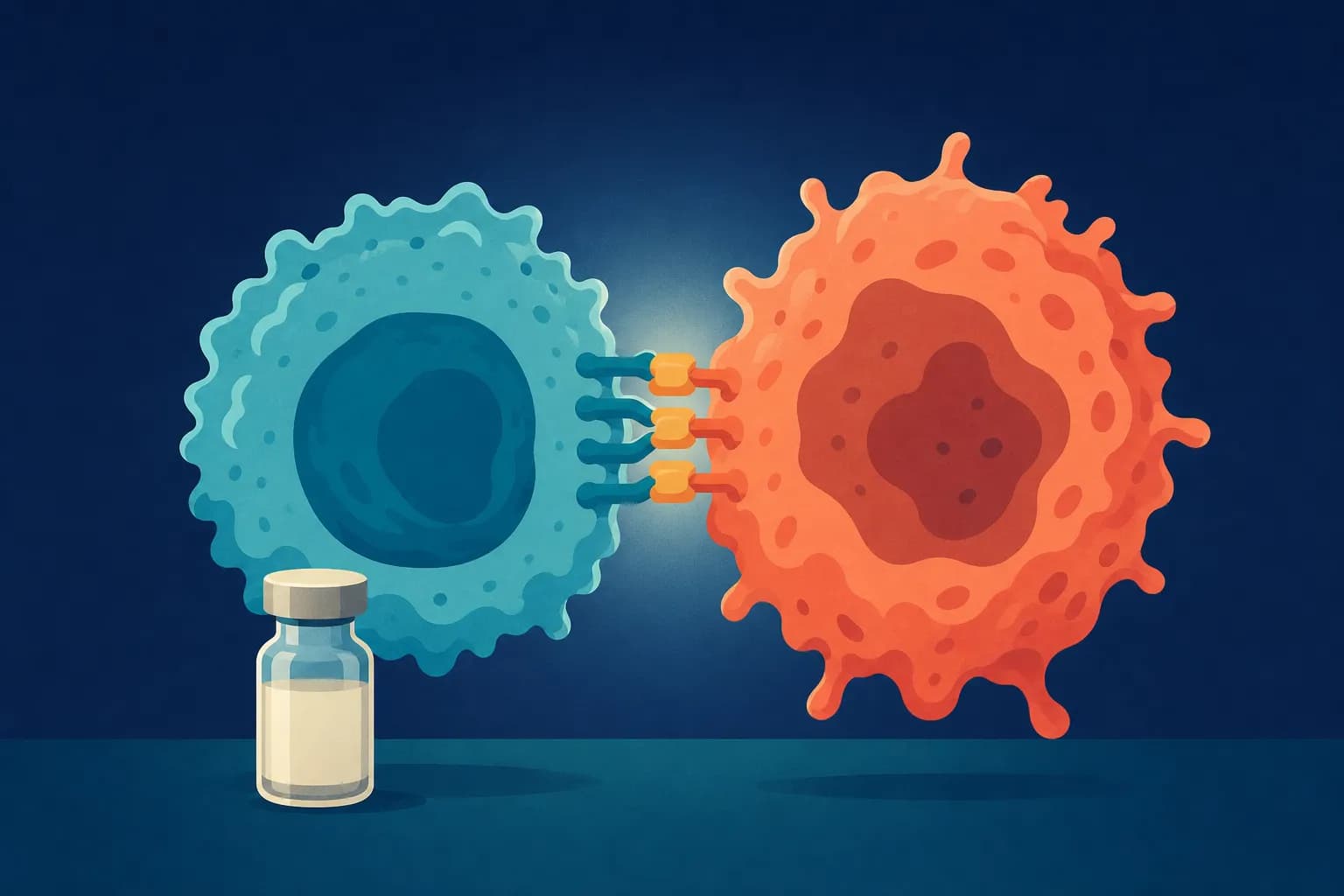
To make intismeran, researchers analyze the genetic features of a patient’s tumor and select potential targets. They then create synthetic mRNA that encodes up to 34 neoantigens. After the treatment is administered, the body’s cells produce the corresponding protein fragments. This is intended to help T cells learn to recognize tumor cells that carry these targets.
Pembrolizumab works differently. It blocks the PD-1 receptor, through which immune cells receive an inhibitory signal. The idea behind combining the two treatments is that the vaccine directs the immune response toward specific tumor targets, while pembrolizumab helps T cells remain active. Researchers also explain this combined mechanism in a University of Sydney report.
The personalized vaccine is tailored to the patient’s tumor: its mRNA encodes selected neoantigens that the T-cell response is intended to target.
What does a 42% risk reduction mean?
The primary measure was recurrence-free survival: how long a person remained alive without their melanoma returning. Accordingly, an unfavorable event was defined as a recurrence or death from any cause. At the time of analysis, the median follow-up was about two years.
The 42% figure takes into account the time until these events over the entire follow-up period. To get a clearer sense of the benefit, it may be helpful to look at the estimates at two years:
82.2% of patients were alive without recurrence in the vaccine-plus-pembrolizumab group;
70.0% were alive without recurrence in the placebo-plus-pembrolizumab group.
The absolute difference was 12.2 percentage points. In other words, based on these estimates, about 12 more out of every 100 people were alive without a recurrence at two years when the vaccine was added. This result applies to the group studied; an individual’s outlook depends on the specific features of their disease.
Researchers also assessed the time until distant metastases appeared or death occurred. For this measure, the relative risk reduction was 38%. This is another result in favor of the combination treatment, but it does not by itself demonstrate a reduction in mortality.
What the results mean for patients
The trial provides grounds to consider a personalized mRNA vaccine as a promising addition to treatment after surgery. Moving to a large Phase III trial is particularly significant: the treatment’s benefits were tested in a randomized study in which both groups received active treatment.
However, intismeran is not yet an available standard treatment. Regulatory approval is required before it can be used outside clinical trials. The results apply to patients with completely removed, high-risk melanoma; they cannot be generalized to all stages of melanoma or to other types of cancer.
Further follow-up should show how long the benefit lasts and whether the reduction in recurrences leads to longer survival.
Can a healthy person get this vaccine to prevent melanoma?
No. Intismeran is being studied as a therapeutic vaccine for people who have already been diagnosed with melanoma. As the U.S. National Cancer Institute explains, therapeutic cancer vaccines are designed to fight an existing disease. This vaccine does not replace protection from ultraviolet radiation or monitoring suspicious changes in the skin.
How many vaccine doses were given in the trial?
The protocol called for up to nine doses of intismeran, given three weeks apart. Pembrolizumab was administered every six weeks. This is a research regimen, not a recommendation for self-directed use.
Is there evidence for patients who cannot receive pembrolizumab?
This trial does not answer that question. Participants in both groups received pembrolizumab, so the results do not allow researchers to assess the vaccine on its own or in combination with another treatment.