Treatment for chronic hepatitis B often lasts for years. Now some patients have an opportunity to complete it: on October 20, 2026, the FDA approved Hibsago, or bepirovirsen, from GSK. In two studies, 19% of those who received the drug maintained viral suppression and had undetectable surface antigen 24 weeks after stopping all hepatitis B treatment.
The drug is added to an existing antiviral regimen. The approval applies to a specific group of adults without cirrhosis, and stopping treatment requires laboratory testing and follow-up because of the risk of a severe flare.
Who Is Eligible for the New Hepatitis B Treatment
According to the approved Hibsago prescribing information, the drug is intended for adults with chronic hepatitis B who do not have liver cirrhosis. Several criteria must all be met before treatment begins:
The patient has been taking a nucleoside or nucleotide antiviral drug for at least six months.
Hepatitis B virus (HBV) DNA is already suppressed on this treatment.
The HBsAg surface antigen level is no more than 3,000 IU/mL, as measured by an FDA-authorized test.
HBV DNA and HBsAg answer different questions. The first helps assess viral replication. The second indicates the presence of the virus’s surface protein. HBsAg may remain detectable even when HBV DNA is suppressed, so a good response to standard pills does not necessarily mean treatment can be stopped.
How Bepirovirsen Works
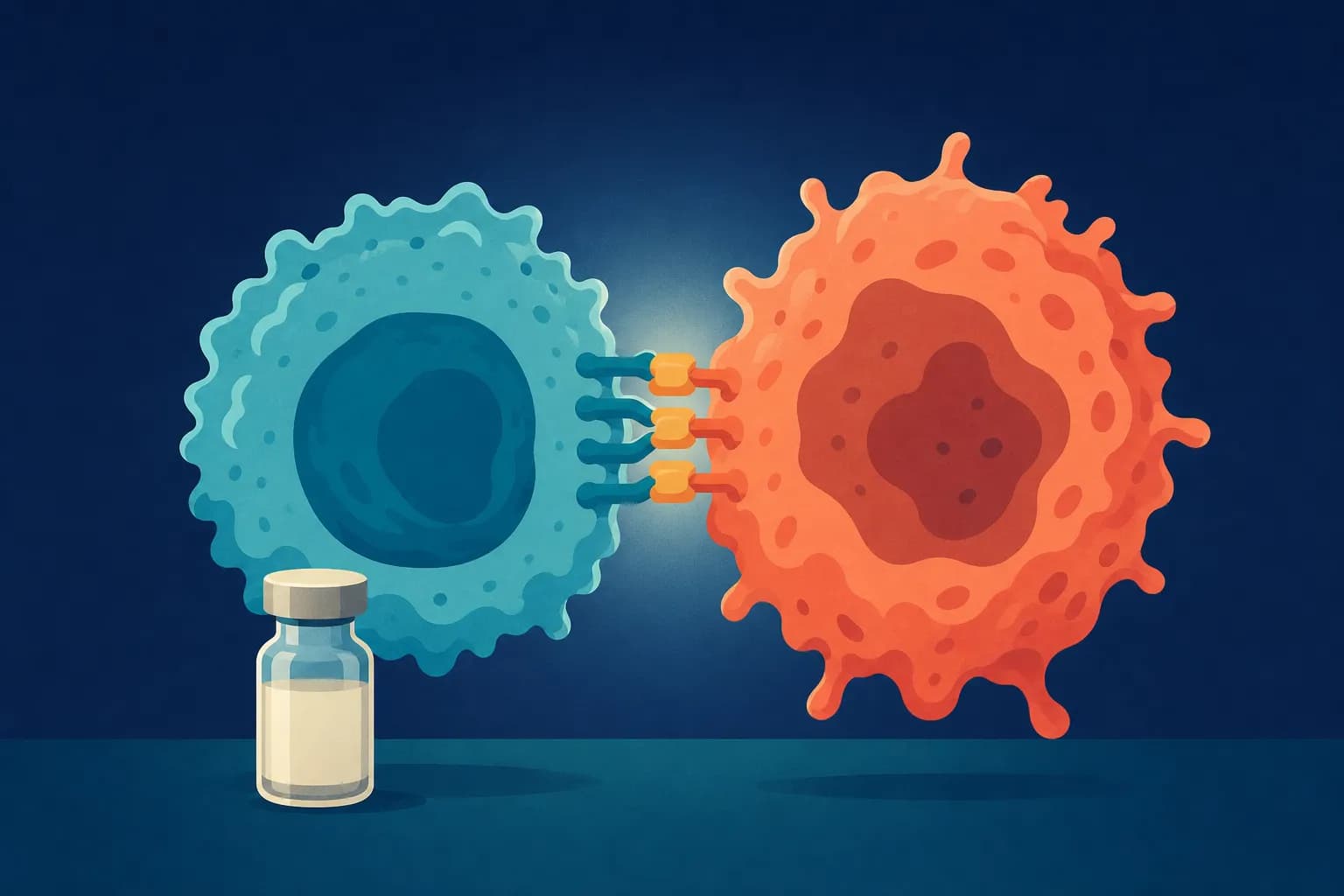
Bepirovirsen is the first antisense oligonucleotide approved by the FDA to treat chronic hepatitis B. It is a short synthetic strand that binds to specific sections of viral RNA and helps break it down. The virus uses RNA as instructions for making its proteins.
Standard nucleoside and nucleotide drugs suppress the production of new copies of viral DNA. Bepirovirsen acts at a different stage: it reduces the amount of viral instructions needed for replication and protein production, including HBsAg. That is why it is used alongside the existing treatment.
The drug is administered by subcutaneous injection for up to 24 weeks. After the last injection, patients continue taking their previous antiviral medication for at least another 24 weeks. Finishing the injection course is not, by itself, a signal to stop taking the pills.
What the B-Well Studies Found
Evidence of efficacy came from B-Well 1 and B-Well 2, two multicenter, randomized, double-blind Phase III studies with identical designs. Participants received bepirovirsen or a placebo in addition to their existing antiviral treatment.
According to the pooled results published by GSK, 233 of the 1,220 participants in the bepirovirsen group achieved a functional cure, or 19%. None of the 614 participants in the placebo group achieved this outcome.
Here, functional cure meant undetectable HBV DNA and HBsAg at least 24 weeks after all treatment had stopped. This is a clinically meaningful result, but it does not confirm that all viral genetic material has been eliminated from the body or that relapse will never occur.
Baseline HBsAg levels mattered. In a prespecified subgroup with levels of no more than 1,000 IU/mL, 26% of those who received bepirovirsen achieved a functional cure, compared with 0% in the placebo group. This figure applies only to that subgroup and does not predict an individual’s outcome.
The FDA separately reports that 24% of those who received Hibsago met the criteria for stopping their original treatment. These figures–24% and the overall 19%–describe different stages: the possibility of stopping the pills and maintaining the response after all treatment has stopped.
When a Doctor May Consider Stopping Treatment
After the course of bepirovirsen and the additional period of taking the original antiviral drug, a doctor evaluates several measures. The prescribing information says stopping treatment may be considered if the following results are achieved:
Negative HBeAg, another viral antigen.
HBV DNA below 20 IU/mL.
Undetectable HBsAg.
ALT, an enzyme used to assess liver damage, no higher than twice the upper limit of normal.
These are criteria for a medical decision, not instructions for stopping treatment on your own. Severe acute hepatitis B flares may occur after antiviral treatment is discontinued.
The prescribing information recommends frequent monitoring of HBsAg, HBV DNA, and liver function for at least a year after treatment is stopped, followed by continued monitoring as clinically indicated. This follow-up can detect renewed infection activity and help determine whether treatment needs to be restarted.
What Risks and Questions Remain
Hibsago carries the FDA’s most prominent warning, highlighted in a boxed warning in the prescribing information: the drug may cause serious liver reactions and a decrease in platelet counts. The latter increases the risk of bleeding, which can be potentially fatal. That is why treatment requires laboratory monitoring and safety assessments, even if the patient feels well.
The main unanswered question is how long the effect lasts. Controlling the infection for 24 weeks without medication does not yet show how often it will return after several years. The FDA has required continued follow-up in the B-Sure study and additional analyses of B-Well 1 and B-Well 2. Final reports on the durability of the response and late relapses are scheduled for December 2029.
A practical change has already taken place: some people whose virus is suppressed now have an approved option to try to complete ongoing therapy. However, successfully stopping medication does not mean medical monitoring can end.
When will Hibsago be available?
GSK plans to make the drug available to patients in the United States by the end of 2026. A company representative told Fierce Pharma; this is a launch plan, not confirmation that supplies have already been delivered. The company said it would announce the list price later.
What is known about its use in people with both hepatitis B and HIV?
These studies do not provide sufficient evidence to assess outcomes in people with both conditions, as people with HIV were not included. In addition, the option described in the prescribing information to stop the original antiviral drugs does not apply when those drugs are needed to treat a co-occurring HIV infection.
Has bepirovirsen been proven to reduce the risk of liver cancer?
The results presented here do not support that conclusion. They describe laboratory measures of infection control after treatment is stopped. Appropriate long-term follow-up data are needed to assess the effects on liver cancer risk and other long-term complications.