Biological Clocks and Depression: Scientists Discover a New Link
Published on: ⋄5 min read
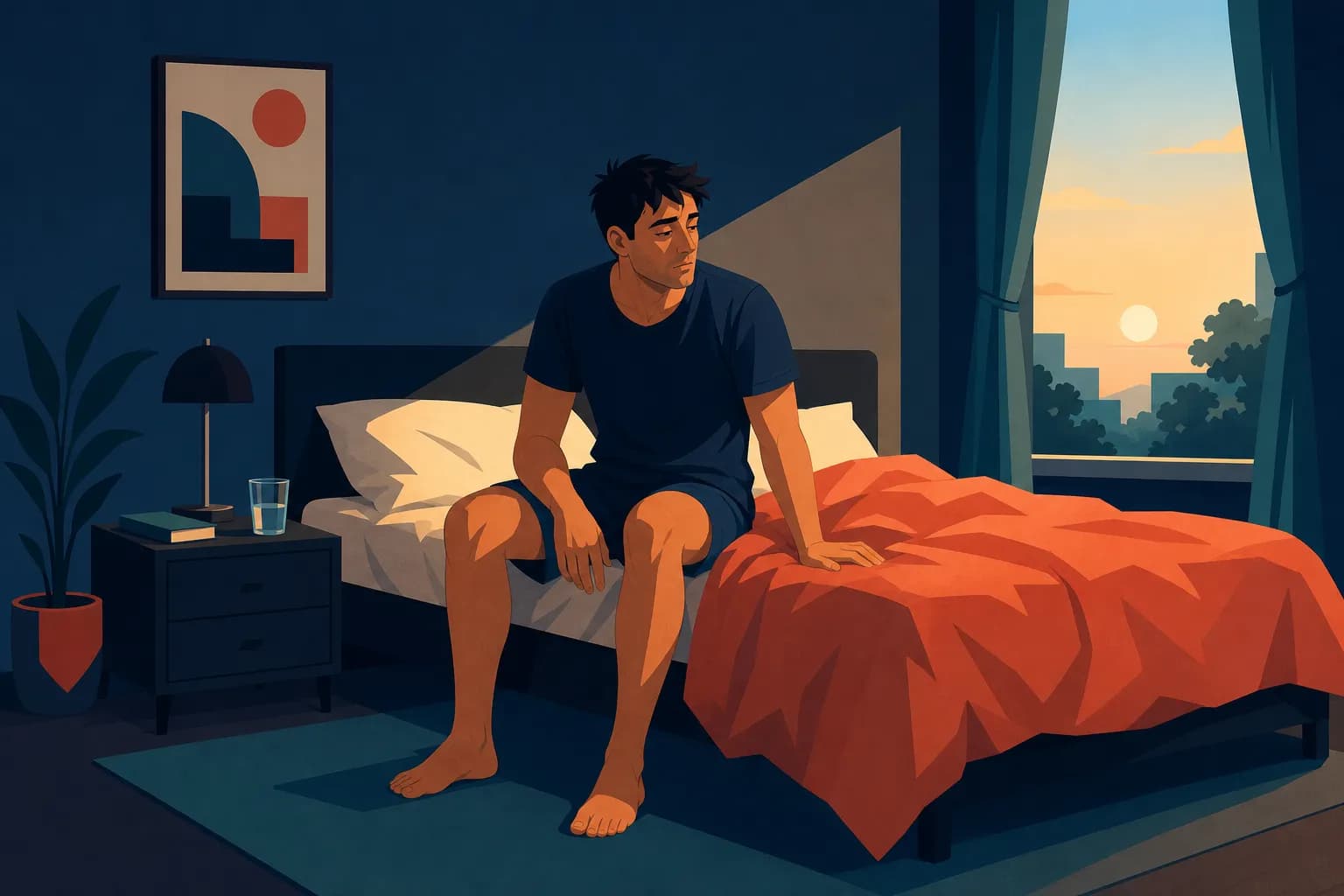
You struggle to wake up in the morning and hit snooze several times, feel tired during the day, then unexpectedly get a burst of energy in the evening. These changes in activity may be linked to the way your internal biological clock works. Australian scientists have found a link between disrupted circadian rhythms and depression, and proposed identifying a separate subtype: “circadian depression.” The researchers use this term to describe a condition in which depressive symptoms occur alongside characteristic disruptions in sleep and biological rhythms. The term “circadian” means “about a day” and describes processes that repeat in the body approximately every 24 hours.
An Australian study led by Emiliana Tonini of the University of Sydney identified a group of participants with characteristic sleep patterns and a more complex course of depression.
No, this new study does not yet provide grounds for changing prescribed treatment or replacing antidepressants with melatonin and morning light. It helps frame questions for future trials.
What is circadian depression?
Going to bed late does not diagnose anything on its own: the researchers considered a combination of signs.
The authors examined data from 11,380 participants in the Australian Genetics of Depression Study. Women made up 75% of the sample, and the average age was 44.
To be included in the circadian depression group, participants needed to have at least three of six characteristics:
Seasonality: changes in mood depending on the time of year.
Social jet lag: a mismatch between sleep schedules on workdays and days off.
Late sleep midpoint: the midpoint between falling asleep and waking up is shifted to a later time.
Evening chronotype: a tendency to sleep and be active later.
Sleep inertia: pronounced grogginess after waking up.
Hypersomnia: excessively long sleep.
According to Dr. Tonini, people with circadian depression have more pronounced symptoms of mental health conditions than patients with other forms of depression. Their condition more often begins at a younger age, may involve manic episodes, suicidal thoughts, and weight gain during periods of worsening symptoms. In addition, mental health conditions in these patients often follow a more complex course.
The study also points to possible genetic differences between these groups. In particular, people with circadian depression were found to have a higher genetic predisposition to attention-deficit/hyperactivity disorder (ADHD).
Circadian depression is not currently included in the DSM as a separate diagnosis. A similar degree of caution is warranted with neuroprofiles of depression: finding a pattern does not automatically make it a separate diagnosis.
What treatments show promise?
The benefits of this approach need to be tested separately: a link between depression and rhythms does not provide a ready-made treatment plan.
The university’s press release names light therapy, behavioral activation, melatonin, and antidepressants that act on the melatonin system as promising approaches. The latter are specific medications; they should not be equated with melatonin supplements.
Approach
What other studies have found
What this does not prove
Light therapy
A 2024 JAMA Psychiatry meta-analysis pooled 11 trials involving 858 patients with nonseasonal depressive disorders. Remission was achieved by 40.7% of those receiving light therapy, compared with 23.5% in the control group.
These results, which mainly concern light therapy as an adjunct to treatment, do not support replacing medication specifically for the circadian subtype.
Melatonin
A 2022 Frontiers in Psychiatry meta-analysis included 19 studies and 1,178 participants. It found no statistically significant overall reduction in depressive symptoms.
The studies did not specifically examine the circadian subtype; most participants had symptoms alongside other medical conditions. Whether melatonin may help with certain sleep problems is a separate question.
When to talk to a doctor about changes in sleep and mood
Feeling alert in the evening may simply be a normal feature of your chronotype. Sleep and mood become a reason to seek help when they consistently interfere with your life. See if any of these sound familiar:
For weeks, almost nothing brings you joy, even activities you used to look forward to.
I sleep much longer than usual but still feel exhausted when I wake up.
I regularly miss work, school, or social plans because of my sleep.
Similar dips in mood recur at the same time of year.
There are times when I sleep much less than usual, barely feel tired, and act in unusually impulsive ways.
It has become difficult for me to eat regularly, shower, or manage my usual household tasks.
These are observations to discuss with a specialist, not a self-test for a new subtype. It is especially useful to tell a psychiatrist about periods when your need for sleep drops sharply before discussing light therapy or changing medication.
If you’re having suicidal thoughts or feel at risk of harming yourself, seek urgent help from your local emergency services or the nearest emergency department. Try to stay with someone you trust.
How to prepare for a doctor’s appointment
For a few days, record when you go to sleep and wake up, any daytime naps, your mood, and the medications you take. Make a separate note of how much your schedule differs between workdays and weekends, when you go outdoors, and what time of day you feel best. This kind of diary gives your doctor specific information to work with.
While you wait for your appointment, you can try to keep a manageable wake-up time, spend time in daylight, and plan activities that feel achievable. Don’t deprive yourself of sleep to “reset” your clock, and don’t start therapeutic light sessions based on someone else’s schedule.
For now, keep taking your medication as prescribed
Starting, stopping, or changing the dose of an antidepressant should be discussed with your doctor. News about a research subtype does not in itself change your treatment plan.
At your appointment, you could ask: “Could my sleep patterns be affecting how I feel, and what should we check?” Even if the name “circadian depression” changes, your sleep schedule already deserves a place in the conversation about treatment.
Can circadian depression be confirmed with a blood test or MRI?
There is not yet a validated diagnostic test for the proposed subtype. A melatonin test or an MRI does not turn a research category into a diagnosis. We also explore why this distinction matters using the example of five neuroprofiles of depression.
If I work nights, does that mean I have circadian depression?
Working nights does not in itself mean you have depression. It can make sleep and recovery more difficult; if you have a persistent low mood, tell your doctor about your shift schedule too.
Can I use a regular desk lamp for light therapy?
A regular desk lamp cannot be considered a substitute for a therapeutic device. Light therapy has specific requirements for the light and how it is used. Medical supervision is necessary if you have an eye condition or take medication that increases sensitivity to light.
Which doctor should I see about these symptoms?
You can start with a psychiatrist or a primary care doctor. Bring your sleep diary and a list of medications; if a separate sleep disorder is suspected, your doctor may recommend seeing a sleep specialist.