Pills Instead of Injections: What the EMA Recommendation on Orforglipron Means
Published on: ⋄7 min read
Medicines based on GLP-1 receptor agonists have become one of the most talked-about topics in modern medicine. Ozempic, Wegovy, and Mounjaro have changed the way obesity and type 2 diabetes are treated, while weight-loss injections have become a global trend. However, injectable treatment has an obvious drawback: the need for regular shots. Now the pharmaceutical industry is taking the next step, developing medicines with a similar mechanism of action that can be taken as ordinary pills.
On October 16, 2026, the European Medicines Agency (EMA) published a positive opinion on its website for orforglipron, under the brand name Foundayo. The agency’s Committee for Medicinal Products for Human Use (CHMP) adopted the opinion on October 15 and recommended authorizing the medicine for weight management and the treatment of type 2 diabetes in adults.
As of October 19, the European Commission has not yet issued final authorization: the EMA recommendation does not mean the medicine is already available to buy.
Orforglipron is a tablet that activates the GLP-1 receptor, or glucagon-like peptide-1 receptor. Its effects reduce appetite and increase feelings of fullness. For someone who finds it difficult to commit to injections, this form may be more convenient. However, the positive opinion brings the possibility of treatment closer without opening the way to pharmacy sales.
Does this mean the era of weight-loss injections is coming to an end? How effective are the pills compared with popular GLP-1 medicines, and what risks are associated with their use? We take a look at what is known about orforglipron and why the European regulator’s decision could change the weight-loss drug market.
There Are Still Several Steps Between the EMA Opinion and Pharmacy Shelves
In its announcement on the outcome of the CHMP meeting held October 12–15, the EMA listed Foundayo among the medicines awaiting a decision from the European Commission. The marketing authorization application was submitted by Eli Lilly Nederland B.V.
Scientific assessment, legal authorization, and availability in a particular country are separate stages:
Stage
Who is responsible
What it changes
Positive scientific opinion
EMA’s CHMP
Recommends authorizing the medicine; this stage was completed on October 15
Marketing authorization in the EU
European Commission
Grants legally binding authorization; as of October 19, a decision is still pending
Pricing and reimbursement
National and regional authorities
Determines the terms of payment for treatment in individual countries
The EMA states that the European Commission’s decision is due within 67 days of receiving the recommendation. This timeline applies to the regulatory decision. It cannot be used to calculate when packs will appear in pharmacies.
The published materials on Foundayo do not yet include a launch date or price. Even after EU-wide authorization, access may vary between countries: the EMA does not set the medicine’s price or reimbursement rules.
How Orforglipron Can Help with Weight Loss Without Injections
The tablet form changes how the medicine is taken, but it still requires a prescription.
Orforglipron belongs to a class of small, non-peptide molecules. It activates the GLP-1 receptor, helping a person feel full sooner and reducing the desire to eat. This effect is what leads to weight loss.
According to the EMA, the proposed Foundayo regimen is one prescription tablet daily, at any time of day, regardless of meals. This may make it easier to fit into everyday life, although daily treatment still requires consistency.
It would be incorrect to call orforglipron the first oral GLP-1 medicine ever. The EMA itself describes it as an alternative to injectable and other oral agonists of this receptor. The news concerns a specific medicine and a specific stage in its authorization process.
Who the Weight-Management Tablets Have Been Recommended For
The CHMP recommendation covers adults with an initial body mass index (BMI) of at least 30 kg/m². Another group is adults with a BMI of 27 to less than 30 kg/m² who have at least one weight-related condition. BMI is calculated using body weight and height; a doctor assesses whether a person meets the criteria.
In both cases, the medicine is intended to complement a healthy diet and physical activity. The recommendation does not cover cosmetic weight loss in people with a normal BMI. Wanting to lose a few kilos does not, in itself, mean that medication is right for someone.
A separate recommended indication is inadequately controlled type 2 diabetes in adults. In this case, orforglipron is proposed as a standalone treatment when metformin is not suitable, or in combination with other glucose-lowering medicines. This is a separate clinical situation with its own treatment goals.
What the 72-Week ATTAIN-1 Trial Found
ATTAIN-1 results cover 72 weeks of treatment and do not show that orforglipron is superior to injections.
The EMA based its weight-management recommendation on two studies involving 4,740 adults with obesity or overweight. One was the international phase III ATTAIN-1 trial, whose results were published online by The New England Journal of Medicine on September 16, 2025.
ATTAIN-1 included 3,127 adults without diabetes. It was a randomized, double-blind trial that compared orforglipron with placebo over 72 weeks. Participants also received guidance on diet and physical activity.
In the main analysis, average weight loss from baseline was 11.2% with the 36 mg investigational dose, compared with 2.1% with placebo. This calculation took into account treatment discontinuation and the use of other weight-management treatments.
The publication also reports a result of 12.4%. This figure comes from a different statistical analysis that models adherence to the assigned treatment without the use of medicines prohibited by the trial protocol. These figures should not be used interchangeably. Each describes the average change across a group and does not promise a particular result for an individual patient.
ATTAIN-1 did not compare orforglipron with weight-loss injections. It cannot be used to conclude that the pill works better than injectable medicines or is just as effective.
The study was funded by Eli Lilly. The company was involved in its design, conduct, and data analysis—a significant conflict of interest to bear in mind when reading the results. Findings over 72 weeks in adults without diabetes also cannot automatically be applied to children, people with diabetes, or treatment over many years.
What Risks Remain with a Pill
Not having to inject the medicine does not eliminate side effects. The EMA lists nausea, vomiting, and diarrhea as the most common reactions to Foundayo. They occurred more often when the dose was increased and became less frequent over time.
For a patient, this is a very practical question: will they be able to eat, drink, work, and continue treatment as usual? If repeated vomiting, an inability to drink, or severe abdominal pain occurs while taking any prescribed medicine, seek medical care.
Doses reported in the scientific publication also require caution. ATTAIN-1 studied 6, 12, and 36 mg capsules, while the EMA opinion lists tablets in different strengths. Do not attempt to apply the trial doses to the future medicine on your own.
The EMA plans to publish detailed product information for Foundayo, including recommendations for use, in the official EU languages after European Commission authorization. For now, the news announcement is not a substitute for that information.
What to Prepare for a Conversation with Your Doctor Now
You do not have to wait for the tablets to become available before discussing obesity treatment for the first time. You can bring a brief note to your appointment:
Your current height and weight, as well as any noticeable weight changes recently.
A list of medicines and supplements you take.
Information about your health conditions and previous attempts at weight management, including any side effects.
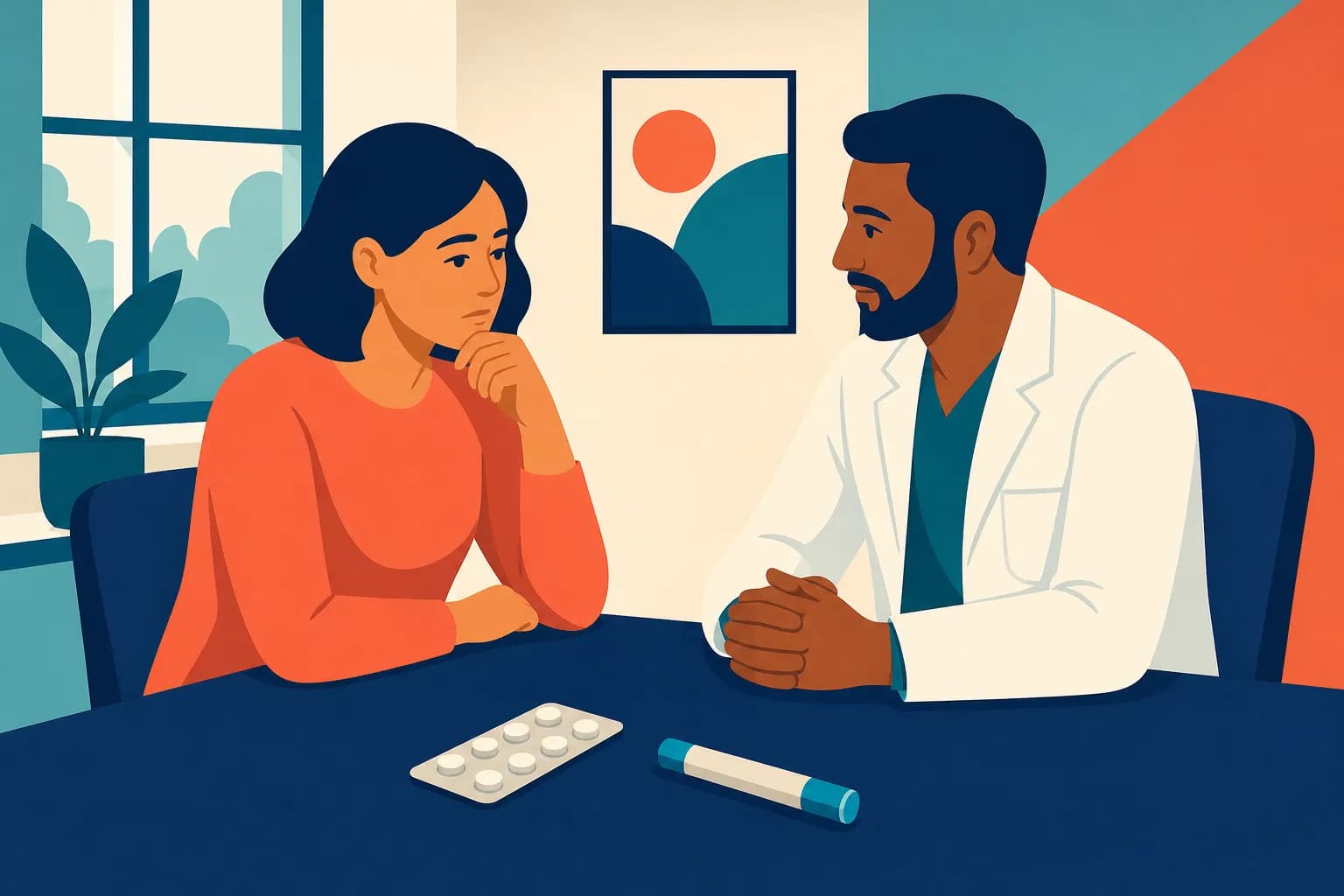
Then discuss your goals: which health concerns you want to address, how you will assess whether treatment is helping, and what to do if you do not tolerate it well. The name of a new medicine can be a starting point for the conversation, but the right treatment depends on your individual situation.
A pill may make treatment more convenient. Access to treatment also depends on authorization, price, whether the medicine is appropriate for your condition, and whether you can take it long term.
That is why a useful question for your doctor is broader than “How much weight will I lose?”: “What will my life with this treatment look like—in a month and in a year?” The answer includes tolerability, costs, and a follow-up plan.
Frequently Asked Questions
If I’m already getting weight-loss injections, will I be able to switch to the pills?
You can discuss switching with your treating doctor only after the medicine is authorized and the final prescribing information is available. The ATTAIN-1 results do not provide a plan for replacing injections with orforglipron or establish equivalent doses.
Will EU authorization mean orforglipron is authorized in Russia?
No. A European Commission decision does not replace medicine registration in Russia. The possibility of legal sales should be checked against Russia’s state register of medicinal products; the European news alone does not confirm it.
Can I take orforglipron during pregnancy?
This recommendation does not establish that orforglipron is safe during pregnancy. If you are pregnant or planning a pregnancy, do not start the medicine on your own and discuss treatment with a doctor: the ATTAIN-1 results reported here do not answer this question.
What should I do if I miss a daily tablet?
Check the missed-dose instructions in the final prescribing information for the authorized medicine. Since that information is not included in the materials reviewed here, do not make up a dosing plan or apply the rules for another GLP-1 medicine to Foundayo.
Can I stop taking the medicine once I reach my target weight?
Make a plan to stop or continue treatment with your doctor. The ATTAIN-1 results described here cover weight loss over 72 weeks and do not establish a universal treatment-ending plan for when a goal has been reached.