If you've ever browsed Instagram, TikTok, or listened to biohacking podcasts — you've definitely heard about peptides. Influencers inject BPC-157 after workouts and claim “super-regeneration.” Wellness clinics offer “rejuvenation protocols” using GHK-Cu for several thousand dollars. Longevity profiles discuss MOTS-c as the “peptide of eternal youth.”
Between 2020 and 2025 the global market for peptide therapeutics tripled. In the US alone the search query “peptide therapy” increased eightfold in three years. Part of this growth is fully justified: drugs like Ozempic and Mounjaro have literally changed the approach to treating obesity and diabetes. But alongside them dozens of unregulated substances with loud promises and minimal evidence flooded the information space.
The goal of this article is to help you understand: what is what. We will divide peptides into three honest categories: FDA-approved (tested, effective, prescribed by a doctor), peptides on the threshold (science is promising, but clinical use is far off) and the grey zone (bought online, risks unknown).
What are peptides — in two words?
A peptide is a short chain of amino acids, from 2 to ~50 residues. If a protein is a novel, a peptide is a single sentence from it — but very specific and targeted. The body uses thousands of its own peptides as molecular “messages”: burn fat, produce growth hormone, heal a wound, reduce anxiety.
Insulin is a peptide. Oxytocin is a peptide. Semaglutide (Ozempic) is a synthetic peptide modeled on an intestinal hormone. Precisely because peptides are the “language” the body itself uses, the pharmaceutical industry is so fascinated by them: they are precise, relatively safe, and controllable.
Most peptides cannot be taken as a pill — stomach acid destroys them. Hence the boom in peptide pens (pen injectors): devices with an ultra-thin needle that deliver the drug subcutaneously in seconds, with almost no pain. Ozempic, Wegovy, Saxenda, Forteo and other approved drugs are released in this form.
FDA-approved peptides: what really works
Over 100 years the FDA has approved around 100 peptide drugs. Here are the key ones — especially those that most often appear in wellness contexts.
Insulin — where it all began and the most famous peptide
Approved: since 1982 (synthetic form) Form: injection pen, pump
A 51-amino-acid peptide that regulates blood sugar. The era of peptide medicine began with the discovery of insulin in 1921. There are dozens of forms: rapid-acting, long-acting, ultra-long-acting.
Semaglutide is a synthetic version of the gut hormone GLP-1, which signals the brain about the body's satiety. It simultaneously reduces appetite, slows gastric emptying, normalizes blood sugar, and lowers cardiovascular risk. In studies patients lost on average 15% of body weight over 68 weeks — a result previously achievable only with surgery. Rybelsus became the first oral peptide form: engineers managed to protect the molecule from degradation in the stomach.
It is important to use these under a doctor’s supervision, as uncontrolled use causes adverse consequences. The internet has many images of emaciated celebrities and the term “Ozempic body” has taken hold.
Activates two receptors at once — GLP-1 and GIP. Clinical trials showed 20–22% body weight loss. It is being studied for fatty liver disease, sleep apnea, and heart failure.
SS-31 (Elamipretide / FORZINITY) — a fresh approval in 2025
Approved: September 2025 Form: subcutaneous injections
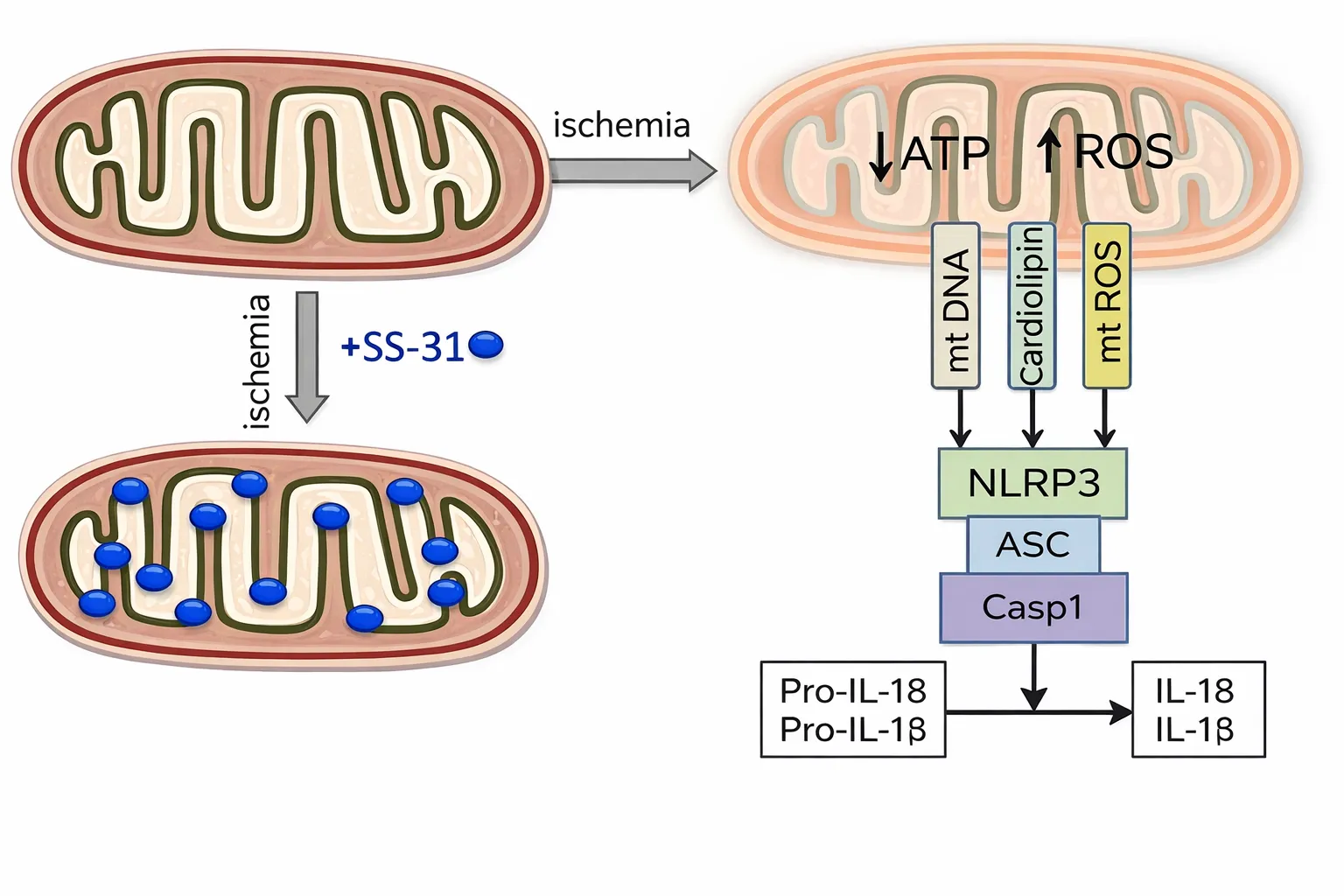
The world’s first mitochondria-targeted drug approved by the FDA. Used to treat Barth syndrome — a rare genetic disease in which the mitochondria of muscle cells break down. Mitochondrial dysfunction is also a common denominator in a range of diseases: Alzheimer’s, Parkinson’s, heart failure, and aging in general. In the wellness space SS-31 was promoted as “rejuvenating” long before approval, but officially it is approved strictly for a specific rare disease.
Mechanism of action of the SS-31 peptide
Unlike other antioxidants, SS-31 works preventively. It stabilizes cardiolipin (needed for the electron transport chain that produces ATP) and reduces leakage of free radicals.
Peptides on the threshold: internet hype vs real science
These are the substances most often written about by biohackers, wellness bloggers and “progressive” clinics. We will examine each honestly: what the science says, what regulators say, and the real potential.
Context: In 2023 the FDA placed most of these peptides into Category 2 — effectively banning their production by pharmacies on a compounding basis. From 2024–2026 a review process is underway and a number of substances may return to Category 1, which would again allow licensed pharmacies to prepare them with a doctor’s prescription. But that is not the same as FDA approval: clinical trials have not been cancelled.
BPC-157 — the “healing peptide” with strong potential
Status: not FDA-approved | under investigation
Fifteen amino acids derived from a protein in human gastric juice. Online it's called “super-healing,” “gut peptide,” “cure-all.”
Animal studies are indeed impressive: BPC-157 accelerates healing of tendons, ligaments, muscles, intestinal mucosa, and has neuroprotective properties. The mechanism is understood — the peptide activates growth hormone receptors in fibroblasts, stimulates angiogenesis (growth of new blood vessels), and reduces inflammation. There is a small pilot human study for knee pain: 87.5% of patients experienced significant relief. But this is not a clinical trial.
Of all the “grey” peptides BPC-157 probably has the most solid preclinical base. That is why research interest in it is growing. But human data is catastrophically limited and long-term effects are unknown. It is still banned in professional sports (WADA).
CJC-1295 — a growth hormone booster
Status: not FDA-approved | clinical trials halted
A synthetic analog of GHRH — the hormone that signals the pituitary to release growth hormone. Natural GHRH lives in the blood for minutes. CJC-1295 is modified to persist for days.
One injection raises growth hormone 2–10 fold for up to 6 days, and IGF-1 for 9–11 days. In wellness circles it is sold as a way to recover muscle, burn fat, and provide “anti-aging” effects. It is most often combined with ipamorelin — this pair was the most popular in clinics before the 2023 restrictions.
CJC-1295 reached Phase II clinical trials — and was stopped after the death of one participant. A causative link was never definitively established, but development ceased. Long-term artificial elevation of growth hormone in healthy people is an area with serious unknowns: risks include cancer, insulin resistance, and acromegaly with misuse.
Selank — a “calmer” from Russia
Status: not FDA-approved | registered in Russia and several CIS countries
A synthetic analog of tuftsin — an endogenous immunopeptide. Added amino acids make it more stable. Developed at the Institute of Molecular Genetics of the Russian Academy of Sciences.
Selank modulates the GABA system as well as serotonin and dopamine. It completed Phase III clinical trials in Russia and is officially registered there as an anti-anxiety drug. Studies show improved memory, reduced anxiety, and an immunomodulatory effect. It is usually administered as a nasal spray.
This is one of the few “wellness peptides” with a real regulatory history — just not an American one. Russian clinical data exist, although Western regulators do not accept them without their own trials. The potential is interesting, but for Western audiences this remains off-label use.
Semax — a nootropic from neuroscience
Status: not FDA-approved | registered in Russia
A fragment of ACTH (adrenocorticotropic hormone) with added amino acids for stability. Developed at the same institute as Selank in the 1980s.
Semax stimulates production of BDNF — a brain neurotrophic factor responsible for neuron growth and survival. In Russia it is used in neurology: after strokes, for memory disorders, and attention deficit syndrome. It improves concentration, memory, mental endurance, and provides neuroprotection under stress. If Selank is a “calmer,” Semax is a “focus enhancer.”
It has a real clinical history within Russian medicine. For Western readers — a drug without FDA approval and with limited data in peer-reviewed English-language journals. It is interesting as an object for future research.
MOTS-c — a popular peptide for mitochondria
Status: not FDA-approved | early human studies
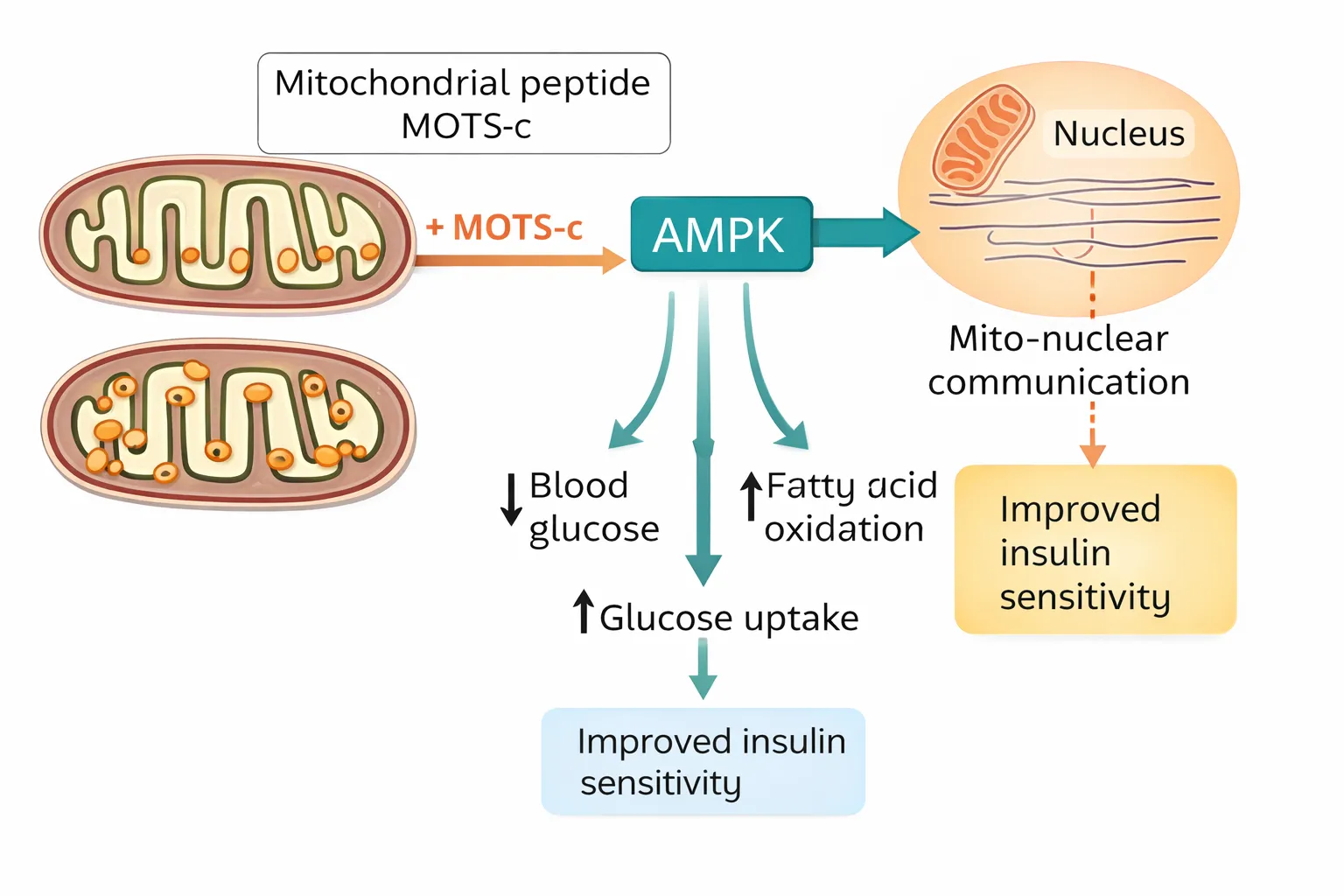
An endogenous peptide encoded not in the cell nucleus but directly in the mitochondria — the cell’s power plants. The body produces it itself, especially during physical activity, but MOTS-c levels decline with age.
Mechanism of action of the MOTS-c peptide
In trials it showed impressive results in mice: improved metabolism, insulin sensitivity, reduced inflammation, and increased lifespan. It activates AMPK — the cell’s main “energy sensor,” the same pathway influenced by metformin. MOTS-c shifts metabolism toward lowering blood glucose and increasing fatty acid utilization. It also regulates stress responses and reduces oxidative stress.
One of the most scientifically exciting candidates among “longevity peptides” and popular with biohackers. The concept is convincing and the mechanism is clear. But there is a huge gap between mice and humans that no one has yet bridged. A possible return to Category 1 compounding is expected in 2026.
GHK-Cu — the copper peptide: yes in creams, be cautious with injections
Status: approved as a cosmetic ingredient | not approved as a drug
The tripeptide glycyl-histidyl-lysine complexed with a copper ion. The body produces it during wound healing. Its level decreases with age — at 60 it is three times lower than at 20.
GHK-Cu stimulates collagen and elastin synthesis, accelerates tissue repair, and has anti-inflammatory and antioxidant actions. In vitro and animal studies are convincing. It is actively used and effective in cosmetics: creams, serums, and shampoos containing GHK-Cu are widely used and legal. As a result, biohackers pushed further and began using and popularizing it in injectable form.
But the FDA explicitly noted: injectable forms of GHK-Cu create a risk of immune reactions due to aggregates and impurities during compounding. Several companies have already received warnings and fines. In cosmetics — it works and is safe. In injections — it is legally and physically risky until regulatory status changes.
The regulatory turning point of 2026
For the first time since the 2023 restrictions several peptides may return to Category 1 — which would again allow licensed pharmacies to prepare them with a doctor's prescription. Candidates include: BPC-157, CJC-1295, Selank, Semax, MOTS-c, GHK-Cu, as well as TB-500, Thymosin Alpha-1 and others.
What this means in practice:
For patients — potentially more legal and controlled access through a physician and a licensed pharmacy instead of grey internet shops.
For doctors — legal clarity: they can prescribe without fearing regulatory risks.
What this DOES NOT mean — it is not FDA approval. A compound permitted for compounding still has not passed full clinical trials. The evidence base remains what it was: promising, but immature.
How to navigate: a practical guide
Before deciding on any peptide, ask yourself and your doctor several questions.
Is the drug FDA-approved? If yes — it has proven safety and efficacy for a specific indication. If not — you are entering an experimental zone.
What research exists? Animal models and in vitro studies are a start, not the finish. Look for human data, randomized trials, independent publications.
Where is it produced? A licensed compounding pharmacy is fundamentally better than powder from the internet. Quality and sterility directly affect safety.
What are the long-term consequences? Most “wellness peptides” lack data beyond a few months of use. This is an honest gap.
Conclusions
The peptide boom is real — and partly justified. Semaglutide and tirzepatide truly revolutionized obesity treatment. SS-31 opened a new era in mitochondrial medicine. Science moves quickly, and what seems experimental today may become a standard of care tomorrow.
But between “promising in the lab” and “safe for you personally” there is a distance that no Instagram post can shorten. Peptides are not supplements or vitamins. They are biologically active molecules with real mechanisms of action and real risks.
The best thing you can do is follow the science, choose a doctor who understands it, and don't confuse hype with evidence.