Fear of Mistakes After Childhood Criticism: Can the Old Pattern Be Changed?
If you were shamed for mistakes in childhood, an adult mistake may feel like a threat. We explore imagery rescripting: how the method works in therapy

⋄7 min read

You reread an ordinary work message and suddenly become certain that you wrote something foolish. You cancel a meeting because you will “get in everyone’s way.” And at night, you replay an old conversation again: I should have answered differently, I should have left sooner, why did I let someone treat me that way?
Shame after emotional abuse often sustains self-criticism and avoidance because the humiliation you experienced gradually turns into an internal rule: “Something is wrong with me, so it is better to hide, stay silent, and not make mistakes.” This is not a diagnosis, nor proof that every painful conflict was abuse. But it is a recognizable pattern that can be useful to name.
Emotional abuse is repeated behavior in which a person is humiliated, intimidated, devalued, isolated, controlled, or made to doubt their own perception. Sometimes it is loud: insults, threats, ridicule. Sometimes it is almost silent: cold silence used as punishment, constant “jokes” about your worthlessness, or phrases such as “You’re imagining everything.”
Guilt usually concerns an action: “I lost my temper, I’m sorry, I can apologize.” Shame attacks your sense of self: “I’m a bad person,” “No one can love me,” “If people get to know me better, they will reject me.” After emotional abuse, shame often remains for a long time because the attacks were directed at your personality, character, appearance, intelligence, and worth.
Imagine a teenager who is told after every mistake: “Things would be easier without you.” Years later, they may receive criticism from a supervisor without any harshness, yet physically hear the earlier verdict. Their stomach tightens, their mouth goes dry, and they want to disappear. In that moment, the reaction is not related only to today’s email or comment.
Psychologist Judith Herman, in her book Trauma and Recovery (1992), described how chronic abuse destroys a person’s sense of authorship over their own life and their trust in themselves. Shame fits easily into this fracture: it offers a simple, though cruel, explanation for what is happening—“The problem is me.” For a child or a person dependent on a partner, it may sometimes feel psychologically easier to believe they are damaged than to acknowledge that someone close to them, on whom their safety depends, is causing harm.
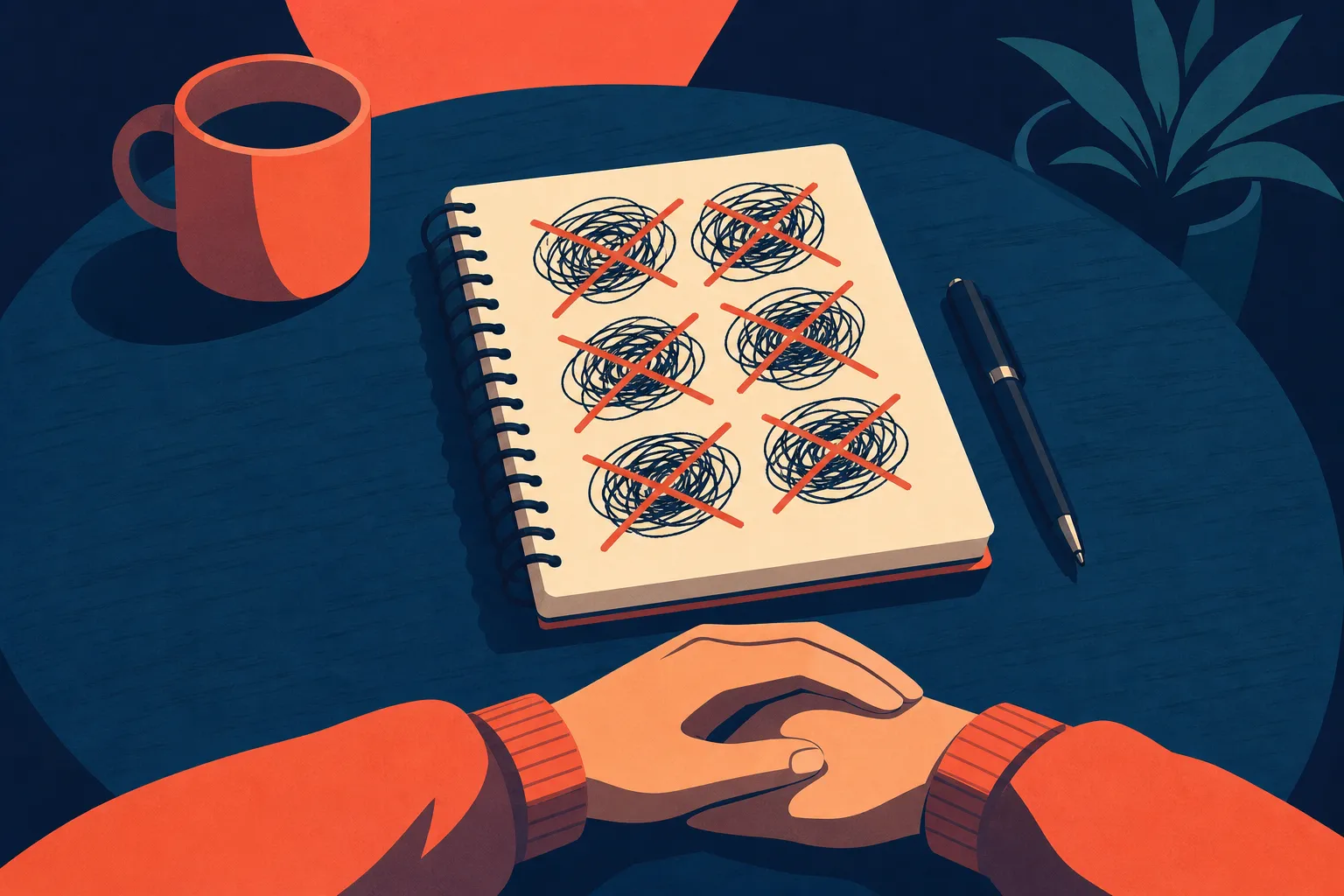
Rumination is the obsessive mental chewing over of distressing or painful subjects. It differs from productive reflection in its outcome. Analysis leads to at least a small decision: write a message, ask for help, take a pause. Rumination goes around in circles and intensifies the sense that there is no way out.
Shame gives it material: “Remember all your mistakes.” Rumination responds: “Now I’ll find definitive proof that you are terrible.” A trap emerges. The person tries to regain control by examining the past second by second, and ends up feeling even more powerless.
This happens especially often after gaslighting—systematically undermining trust in your own memories and judgments. “You’re too sensitive,” “That never happened,” “Normal people don’t get offended.” The brain then begins to double-check itself to the point of exhaustion: Do I remember correctly? Was I allowed to be upset? Did I exaggerate?
Shame promises to protect you from new humiliation if you control yourself mercilessly. But the price of this protection is living in constant inner anxiety.
If emotions seem stuck in your body—as a lump in your throat, heaviness in your chest, or tension in your shoulders—it may be helpful to read about how to release stuck emotions. Physical sensations do not prove a specific story, but they can help you notice that you are overloaded right now.
Avoiding emotions can look perfectly respectable. You work a lot. You turn everything into a joke. You postpone conversations “until later.” You do not ask for help until things become unbearable. You choose relationships in which little is expected of you, or leave at the first signs of closeness.
In the short term, this is a reasonable form of protection. If you were once mocked for crying, punished for disagreeing, or called “clingy” for needing warmth, opening up can feel frightening. The nervous system remembers the pattern: showing yourself is risky.
The problem begins when an old survival strategy controls every situation. Instead of talking to someone close to you, you go silent for three days. Instead of responding to an interesting job opening, you convince yourself that you will fail anyway. Instead of resting, you scroll through your feed until two in the morning so you do not have to encounter your sadness.

Intense shame after a breakup, conflict, or difficult period does not by itself mean trauma. People experience loss and humiliation in different ways. But there are signs that speaking with a psychologist, psychotherapist, or crisis service may significantly make life easier. This is not a self-diagnosis checklist, but a reason to take yourself more seriously.
After an ordinary comment, you sink for a long time into the thought that you are “worthless.”
You avoid people, tasks, or places that used to matter to you.
During an argument, you stop understanding what you feel and want, and then blame yourself for hours.
You apologize for making requests, being tired, crying, taking up space, or simply being present.
When memories arise, your body suddenly tenses, goes numb, trembles, or you feel as if what is happening is unreal.
You watch a series, read messages, or talk with someone close and barely remember the content because your attention is occupied by inner self-judgment.
If you are having thoughts of self-harm or suicide, are afraid to return home, or face a risk of violence from a partner or relative, do not remain alone with this. Call your country’s emergency service, contact a local crisis center, or reach out to someone who can physically stay with you. In such a moment, you do not first need to “prove” that you are suffering enough to deserve help.
Long-term work with the effects of emotional abuse takes time and a careful connection with a specialist. But several actions can help keep you from falling into another round of rumination today.
Name the process. Say to yourself: “Shame has been activated in me right now,” or “I’m replaying the conversation again.” This sentence separates you from the thought, even if only by an inch.
Return to the facts. Write two columns: what literally happened and what conclusions you drew about yourself. “My colleague asked me to correct a figure” is a fact. “I’m incompetent” is a painful interpretation.
Ask: whose voice is this? Shame-based phrases are often recognizable. Perhaps an ex-partner, parent, or teacher used to speak this way. You do not need to argue with the memory; it is enough to notice where the phrase came from.
Give your body a signal of safety. Place both feet on the floor, slowly name five objects around you, drink some water, wrap yourself in a blanket, or take a short walk. These are simple actions, but they reduce the intensity of the experience.
Make one connection. Write to someone you trust: “I feel ashamed and overwhelmed right now. You don’t need to solve the problem; just stay in touch with me.” A specific request is usually easier than the abstract statement “I feel bad.”
Psychologist Paul Gilbert, the creator of compassion-focused therapy, linked chronic shame with threat and self-attack. A compassionate tone here does not mean excusing everything. It is needed so that you can correct a mistake without internally punishing yourself. You can read more about the connection between emotional experiences and bodily reactions in the article “Your Body Knows the Truth: How to Release Stuck Emotions”.
Looking for a specialist can be frightening: you will have to tell personal things to a stranger, while an inner voice is already saying, “They won’t believe you.” Start with one small goal. You do not have to retell the entire story at the first appointment. You can say: “It is difficult for me to talk about the past. I often blame myself and avoid conflict. I want to understand how to cope with this.”
A specialist who is right for you will not rush you into disclosures, demand that you call a relative or partner an “abuser,” or blame you for having “chosen the role of a victim.” They help you distinguish facts, feelings, boundaries, and current possibilities. After the first appointment, you have the right to assess not only their qualifications but also your own state: Did it become a little safer to talk? Did they respect your pace? Could you ask an uncomfortable question?
Sometimes the first source of support is not therapy but one calm conversation, a record of events in a journal, a support group, a legal consultation, or a safe-exit plan from a relationship. Your right to support does not depend on how convincingly you can describe your pain.
Emotional abuse is indicated by a recurring pattern of humiliation, intimidation, control, or undermining your reality, especially when you fear the person’s reaction and have to adapt in order to stay safe. One argument or harsh phrase does not describe the entire relationship dynamic; it is useful to look at repetition, power, and the consequences for you.
Shame can arise as an attempt to explain and predict the dangerous behavior of someone close to you. The thought “It’s my fault” creates an illusion of control: as though changing yourself could prevent further humiliation. This logic is understandable as a form of protection, even though it is often unfair to you.
Sometimes the frequency of rumination can be reduced through sleep, movement, setting a limited time for writing down thoughts, and talking with trustworthy people. If it interferes with your work, sleep, or relationships for months, or is accompanied by panic and despair, professional support usually creates more room for change.
Respond briefly: “That is a cruel thought, not a fact.” Then name one verifiable circumstance: “I made a mistake in an email and have already corrected it,” or “This is difficult for me, and I can ask for a pause.” You do not have to immediately believe that you are wonderful; it is enough to step out of the language of insults.
No, you do not need to share every detail during the first appointment. You can begin with your current symptoms—self-criticism, fear of conflict, insomnia, avoidance—and agree in advance that you will proceed at a comfortable pace.
Urgent help is needed if you are thinking about suicide or self-harm, fear for your physical safety, cannot stop violence at home, or feel that you may harm yourself or someone else. Contact an emergency service, crisis line, or someone nearby and say directly that it is unsafe for you to remain alone.
How was this article?
Share