Our body is much more than just a way to move through space. It lives its own life, remembers everything, and stores inside itself all our experiences. Especially those that were hard for us to endure. And here is something interesting: sometimes for years a person suffers from unclear pains, strange symptoms, or suddenly overwhelming emotions — and cannot understand where it comes from. And this body remembers what we may have forgotten.
What is somatic experiencing
The word "somatic" comes from the Greek "soma," meaning "body." Essentially, it is about how the lived experience settles not only in memory and thoughts but directly in the muscles, nerves, and cells. The traumatic experience is literally etched into the body's tissues.
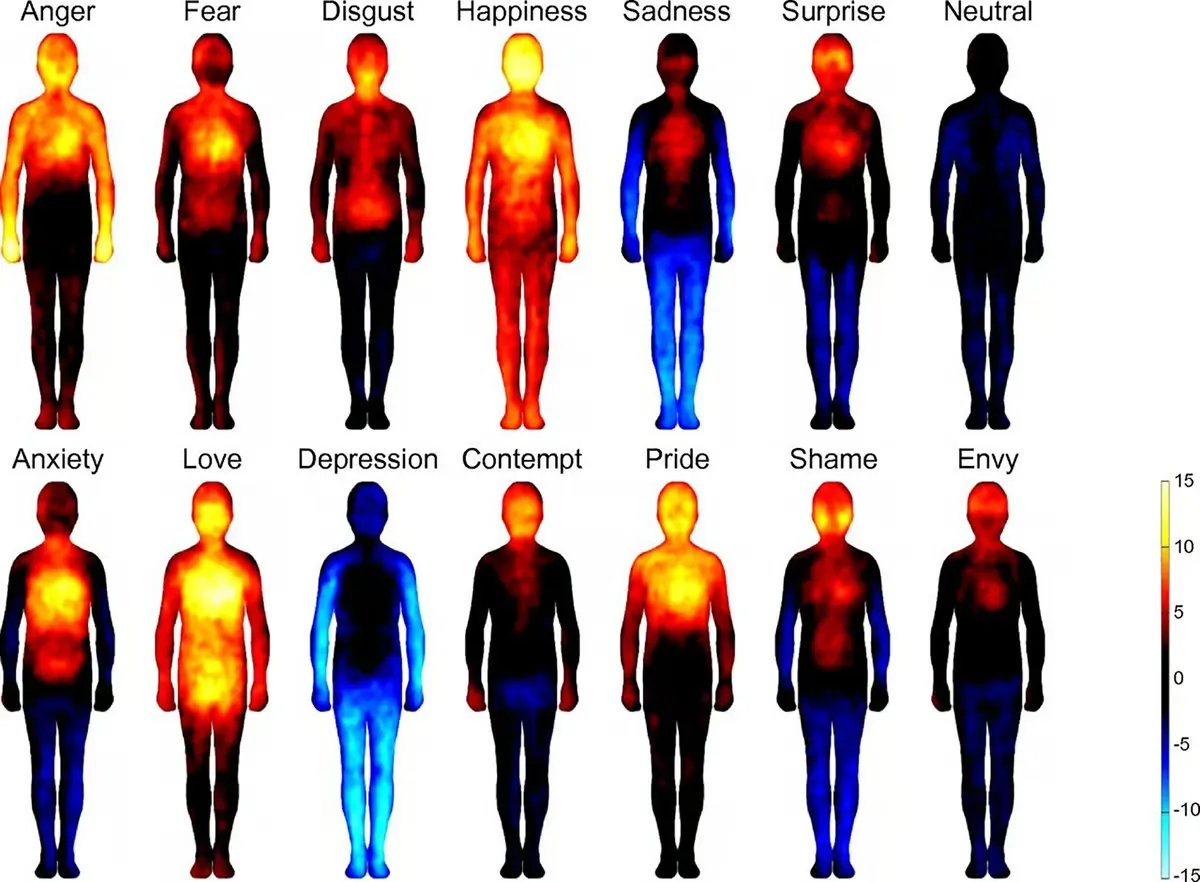
Imagine: something scary or dangerous happens. The organism immediately mobilizes — the heart pounds, the muscles tense, adrenaline rushes through the veins. This is the natural "fight, flight, or freeze" reaction. For our distant ancestors, who had to escape real predators, it worked perfectly.
But in our life things are more complex. We cannot run away from a toxic boss. A child cannot stand up to an adult who is hurting them. And all this energy that the body gathered to protect itself does not disappear — it gets stuck inside. It hardens. And continues to live there, creating chronic tension.
How the body stores trauma
Peter Levine, who created the method of working with trauma through the body (Somatic Experiencing), states a very precise thing: trauma is not the event itself. It is what remains in the body unfinished after this event. A physiological response that could not complete itself naturally.
And the body seems to get stuck in protection mode. Even when the danger has long passed, it remains on guard. This can look very different: perpetually clenched shoulders or jaw, stomach problems, constant fatigue, insomnia, sudden panic attacks. A person may not even remember exactly what happened, but the body remembers. And continues to react.
An especially important role here is played by the vagus nerve — such an internal highway that connects the brain with the heart, lungs, stomach, and other organs. When its functioning is disrupted by trauma, the body loses the ability to return to a normal state of calm.
Why it is important to work with the body
Ordinary therapy, where we talk about problems, is certainly important and valuable. But sometimes this is not enough. Because trauma does not live in the part of the brain that thinks and analyzes. It sits deeper — in those ancient structures that do not understand words, yet perfectly sense what is happening in the body.

Therefore, working through the body is a way to directly communicate with the nervous system. To help it finish what was once interrupted. Restore the ability to relax and feel safe. This does not mean abandoning psychotherapy — rather, one complements the other.
Self-help practices
Here are a few simple things you can do on your own. This is not a miracle cure and not a quick fix. It is just a way to gradually, very gently help your nervous system rewire itself. We work with the body, trusting that it is smarter than it seems. And it truly is.
1. Orientation: bring yourself to the present moment
Why: Trauma locks us inside ourselves. And this practice restores the sense of "I am here, now, and everything is okay".
What to do: Slowly look around. Name a few objects around you — the sofa, the lamp, the cup on the table. Listen to the sounds. Notice where the light falls, how much space is around you. Let your eyes move calmly, without focusing on anything specific.
What happens: The brain receives a signal: "I am safe. Here and now everything is fine." And the nervous system gradually calms down.
2. Contact with support: I am here, the ground holds me
Why: When the body feels solid support beneath it, it becomes calmer.
What to do: Feel your feet on the floor. Feel how the body rests on the chair. Press gently with your feet downward for about five seconds, then release.
Important: Do not imagine this — actually feel it. Weight, pressure, contact.
3. Titration of sensations: a little at a time is safer
Why: To avoid overloading yourself.
What to do: Find something neutral or pleasant in the body. Maybe warmth in the hands or calmness in the stomach. Stay with it for half a minute. Then — literally for a second — notice the tension. And immediately return to the pleasant.
Rule: If anxiety rises — you went too deep too quickly. Go back.
4. Pendulation: a swing between tension and calm
Why: To help the body complete stuck stress responses.
What to do: Notice where there is tension. Notice where there is relaxation. Gently shift attention back and forth without getting stuck.
Effect: The nervous system learns: "Oh, you can exit from tension."
5. Completing the defensive impulse
Why: The body remembers what we did not manage to do in the moment of danger — push away, close off, run away.
What to do: Listen — perhaps there is a barely noticeable urge to clench a fist, to move away, to turn? Make this movement very slowly, in miniature. See what changes.
Important: Do not turn this into a drama. One tiny movement is enough.
6. Regulation of breathing
Why: Breathing is a direct path to the nervous system.
What to do: Inhale through the nose for 3–4 counts. Exhale through the mouth for 6–8 counts. Calmly, effortlessly, for a couple of minutes.
Why it works: A long exhale is like a signal to the body that the danger has passed.
7. Finish with integration
Why: So the body remembers: "Ah, this is how it can be safe."
What to do: Notice what has changed. Maybe it feels warmer, or you yawned, or everything inside slowed down. Name it with a simple word — "calm," "stability." Stay with it for a minute.
When professional help is needed
All of these practices are good for everyday support. But if you have a serious trauma, intense symptoms, thoughts of suicide, or you simply feel that you cannot cope — please consult a specialist. A psychotherapist who works with trauma, a somatic therapist, a doctor.
Healing is not a quick process. The body needs time, softness, and patience. But one thing is important to know: changes are possible. The nervous system can recover — if we create the conditions for it. Safety. Support. And belief that the body is on our side.