The BuildABoyfriend Trend: When a Style Makeover Turns Into Control
Published on: ⋄6 min read
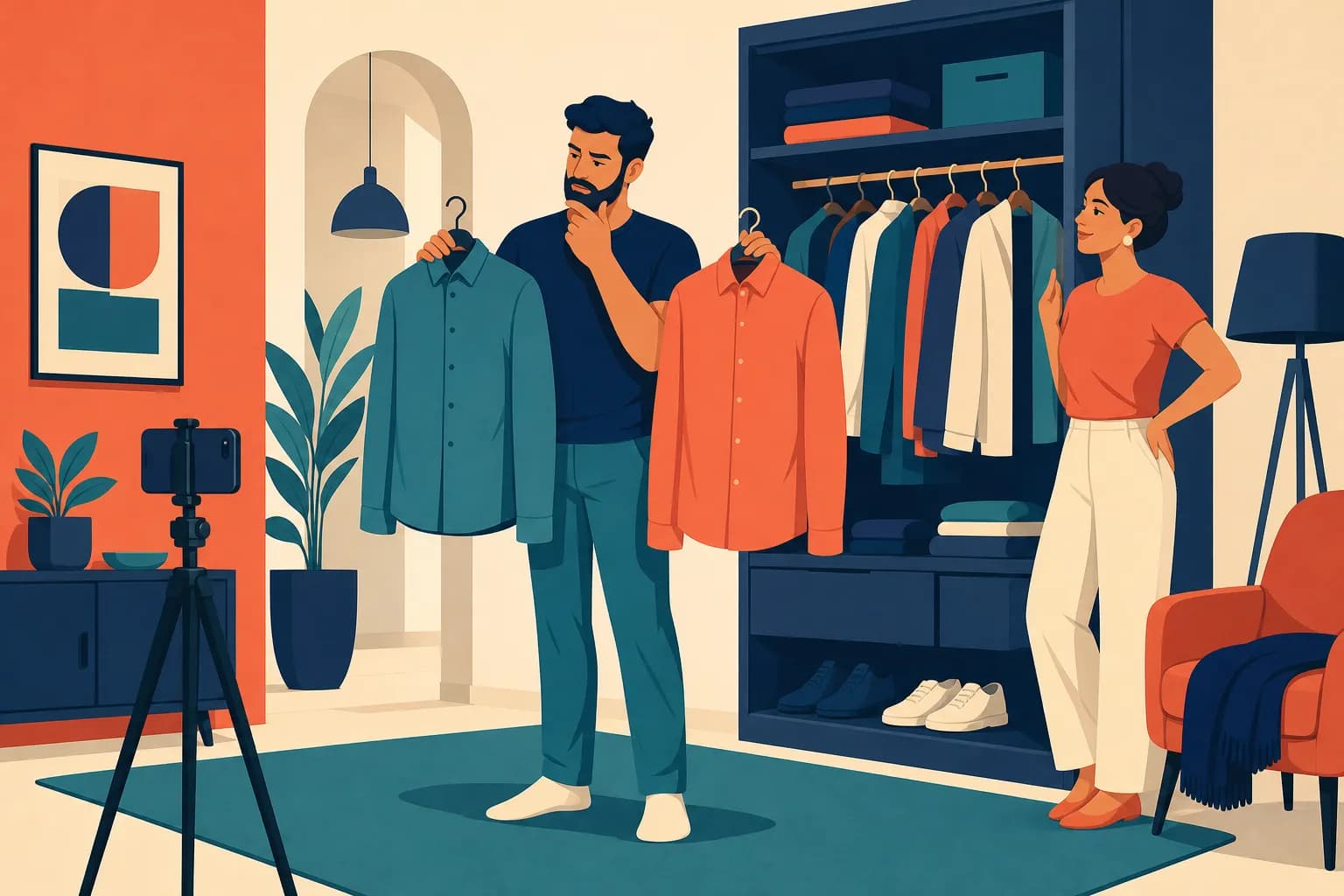
BuildABoyfriend, or BuildABF for short, is a format of “before and after” posts in which women show how they have changed their partners’ clothes, hairstyles, and other aspects of their appearance. The name literally means “build yourself a boyfriend”; it can be pronounced as “build-a-boyfriend.”
The line between a suggestion and pressure is crossed when a partner can no longer say no without facing ridicule, punishment, or manipulative threats to the relationship. A new haircut, by itself, proves none of this.
What We Know About the BuildABoyfriend Trend
The discussion began earlier than last week: the Slovak website Odzadu published an article by Simona Kertysová on October 8, 2026. The author distinguishes between a man willingly taking part in a style change and a situation where suggestions become demands. A piece by Relevant Radio and an article by Simona Ayroldi in Vanity Fair Italia, published on October 18, followed; both also discuss the BuildABF hashtag.
Relevant Radio approaches the topic from a religious and ethical perspective: host Timmery draws on the ideas of Thomas Aquinas and John Paul II about human dignity and freedom. This is a moral commentary, not a psychological study of the people featured in the videos.
These publications offer no verifiable figures on the number of videos, views, or growth in popularity. So it is too early to speak of a widespread craze. What we can confirm is a series of articles devoted to a recognizable makeover format.
Short edits also do not reveal who suggested the new clothes, whether the man himself liked them, or whether he could refuse to be filmed. A smile at the end does not tell us the whole story of a couple.
Why a Style Suggestion Can Turn Into Pressure
You can suggest different clothes. Continuing to pressure someone after a clear no is a reason to stop.
Wanting to help with someone’s style can be entirely well-intentioned. Someone finds it hard to choose clothes and asks their partner to pick out an outfit for a new job. Or both enjoy experimenting: today they try on an unfamiliar blazer; next week, they laugh together about a purchase that didn’t work out.
But a “before and after” format can easily frame someone’s original appearance as a mistake that another person corrected. This is especially true when old photos are mocked and the new look is presented as the partner’s personal achievement. In this story, the man himself may be reduced to a display mannequin.
An everyday disagreement can also shift focus. At first, they discuss whether a shirt suits him. Then comes: “If you loved me, you’d wear it.” Now he has to prove his feelings through obedience. Saying no to the shirt comes at the cost of a peaceful evening.
Help can quietly turn into an expectation of gratitude: “I spent so much time and money.” But another person’s investment does not create an obligation to wear the clothes they chose.
How to Tell Support From Control Over Appearance
The love is respect support service describes respecting boundaries as being able to talk about your wishes, fears, and limits without being afraid of your partner’s reaction. This is a useful guide for makeovers: what happens after a calm “I don’t like it”?
A suggestion remains a suggestion as long as saying “no” does not come at the cost of humiliation or punishment.
Pay attention to specific situations:
I turn down a suggested item and hear mocking comments about my appearance or taste.
After I clearly say no, my partner keeps demanding that I agree until I give in.
My clothes are hidden, thrown away, or replaced without my permission.
My partner deliberately stops talking to me or showing affection to get me to agree to a particular haircut or purchase.
During an argument about my appearance, I hear an ultimatum: “Do it my way, or we’re done.”
My “before” photos are posted or shown to other people even though I asked for that not to happen.
This list is a guide for assessing a situation, not a diagnostic test for BuildABoyfriend. Shopping together or getting advice from a barber does not, on its own, mean there is control.
The U.S. National Domestic Violence Hotline identifies criticism of a person’s appearance, telling them what to wear, deliberately withholding attention as punishment, and threatening to end the relationship to manipulate them as warning signs of emotional abuse. At the same time, saying “I’m angry; I’ll come back to this conversation in half an hour” is different from using silence to get someone to comply.
How to Suggest a Change—and How to Respond to One
Consent to trying on clothes, buying them, and posting a video should be discussed separately.
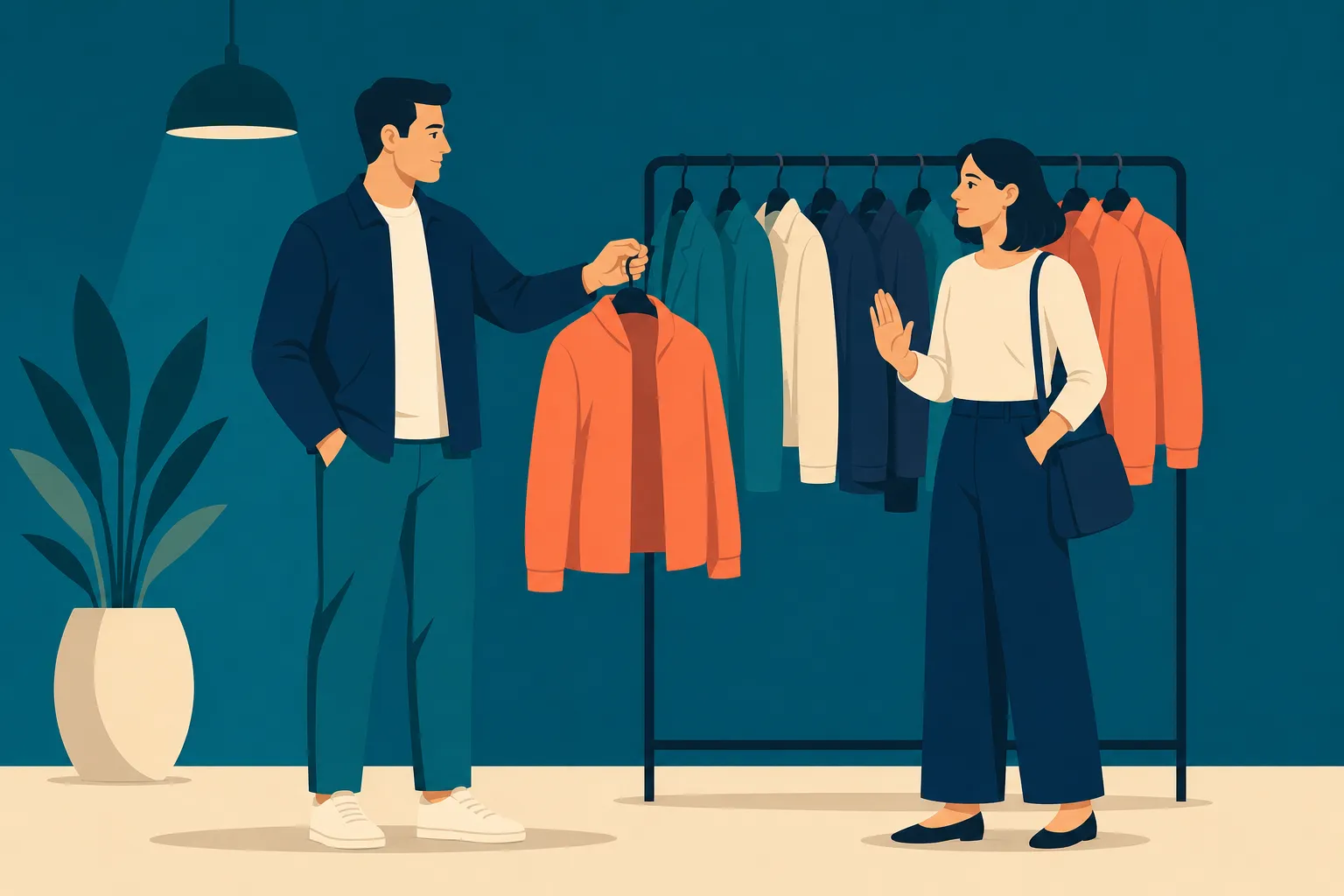
If you want to suggest a new look to your partner, start by asking whether they’re open to the conversation: “Would you like me to show you a jacket I think would suit you?” “No” needs to be an acceptable answer. When you hear it, don’t immediately launch into a sales pitch.
Three agreements can help:
Ask what they want. “What would you like to change?” They may need a comfortable pair of trousers, while the idea of a complete wardrobe overhaul belongs only to you.
Keep the experiment limited. For example, try on one item today, with no obligation to buy it. Discuss the budget and who will pay in advance.
Ask separately about filming. Agreeing to try on clothes does not mean agreeing to be featured in a video. Show the finished edit before posting it, including the “before” shots and caption.
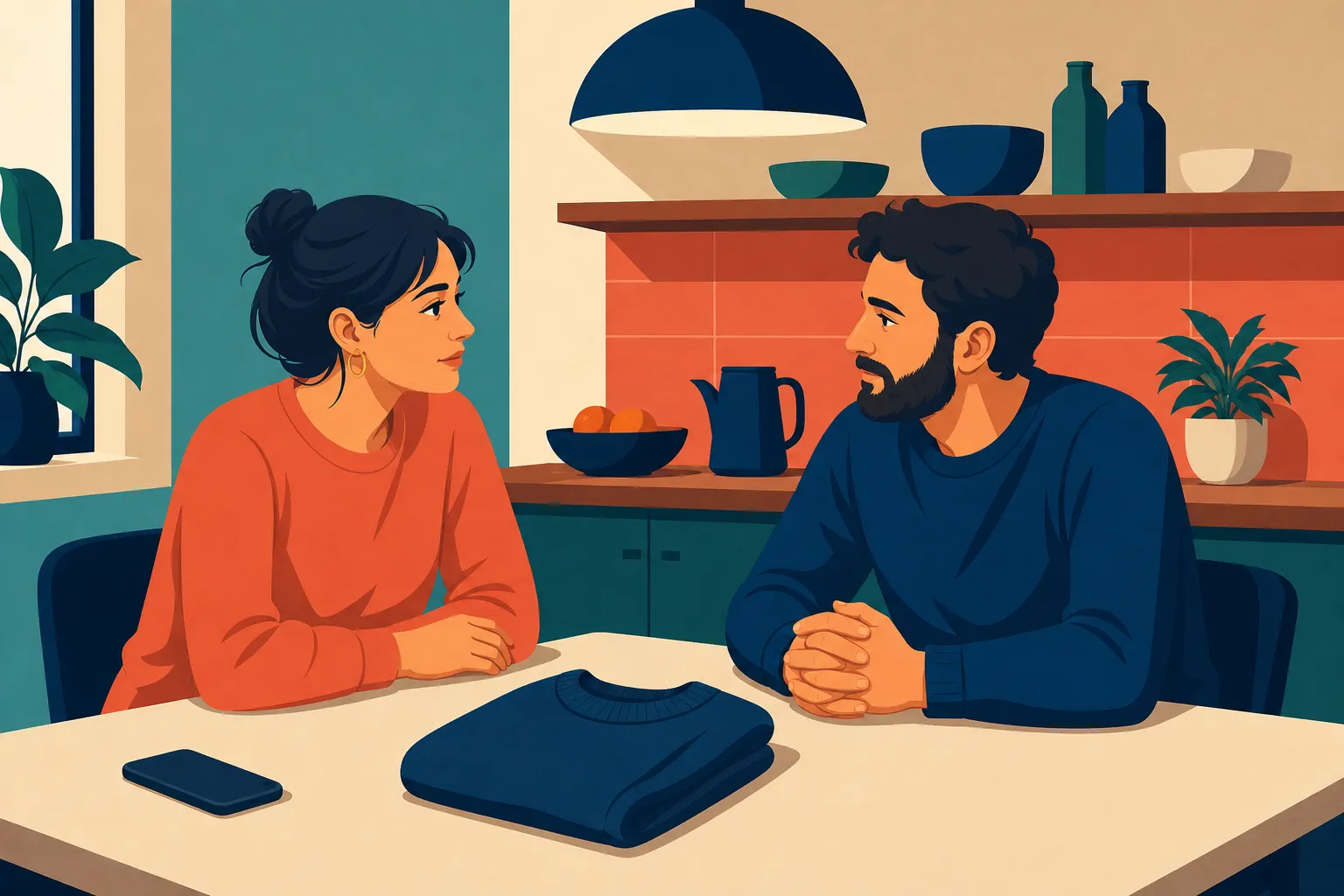
If someone is suggesting a change to your appearance, you don’t need to give a long explanation. Simple responses will do: “I hear your suggestion, but I don’t want that haircut,” “I can try on the clothes, but don’t film me,” “I like my clothes. Please stop making fun of them.”
If you’ve already pressured someone, it’s more helpful to acknowledge the specific action: “I kept trying to persuade you after you said no. That was pressure. I won’t do it again.” Then you need to actually stop—even if the shirt you bought remains unworn.
One Question Before a Makeover
Ask: “If I like the result but you don’t, what will we do?” It’s better to discuss the option of returning to the original look calmly before shopping or booking an appointment with a stylist.
When a Conversation About Boundaries May Be Unsafe
The responses in the previous section are not right for every situation. If saying no leads to threats, intimidation, damage to belongings, or fear of physical violence, trying to “explain everything calmly” may put someone at further risk.
Love is respect specifically warns that in an unsafe relationship, talking directly about violated boundaries can also be unsafe. In this situation, it may be better to reach out to someone you trust or a qualified counselor first and think through what support you need.
You don’t have to decide the future of the entire relationship right away. You can start with one concrete step: tell someone close to you what’s happening, arrange somewhere to stay if necessary, or find a local support service. If your partner checks your messages, use a device they cannot access, if possible. If you are in immediate danger, contact your local emergency services.
There’s also a question worth asking yourself when you feel calm: “What would I choose to wear if nobody were judging the result?” Sometimes, after a string of suggestions, you have to find your own answer again—starting with one comfortable item from your own closet.
Frequently Asked Questions About Partner Makeovers
My partner gave me expensive clothes. Do I have to wear them?
No. The cost of a gift does not obligate you to change your style. You can thank your partner for thinking of you and say that the item isn’t right for you. If possible, you can discuss exchanging or returning it separately.
What if I’m no longer attracted to my partner’s original look?
You can talk about it honestly while recognizing your partner’s right not to change. You’re entitled to decide whether the relationship is right for you. Choosing to end a relationship is different from repeatedly threatening to leave in order to get someone to comply during an argument.
How do I ask for a video of my makeover to be taken down?
If it’s safe to contact your partner directly, be specific: “I don’t consent to this video being posted. Please delete the video and any copies from your accounts.” If they refuse, you can use the platform’s reporting tools; the outcome will depend on its policies and the content of the post.
Can I take part in BuildABoyfriend without showing my face?
Yes, but keeping your face out of the video does not guarantee anonymity. People may recognize you by your voice, tattoos, surroundings, or the creator’s account. Discuss these details before filming, and don’t promise privacy you can’t ensure after the video is posted.