Diet Coke While Losing Weight: What a Large-Scale Study Found
Published on: ⋄8 min read
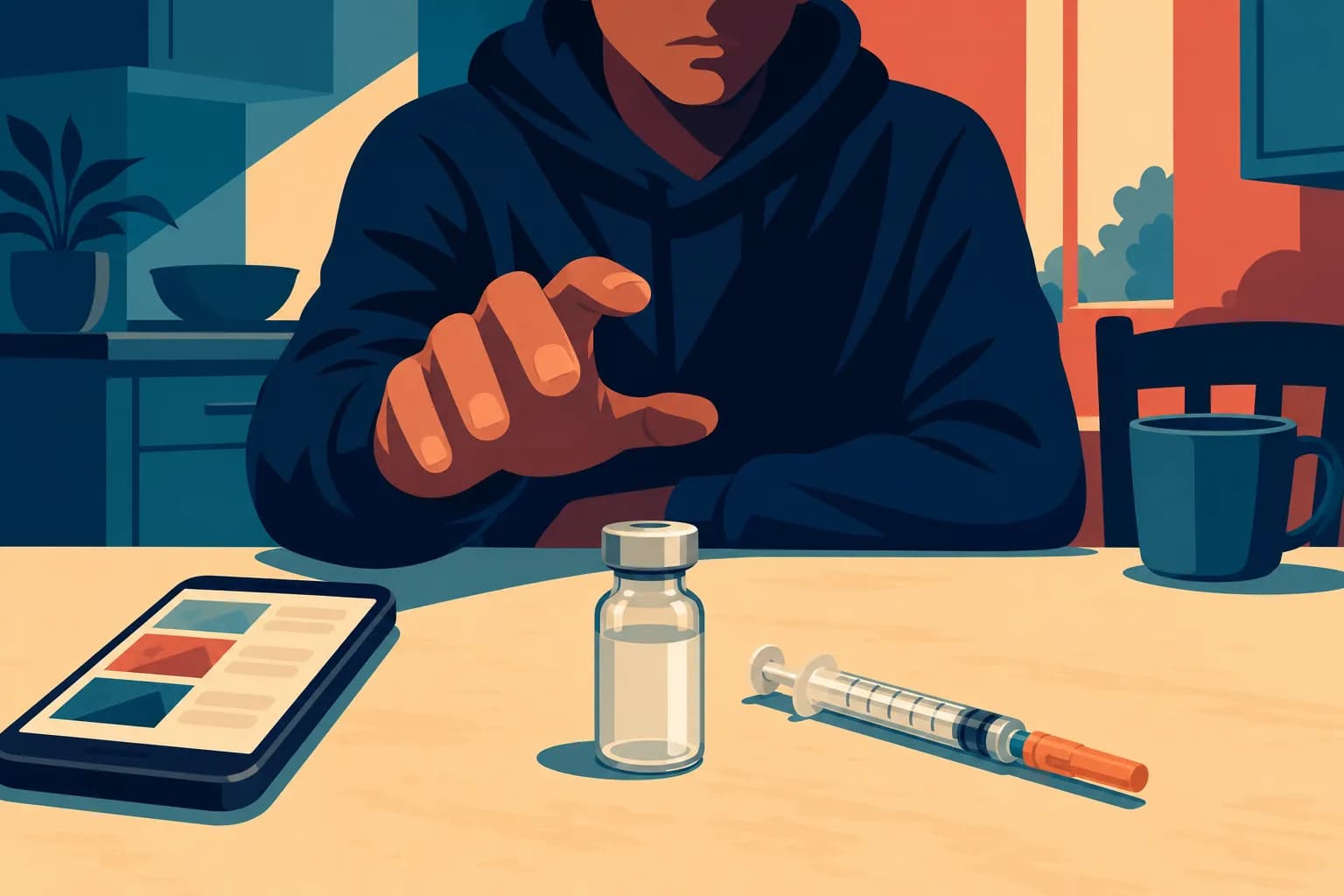
There’s a cold Diet Coke in the fridge, and your weight-loss app is reminding you of your water goal again. A simple question comes up: does this glass count, or should you pour a glass of plain water?
Yes, you can sometimes drink beverages with sweeteners instead of some of your water while losing weight: in a two-year randomized trial, they were no less effective than water for weight loss. However, they’re not essential for results, and they don’t automatically resolve your habit of reaching for sweet flavors.
“Diet beverages” here refers to soda, iced tea, lemonade, and other drinks with no added sugar, sweetened with sugar substitutes. They’re often called sugar-free or “zero” drinks. They usually contain very few calories or none at all—but it’s still worth checking the label, as formulations vary.
What the two-year trial of water and diet beverages actually found
If a sugar-free drink helps you avoid going back to regular sugary soda, it may support a calorie deficit.
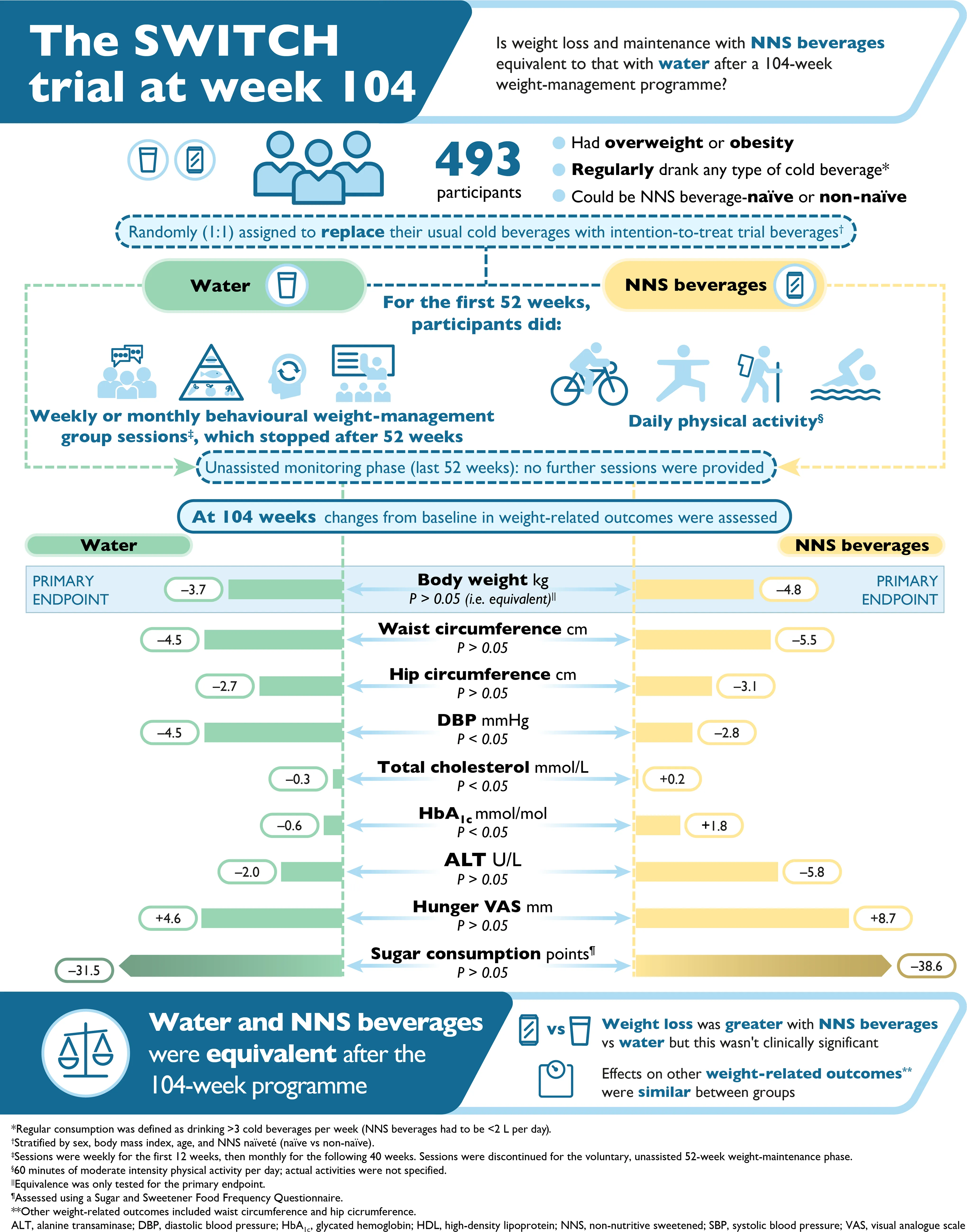
A two-year randomized study reported on October 2, 2026, sparked renewed debate. It was conducted in the UK by researchers from the University of Liverpool (led by Joanne Harrold) and the University of Leeds (led by Jason Halford). To date, it is the longest and largest trial to directly compare water and diet beverages over the long term. The 493 participants were randomly assigned to groups: some chose water, while others chose diet beverages. The results showed that beverages with sweeteners were no less effective than water for weight loss.
This finding is useful precisely because the study lasted longer than the more familiar experiments that run for a few days or weeks. It answers a specific, practical question: does replacing sugary drinks with sugar-free alternatives make it harder to lose weight? Under these conditions, it did not.
It would be misleading to conclude from this result that sweet taste speeds up fat burning or that everyone should switch to several cans a day. Weight changes primarily when your diet creates a consistent energy deficit. If you drink a nearly calorie-free beverage instead of a glass of regular soda and don’t make up the difference with cookies, it’s easier to maintain that deficit. That’s the whole mechanism—no magic involved.
It’s also useful to distinguish between a drink and a weight-loss program. Participants in long-term trials are usually aware that their eating habits are being monitored, think more about their food choices, and stick to their chosen routine. In everyday life, a can of “zero” doesn’t cancel out the hearty snack you automatically reach for alongside it.
Summary data from The SWITCH study
Why water and sugar-free drinks offer different experiences
When it comes to weight, they may have one benefit in common: neither adds as much energy as juice, sweetened tea, or regular soda. But they work differently in everyday eating habits.
Criteria
Water
Drink with a sweetener
Calories
Zero
Usually close to zero; check the label
Taste
Neutral
Distinctly sweet, sometimes with caffeine and acids
Role in weight loss
A convenient everyday staple
A compromise in place of sugary soda
Risk of “eating along” with the drink
Usually lower
Depends on your personal “drink and snack” pairing
Dental care
The simplest option
Acidic carbonated drinks may be hard on tooth enamel
Water doesn’t require you to make decisions: there’s no flavor to choose, no pack to buy, and no need to look for a caffeine-free option. It’s easy to keep on the table or take with you on the go. Add a slice of lemon or brew unsweetened herbal tea if you want some variety.
A diet drink can also work as a “bridge.” For example, maybe you’re used to buying sugary soda every day on your way home. A sudden ban can leave you frustrated and lead to a slip by Wednesday. A sugar-free option for a couple of weeks may help you cut liquid calories while you build a new habit. Later, you can gradually replace some of those drinks with water.
Weight on the scale and cravings for sweets are two different questions
Someone can lose weight while regularly drinking beverages with sweeteners and still feel that their day “doesn’t get going” without a sweet taste. There’s no contradiction. A study on body weight doesn’t measure how comfortable you feel drinking unsweetened beverages, how often you think about dessert, or what you buy to have with your drink.
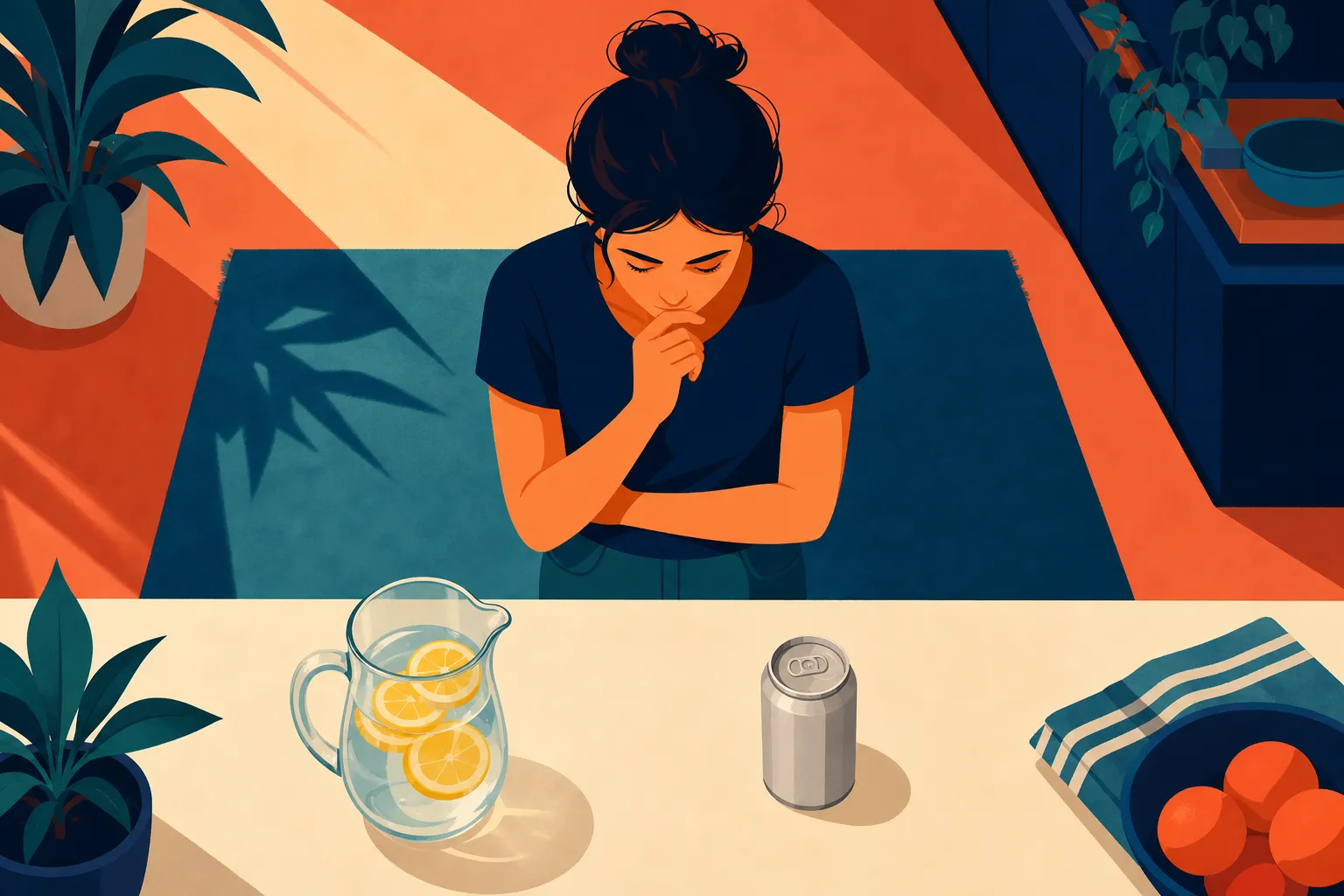
Cravings often follow familiar scenarios. A difficult call, then a cold can. A movie, then popcorn and soda. Something sweet after lunch “to round it off.” A sweetener may satisfy one part of the habit because the flavor is still there. For some people, that’s a relief. For others, the taste acts like a button that makes them want chocolate.
Try observing your habits for a week, without criticizing yourself. Write down three things: when you reached for the drink, what you were feeling five minutes beforehand, and whether you felt hungry afterward. A journal can quickly reveal your personal pattern. If you go about your day just fine after a can, it’s serving as a substitute. If you almost always open the cupboard for something sweet, it may help to change the ritual: take a ten-minute walk, make mint tea, or have a proper lunch instead of “toughing out” your hunger.
Read more about how sweeteners may affect cravings for sweets and why people respond differently in this article on cravings for sweets.
Why “water only” isn’t the right advice for everyone
A helpful drink is one that makes it easier to stick to your plan without feeling punished.
Absolute advice often breeds guilt: “If I drink sugar-free soda, I’m harming my health and sabotaging my weight loss.” The long-term trial doesn’t support this kind of alarmism when it comes to weight. If you’re choosing between a bottle of sugary soda and its sugar-free version, the latter will usually help you cut liquid calories.
In 2023, the World Health Organization issued a conditional recommendation against using sweeteners as a long-term weight-control tool. It was based on a systematic review that considered long-term observational studies and potential adverse associations separately. “Conditional” means the recommendation calls for taking a person’s circumstances into account, and that some of the long-term evidence is limited in quality. It doesn’t turn having one drink a day into a failure.
A balanced approach looks like this: water is your main drink, while a sweetened option is a practical tool for specific situations—especially when it genuinely replaces sugar rather than simply being added to it.
Check your pattern
Before buying, ask yourself: am I using this drink to replace sugary soda, or do I reach for it out of habit alongside food? Your answer will point you toward the next step.
How to fit drinks with sweeteners into a weight-loss plan
You don’t need to wait for the perfect Monday. Start with one recurring moment: for example, replace a sugary drink at lunch with a sugar-free option or water. After 7–10 days, see whether it’s become easier to stick to your chosen eating plan.
Keep water where you can see it: a bottle on your desk, a pitcher by the stove, or a glass next to your bed.
Choose one predictable occasion for a sugar-free drink—meeting friends, going to the movies, or traveling. This can make the change feel less restrictive.
Don’t automatically drink sugary soda with your meal. Take a few sips of water first, then decide whether you still want the soda.
If your drink contains caffeine, avoid having it late in the evening: poor sleep often increases hunger and impulsive food choices the next day.
Don’t “earn” food by choosing a zero-calorie drink. It doesn’t give you extra room for dessert.
If you’d like to gradually cut back on sweet flavors, alternate your drinks: one sugar-free drink and one glass of water today, then two glasses of water for every sugar-free drink next week. A sustainable pace is usually more helpful than a strict ban that leaves you feeling angry.
Where’s the line between a convenient substitute and a problem?
A sugar-free drink by itself doesn’t signal a problem with your eating habits. Take a closer look at the habit if you recognize yourself in several of these points:
You buy a drink every day and feel irritated if you don’t have one nearby.
After every can, you want something sweet or salty, and often go looking for it.
You drink soda at night even though you then have trouble falling asleep.
Plain water seems so unpleasant that you barely drink any all day.
You replace meals with a drink, even though you feel very hungry by evening.
You keep drinking acidic carbonated beverages despite tooth sensitivity or heartburn.
This isn’t a diagnosis or a reason to deprive yourself of everything you enjoy. It’s more of a cue that the habit may no longer be neutral and could use some adjustment. If you have diabetes, kidney disease, are pregnant, or have significant difficulties with eating, it’s best to discuss your diet with a doctor or dietitian—not because sweeteners are cause for panic, but to consider the whole picture.
What helps with weight loss isn’t the most “virtuous” drink, but the choice you can repeat without being at war with yourself.
Can I drink Diet Coke every day while losing weight?
Yes, if it replaces sugary soda and doesn’t trigger overeating for you. It still makes sense to keep water as your main drink. If you have sensitive teeth, heartburn, or sleep problems, take acidity and caffeine into account.
Do sugar-free drinks count toward my daily fluid intake?
They do provide fluid, but it’s best not to build your entire drinking habit around sweet flavors. For everyday thirst, water remains the simplest choice.
Do sweeteners make it harder to lose weight?
By themselves, they don’t prevent weight loss if they help you replace sugar-sweetened drinks and your overall diet remains appropriate in calories. Your personal response matters: after a sweet flavor, some people find it harder to stop at one snack.
What can I drink if I really don’t like water?
Try chilled water with lemon, cucumber, or berries; unsweetened tea; or sparkling mineral water without syrup. Experiment with the temperature and glassware: sometimes the issue is warm water from a bottle, not water itself.
Is a drink with a sweetener or juice a better choice?
For weight loss, a drink with a sweetener is usually more practical than juice, because juice contains sugar and calories. Whole fruit offers flavor, fiber, and a feeling of fullness—benefits that are largely missing from a glass of juice.
Do I need to cut out sweeteners completely if I crave sweets?
Not necessarily. Try cutting back on sweet drinks for two weeks and tracking how your cravings, sleep, and snacking change. If you feel better, keep going at a pace that feels comfortable.