Healing Silence and the Experience of Psychedelic Therapy
Published on: ⋄6 min read
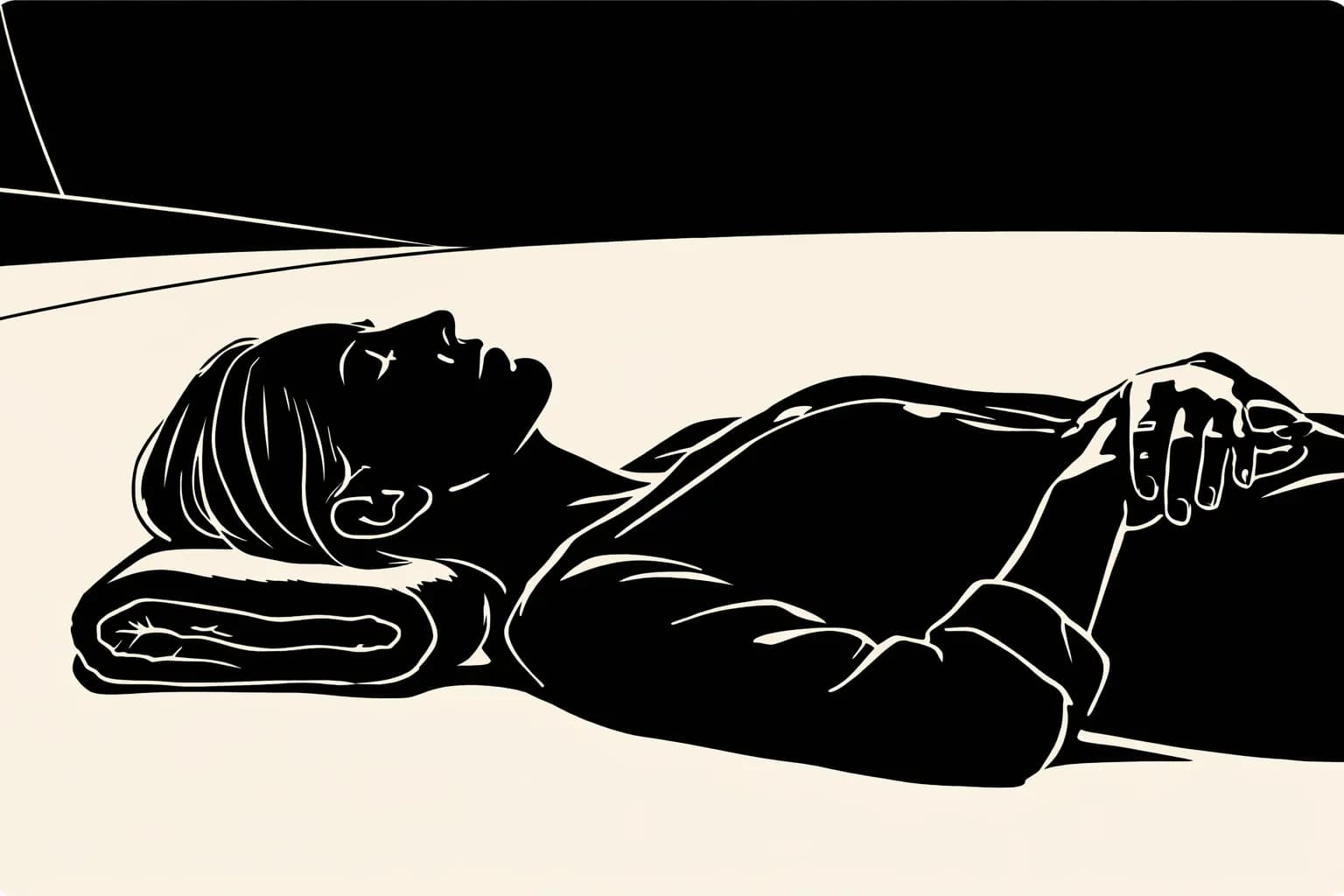
Imagine this: you are sitting beside someone who is very frightened. They do not tell their story in order, answer questions, or ask for advice. They simply cry, stare at the ceiling, and occasionally grip the edge of a blanket. And all you can do is stay. Do not fill the pause with a clever explanation. Do not say, “Come on, don’t cry.” Do not escape into your phone.
For a culture accustomed to conversation, such a scene is almost unbearable. We feel that help must be expressed in words: it should contain precise language, interpretations, advice, and the right questions. But silence in therapy can sometimes turn out not to be an absence of work, but a form of it. This is especially clear in research on psychedelic therapy—a field in which the experience can sometimes be so intense that ordinary conversation temporarily recedes into the background.
When Words Become Too Small
A recent analysis of psilocybin therapy sessions for people with post-traumatic stress disorder drew attention to a simple detail: participants were silent for much of the time. This does not mean that the therapists were inactive or that silence itself “cured” trauma. The researchers described a format in which a person moves through a powerful inner experience with calm, attentive support from specialists.
With trauma, speech often breaks down. A memory arrives not as a coherent story, but as a lump in the throat, a flash of shame, tense shoulders, a fragment of a smell, or an image that cannot be explained. A person may need not another question, but time to notice and experience: “I am feeling this—and I am not alone. No one is rushing me. I do not have to immediately turn my pain into understandable text.”
Psychologist Carl Rogers described empathy, genuineness, and unconditional positive regard as therapeutic conditions. In this approach, the specialist does not “fix” the client, but creates a relationship in which the client can hear themselves more clearly. Silence can be part of such a relationship—if it contains attention rather than coldness.
Not every pause is therapeutic. The kind that helps is one in which a person feels that someone steady is nearby and that their experience does not need to be earned through words.
Silence Is Not Emptiness, but Co-Regulation
Safety in a therapy room is created through details: light, pace, boundaries, and another person’s presence.
The nervous system is constantly scanning the environment. Tone of voice, facial expression, sudden movements, the possibility of leaving, and clear rules all answer a silent question: “Am I in danger here, or can I let go of some control?” In Stephen Porges’s polyvagal theory, this process is associated with neuroception—the rapid, often unconscious assessment of safety or danger.
The theory should not be turned into a universal key to all feelings, but the everyday idea is familiar. In the presence of a calm loved one, breathing sometimes becomes more even without any techniques at all. And beside someone who is nervous, pressuring us, or waiting for the “right reaction,” even kind words can heighten anxiety.
Therefore, silence in therapy is not a technique that can be applied mechanically: remain silent for ten minutes and wait for a breakthrough. One client may feel spaciousness in a pause. Another may experience a familiar childhood punishment: “They do not want to talk to me.” A good therapist notices the difference. They may quietly ask, “How is it for you to be silent with me right now?”—and in doing so, return a sense of choice to the person.
Presence does not equal stillness. Sometimes support looks like a glass of water, a reminder to feel one’s feet on the floor, permission to open one’s eyes, or a brief phrase: “I’m here; we can slow down.” This may look little like a beautiful spiritual image. But it contains genuine care.
A Safe Setting Is Not Just Candles and a Playlist
In discussions of psychedelics, the word “setting” often sounds almost decorative: dimmed lights, music, a cozy blanket. In reality, a safe setting is much broader. It begins before the session—with medical and psychiatric screening, a discussion of medications, clear informed consent, boundaries around touch, and a plan for moments of intense anxiety.
In clinical studies of psychedelic therapy, participants are usually prepared in advance, supported during the experience, and met afterward in integration sessions. The last part is especially important. Experiencing a powerful image does not yet mean understanding how to live afterward. Without integration, a person may be left with confusion, false conclusions, or the urge to repeat the experience immediately.
Physical safety: medical assessment, the ability to receive help, and the absence of dangerous conditions.
Psychological safety: the right to stop, not answer, avoid sharing anything unnecessary, and decline touch.
Ethical safety: clear roles, no unwanted contact, and confidentiality.
Social safety: time to recover, someone to contact after the session, and no need to get behind the wheel or go to work immediately.
Where these supports are absent, calling a situation “therapy” does not make it therapeutic. A particularly troubling warning sign is a promise of guaranteed healing in a single ceremony or a demand to “trust the process” when you are frightened and want to ask a question.
A Pause Also Requires Consent
If the therapist’s silence intensifies your anxiety, say so directly. Support should be attuned to you, not to a beautiful idea about silence.
Psilocybin and PTSD: There Is Hope, but No Definitive Answer
An intense experience needs not only support during it, but also careful reflection afterward.
The phrase “psilocybin and PTSD” is being heard more and more often, but an important qualification is needed. Evidence on psychedelic therapy is developing rapidly; however, for PTSD specifically, the most convincing clinical evidence currently concerns MDMA-assisted therapy rather than psilocybin. In a phase 3 study published in Nature Medicine in 2021, a team led by Jennifer Mitchell compared MDMA-assisted therapy with therapy and placebo in adults with severe PTSD. The results were promising, but this does not eliminate the need for medical supervision and further research.
Psilocybin is being studied for depression, anxiety in people with serious illnesses, and other conditions; there is considerable hope surrounding it. But hope is not the same as a recommendation for self-treatment. A psychedelic experience can intensify anxiety, disorientation, and panic reactions. With a personal or family history of psychosis or bipolar disorder, the risks require especially careful assessment by a specialist.
There is also a legal dimension. Psilocybin’s legal status varies from country to country, and taking part in a study or licensed program is not like buying a substance “to work on yourself.” Illegality, unknown dosage, lack of quality control, and the absence of a trained facilitator add risks that are easy to lose sight of amid conversations about spiritual experience.
Why “Just Stay Beside Me” Does Not Always Help
Not every trauma unfolds through turning inward. Some people first need very concrete support: to establish sleep, find safe housing, end contact with an abuser, or obtain treatment from a psychiatrist. The human psyche is not separate from the body, money, documents, or the lock on the door.
Even in ordinary therapy, prolonged silence can become a defense against contact—or a sign that trust has not developed between the client and the specialist. It is possible and necessary to talk about this. An appropriate question is not “Why are you silent?” but “What is happening for you in this silence?”
What Can Be Taken from This Experience Without Psychedelics
The value of silence is available without altered states of consciousness. This evening, try a small experiment: choose ten minutes without a podcast, messages, or attempts to understand anything. Sit somewhere your body feels comfortable. Place a sheet of paper nearby. For the first five minutes, simply notice three things: the support beneath your body, your breathing, and the sounds around you. Then write one sentence: “Right now, there is…” Do not search for beautiful words.
If you want to support someone close to you, you can ask: “What would be more helpful right now: for me to listen, help you think, or simply stay beside you?” This question returns a sense of control to the person. And control is often what traumatic experience takes away first.
Silence does not have to be deep, productive, or healing. Sometimes it will be awkward. Sometimes irritating. But if it contains choice, clear boundaries, and genuine presence, it stops being an empty interval between words. It becomes a place where one can finally stop having to prove what is happening inside.