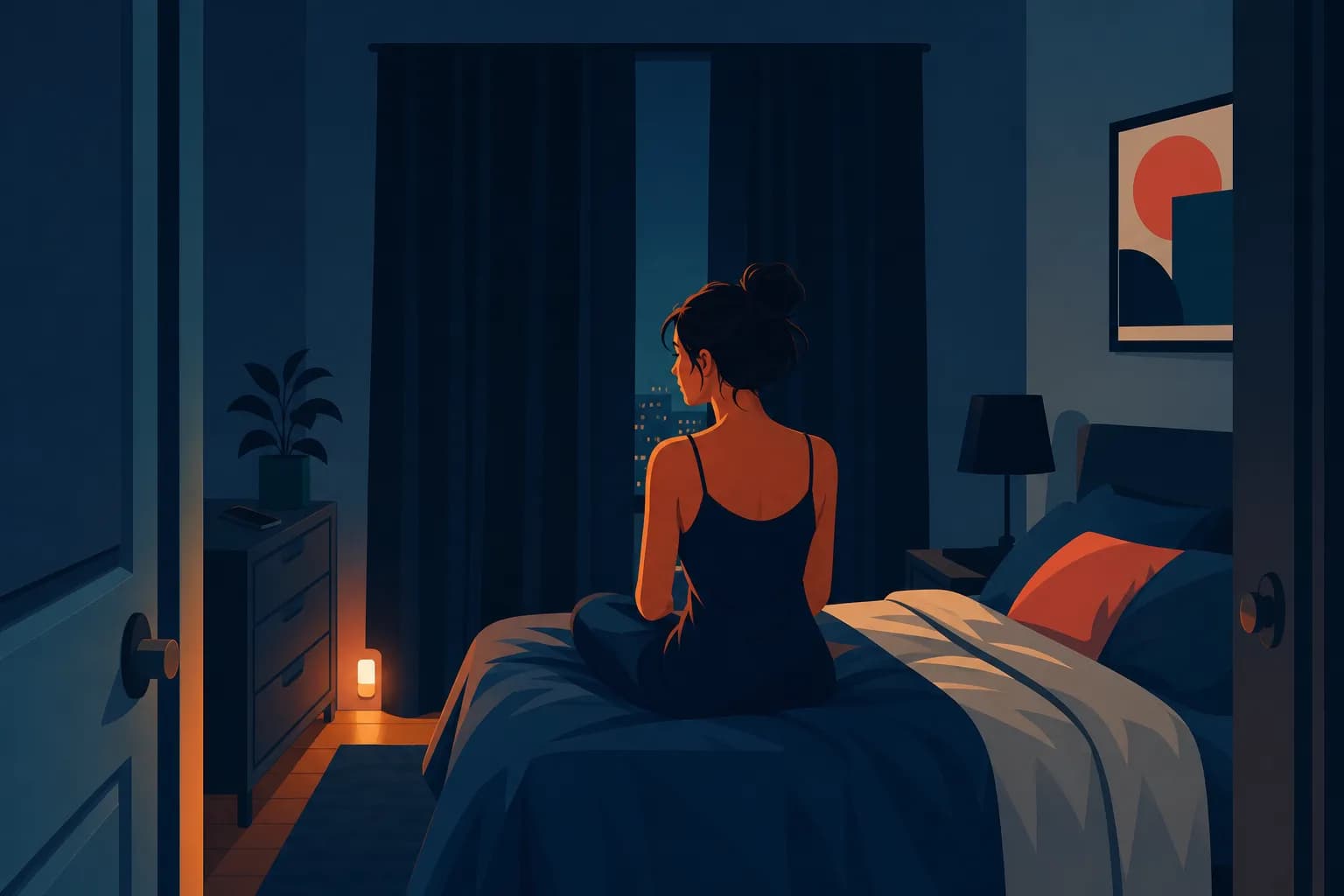
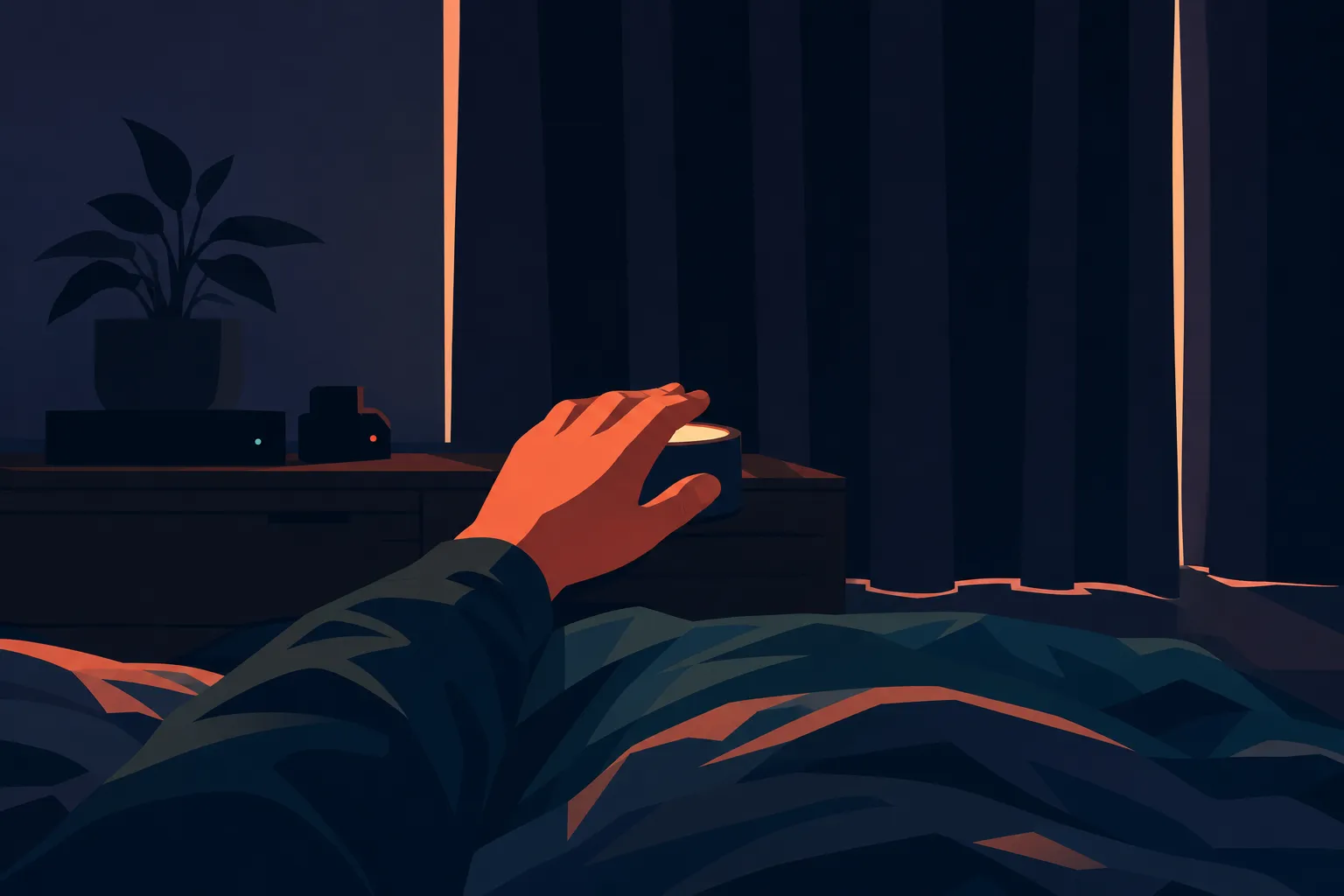
At two in the morning, the phone screen lights up, a streetlamp shines through the curtains, and a charger blinks on the dresser. They seem like minor details. But the body perceives them as a signal: night has not fully arrived yet.
Yes: a dark bedroom can support healthy sleep and circadian rhythms, which are connected to heart function; but turning off the light by itself does not protect against heart disease. The connection between nighttime light and the heart is based primarily on observational data: these data identify patterns but do not prove that the lamp itself caused the changes.
Sleeping in darkness is not a wellness ritual for perfect people. It is an attempt to give the internal clock a clear nighttime signal. Even so, safety always comes first: for someone who might fall, become disoriented, or care for a child at night, a night-light may be necessary.
What is already known about nighttime light and the heart
At night, the body benefits from a clear signal: it is time to reduce activity and recover.
In 2024, a study by Daniel Windred and colleagues—Light exposure and cardiovascular disease risk: a prospective cohort study—was published in the European Heart Journal. The authors used light-sensor data from wearable devices worn by 88,905 UK Biobank participants and then tracked cardiovascular events. Brighter light exposure during nighttime hours was associated with a higher risk of coronary heart disease, heart failure, atrial fibrillation, heart attack, and stroke.
The word “associated” is crucial here. People who are often exposed to bright light at night may differ in their work schedules, stress levels, sleep, income, alcohol use, and health status. The authors accounted for a number of these factors, but an observational study cannot eliminate all differences between people.
Therefore, the statement “light in the bedroom at night causes heart disease” would be stronger than the data allow. A more accurate formulation is this: nighttime lighting is a plausible factor worth reducing, especially if sleep is already fragile.
Why light can shift the sleep rhythm and the body’s workload
The retina contains cells that are sensitive to light even when you are not looking at objects. They send information to the suprachiasmatic nucleus of the hypothalamus—a brain region that synchronizes the internal clock. Evening and nighttime light can delay nighttime processes: sleepiness arrives later, and the biological night becomes less distinct.
The effect can then unfold through several pathways. A person falls asleep later, sleeps for a shorter time, or wakes more often. The usual rhythm of meals is disrupted. Waking up in the morning becomes harder, and there is a greater desire for coffee. Coffee itself should not automatically be classified as a threat to the heart: a piece on the effect of morning coffee on heart health discusses the nuances of the timing of the first cup. But a cup at five in the evening to get through a sleepless night often makes the following night even more restless.
The heart and blood vessels also follow a schedule: at night, heart rate and blood pressure normally change. One evening spent watching a film with a light on does not “break” anything. The question arises when scattered light, later bedtimes, and short sleep become the background pattern for months.
Darkness does not treat the heart. It removes one of the small nighttime signals that make it harder for the body to understand that the day is over.
How to tell whether your bedroom is actually dark
For sleep, consistent light near the bed matters more than a rare, brief glow from beyond the door.
You do not have to buy a light meter and turn the evening into a laboratory experiment. Start with a simple test: turn off the main light, lie in bed for a few minutes, and let your eyes adjust. Can you see the outlines of the furniture, read the writing on a package, or distinguish the color of clothing? There is probably more light than it seems.
The sources can be entirely ordinary: a streetlamp, a television in standby mode, a router, an electronic clock, an illuminated humidifier, or a phone charging. It is also worth checking the door to the hallway: the strip of light beneath it is sometimes brighter than a night-light.
There is no need to aim for frightening absolute darkness. The goal is simpler: remove constant bright light from your field of vision and avoid turning a nighttime awakening into full alertness.
What to change this evening without renovations or expensive purchases
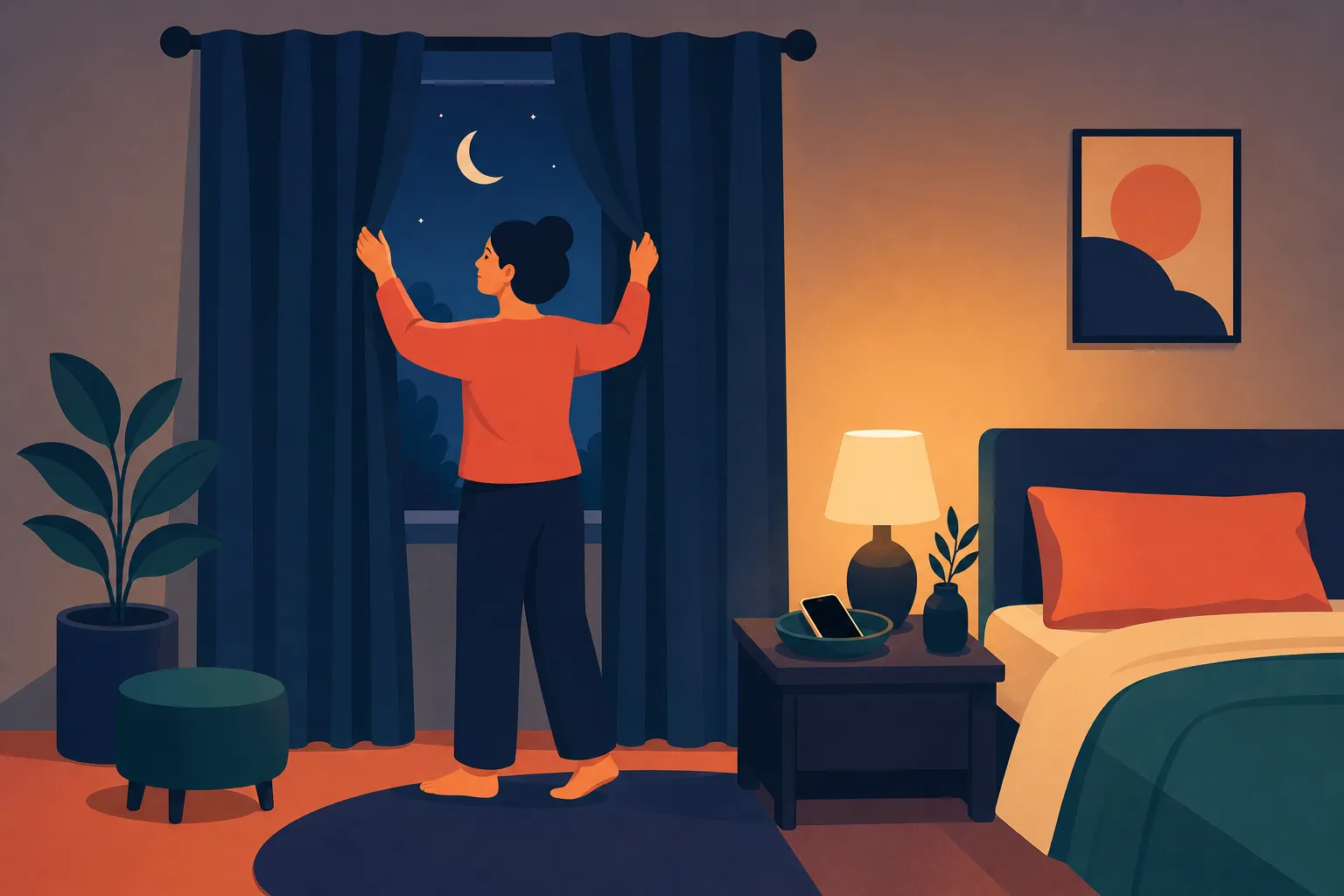
Choose the one source that bothers you most. Often, it is the window. Blackout curtains, a roller blind, or a sleep mask can noticeably change how the night feels. Try on the mask in advance: it should not press on your eyes or slip, otherwise you may wake up irritated.
It is useful to charge your phone farther from the bed, turn off notifications, and place it screen-side down. If you need it as an alarm clock, a separate alarm clock with a dimmed display may help. For those accustomed to scrolling through a feed before bed, this is usually the hardest light to give up: the issue is also the emotional stimulation from messages, news, and short videos.
A three-evening test
For three consecutive nights, turn off or cover the same light source. In the morning, rate on a ten-point scale how quickly you fell asleep and how rested you felt when you woke up. This makes it easier to understand whether the change works specifically for you.
If you drink coffee after a poor night’s sleep, do not blame yourself. Instead, move the first cup to the morning and try not to extend your coffee drinking into the second half of the day. More about the connection between coffee timing and cardiovascular health can be found in the article “Morning Coffee and Heart Health”.
When a night-light is needed and how to choose a safe option
Nighttime lighting is justified if going without it creates a risk of injury. This applies to older people, people with impaired balance or vision, those who get up to care for a child, people living in an unfamiliar space, or those taking medications that cause nighttime disorientation. You should not walk through a completely dark apartment for the sake of a beautiful idea of “perfect sleep.”
In that case, choose a dim, downward-facing night-light with a warm hue. Place it low—near the baseboard, beside the bed, or along the route to the bathroom—so that it illuminates the floor rather than your face. A motion sensor is convenient: the light will turn on only briefly when you are actually walking.
Bright overhead light in the middle of the night is the most stimulating option. If it is necessary, turn it on, do what you need to do, and calmly return to bed: a few minutes do not undo your entire routine.
Where an ordinary habit ends and a reason to address your sleep begins
A single light from a device is no reason for concern. Pay attention if nighttime light occurs together with persistent sleep and well-being problems. This list does not diagnose anything, but it can help you notice a recurring pattern:
you fall asleep with the television or a bright screen on almost every night;
you wake up and immediately pick up your phone, after which you remain awake for more than 20–30 minutes;
in the morning, you do not remember how the last episode of the series ended, even though you watched it before bed;
you regularly need coffee or an energy drink in the second half of the day to avoid falling asleep;
someone close to you says that you snore loudly, pause in breathing, or suddenly gasp;
sleepiness interferes with driving, working, or caring for a child;
at night, you experience chest pain, pronounced palpitations, shortness of breath, or near-fainting.
For the last symptoms, and if sleep apnea is suspected, you should consult a doctor. Darkening the bedroom can improve the conditions for rest, but it does not replace evaluation, treatment for high blood pressure, quitting smoking, physical activity, or prescribed medications.
Frequently asked questions
Can I sleep with the television on if it helps me fall asleep faster?
You can, but this is usually an unhelpful habit for sleep quality. It is better to set a sleep timer and gradually replace the television with calming audio or a familiar short bedtime ritual.
Which night-light color is least disruptive to sleep?
For nighttime trips to the bathroom, people usually choose a very dim warm or reddish-amber light directed downward. Brightness and direction matter more than hue: any source that shines directly into your eyes can wake you.
Will a sleep mask help if there is a streetlamp outside the window?
Yes, a comfortable, opaque mask can noticeably reduce light reaching your eyes. Choose a model that does not put strong pressure on your eyelids and keep it beside the bed so you do not have to search for it in the dark.
Do I need to turn off the router at night?
You do not need to turn off the router for sleep if its indicator lights do not illuminate the room. It is enough to cover or turn away the blinking lights, and move the device out of the bedroom if convenient.
Is phone light dangerous if I wake up for a minute?
One brief glance at the screen does not mean harm to the heart. The problem is more often that “one minute” turns into messages, news, and twenty minutes of wakefulness; night mode and disabling notifications reduce this risk.
When should I see a doctor because of poor sleep?
Make an appointment with a doctor if insomnia persists for weeks, daytime sleepiness interferes with your life, you have loud snoring with pauses in breathing, or experience nighttime chest pain and shortness of breath. Sudden chest pain, breathlessness, or fainting requires urgent medical attention.