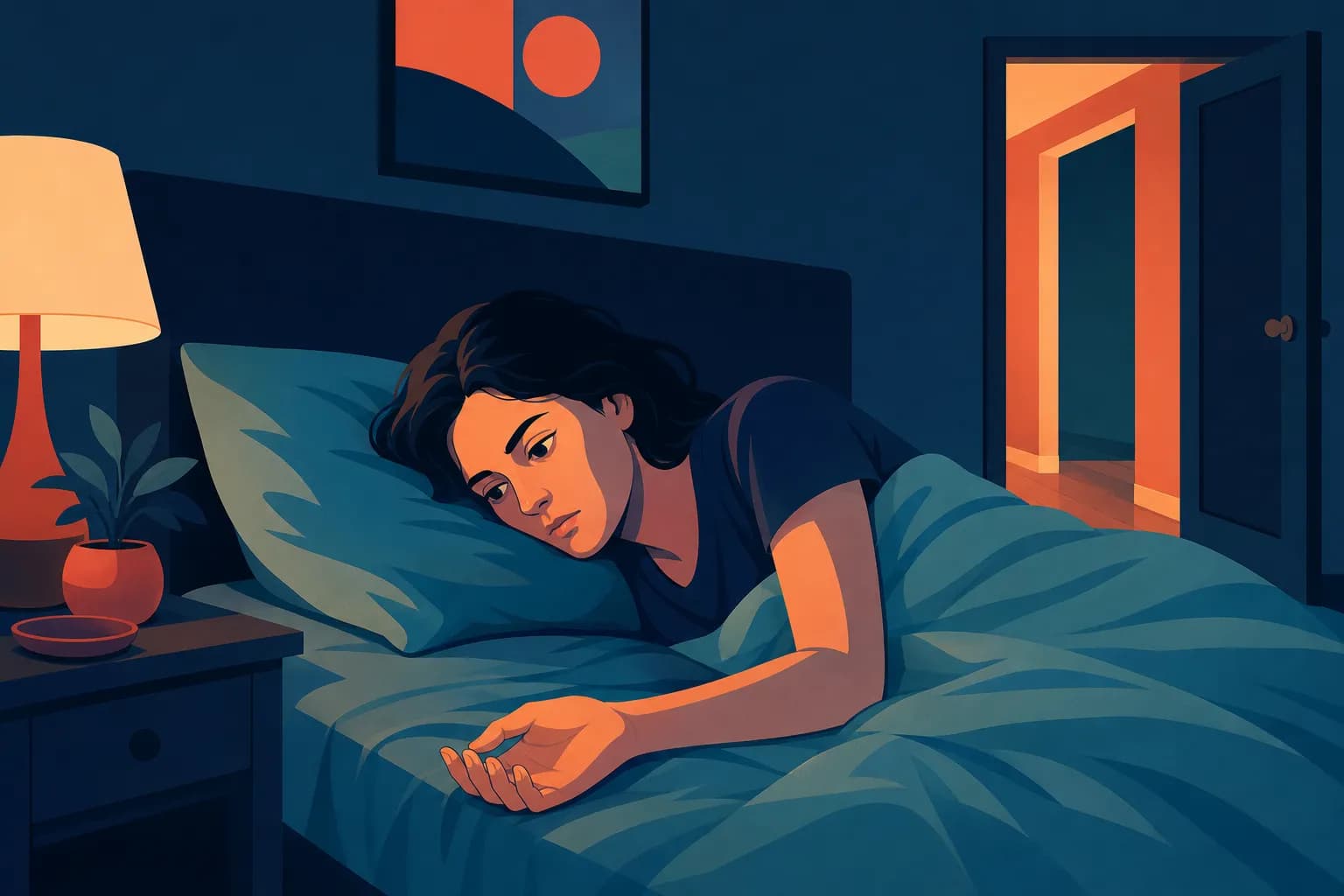
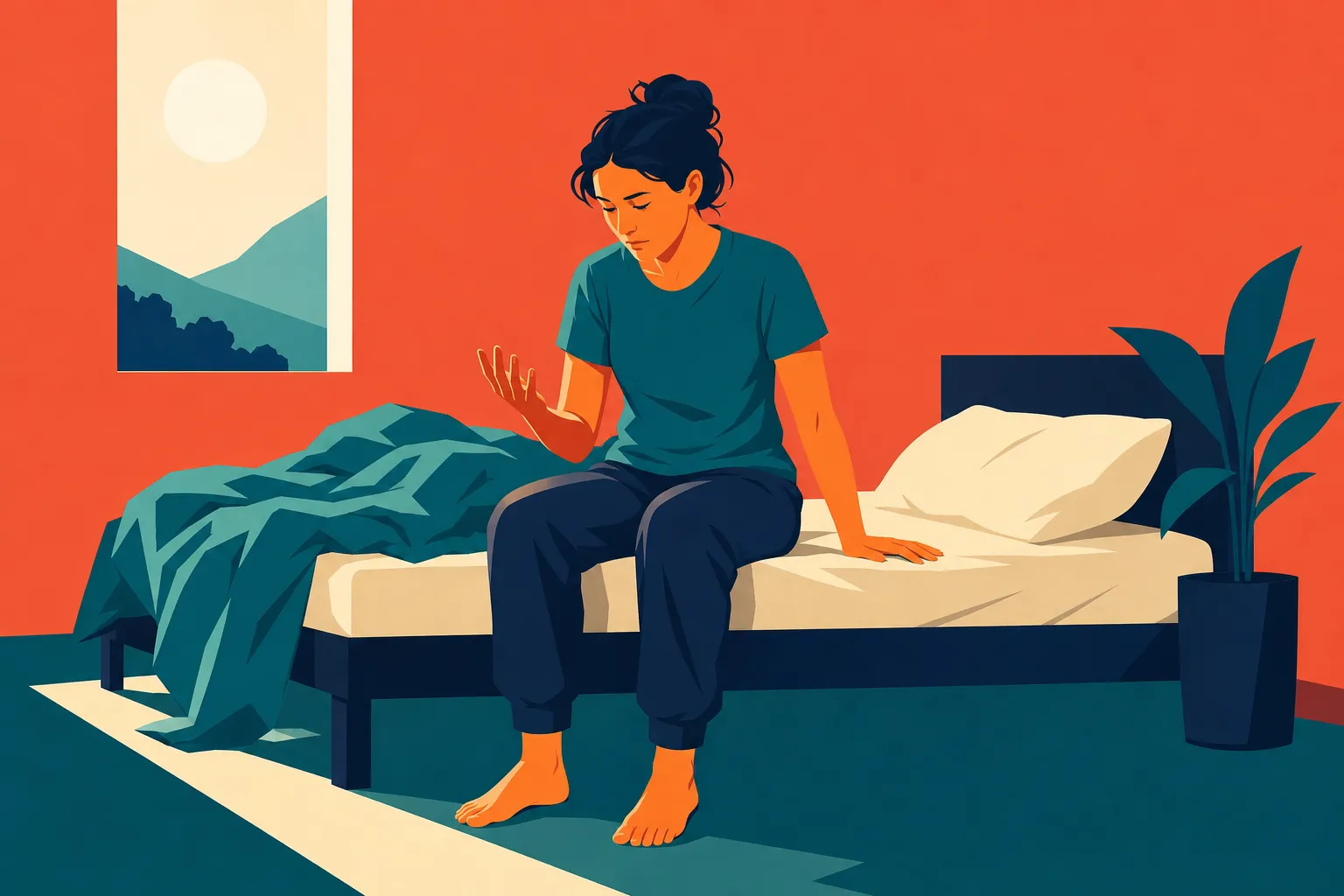
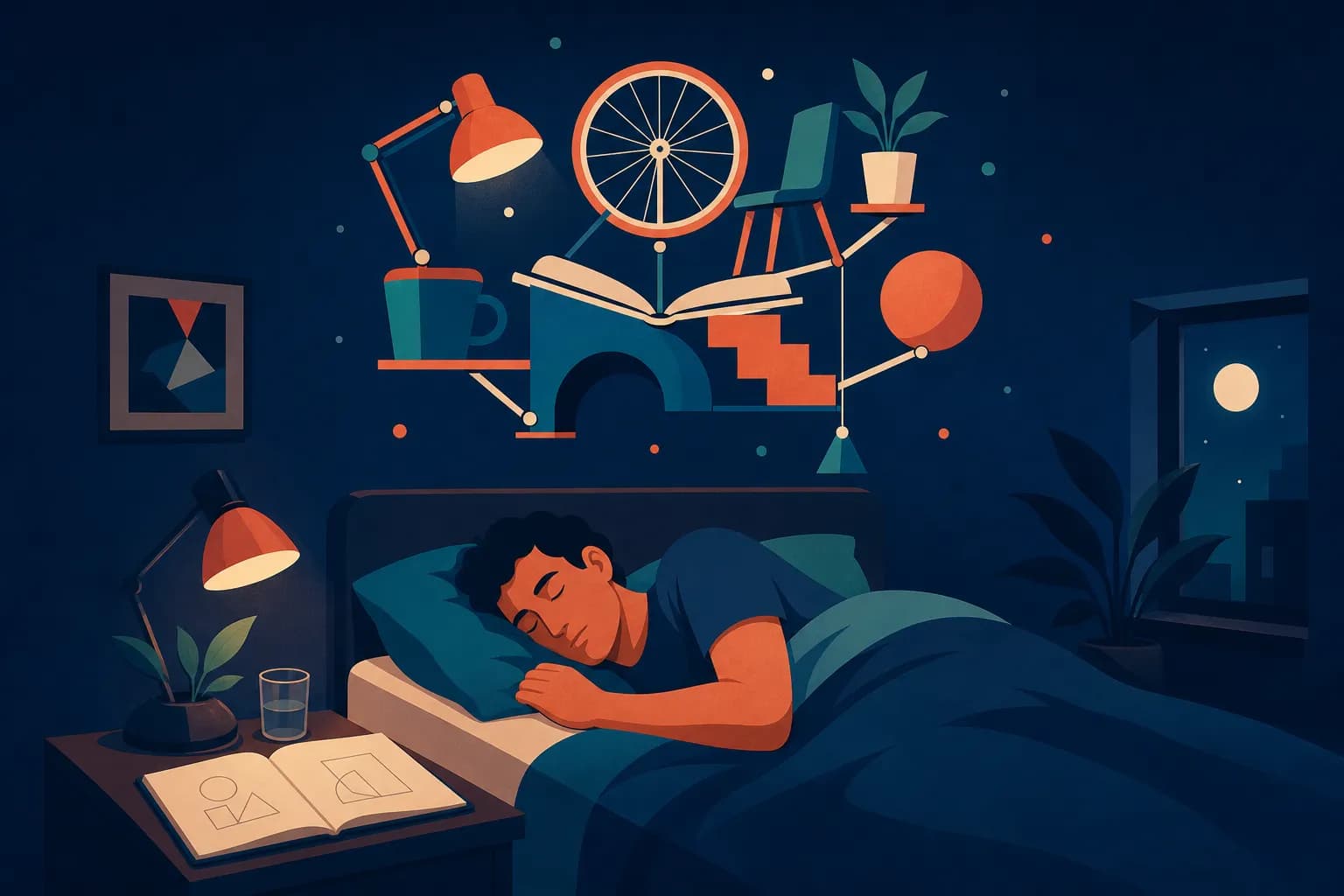
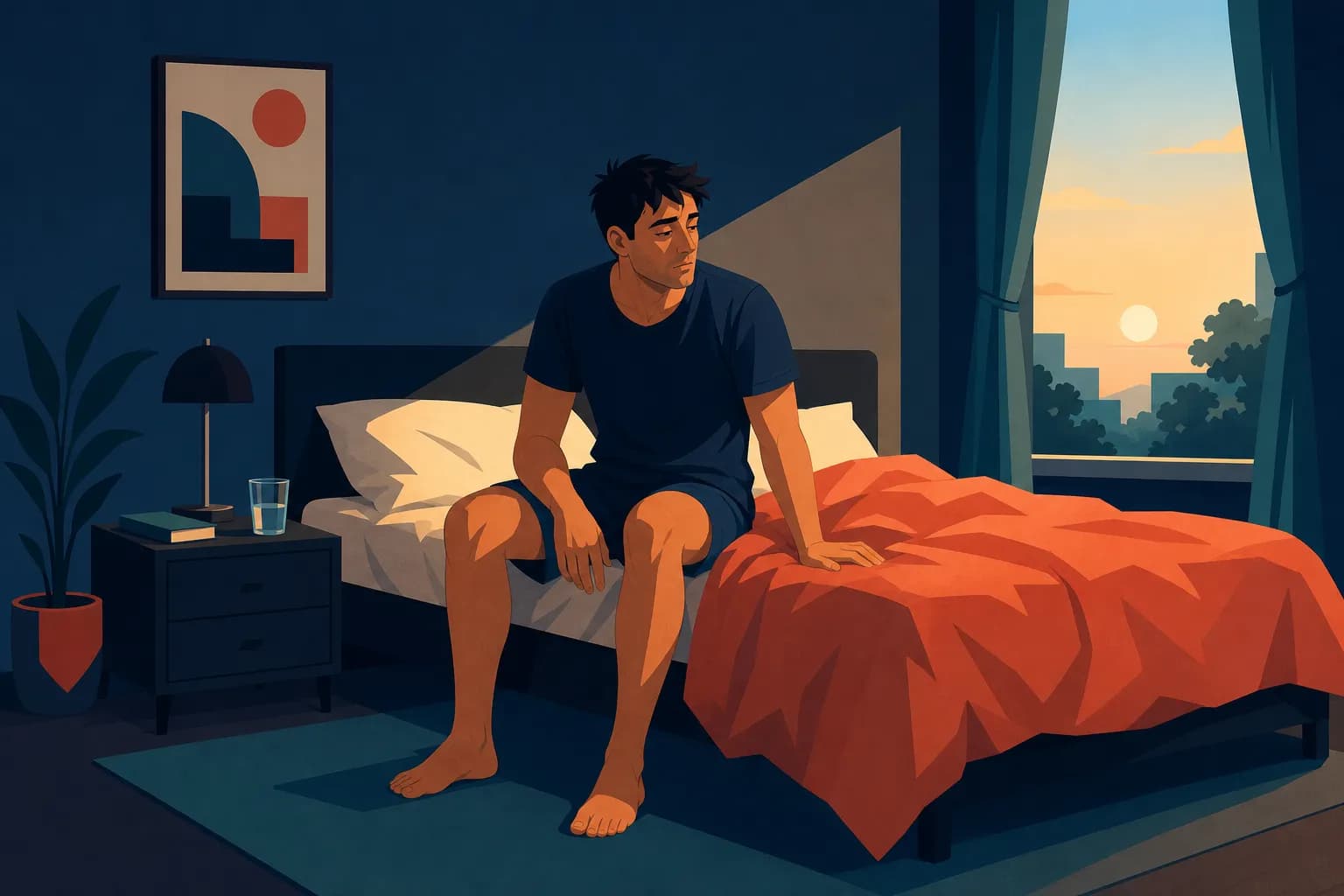
You realize that you’re lying in your bed in the middle of the night and try to turn over or call for someone, but your body won’t respond. This is what sleep paralysis can feel like: awareness returns while the muscle tone suppression characteristic of REM sleep is still in place. An episode usually ends on its own and can last up to several minutes, although from the inside, this time can feel especially frightening.
The phrase “your mind wakes up before your body” captures the experience well. Physiologically, things are a little more complex: the brain may show signs of both sleep and wakefulness. Understanding this transitional state helps explain both the immobility and the loss of control that often feels more frightening than any nighttime imagery.
What happens to your muscles during sleep paralysis
Sleep consists of several stages. One of them, REM sleep, or sleep with rapid eye movements, involves a marked reduction in the tone of most skeletal muscles. This state is called muscle atonia. The brain remains active, and a person may have vivid dreams, but ordinary movements of the arms, legs, and torso are largely suppressed.
Atonia occurs through the activity of neural circuits in the brainstem that inhibit motor neurons, including those in the spinal cord. GABA and glycine, signaling chemicals that can reduce neuron activity, are involved. This inhibition helps limit movement during dreams.
During an ordinary awakening, muscle activity returns in sync with other signs of wakefulness. In sleep paralysis, the transition is out of sync. A person is already aware of their surroundings and tries to act, but a voluntary command does not yet translate into movement. They may also be unable to speak.
This experience is more often discussed in connection with waking up. But it can also happen while falling asleep. Episodes that occur as you emerge from sleep are called hypnopompic; those that occur as you enter sleep are called hypnagogic.
How awake is the mind during an episode?
The phrase “I woke up and can’t move” describes a subjective experience, but it does not tell us precisely what state the entire brain is in. Being aware of your bedroom and your inability to move does not necessarily mean that all brain processes are already working as they do during ordinary wakefulness.
In a study by Greta Mainieri and colleagues, published in the Journal of Clinical Sleep Medicine in 2021, researchers recorded five episodes of sleep paralysis. Across several frequency ranges, the brain’s electrical activity fell between REM sleep and wakefulness. This supports the idea that sleep paralysis is a mixed state in which some features of sleep remain while the person is aware of what is happening.
The study was small, with five participants, including people with diagnosed or suspected narcolepsy. It offers a rare opportunity to observe an episode using laboratory recordings, but it does not describe every possible case of sleep paralysis. The SleepFM AI model for health diagnostics was also discussed.
For the person experiencing it, the central feeling is often the gap between intention and outcome. In everyday life, deciding to move your hand is almost immediately followed by the movement and the sensation of moving. Here, the expected response doesn’t come. This loss of familiar control can understandably cause fear, even if the person knows sleep paralysis exists.
Why it can be hard to breathe in, even though breathing continues
A feeling of heaviness in the chest can make the immobility especially frightening. It may seem as if your breathing has stopped obeying you along with your arms and legs. However, REM sleep muscle atonia does not switch off all muscles equally.
The diaphragm, the main breathing muscle, continues to work. At the same time, activity in some of the accessory breathing muscles is reduced. This combination helps explain why breathing continues while a familiar deep breath may feel difficult. Fear can also make you focus more intensely on every breath.
So the sensation of pressure does not, by itself, mean that you have stopped breathing. Nor can it tell you how much oxygen is in your blood: the subjective feeling of breathlessness and objective measures of breathing do not always match.
This explanation applies to a typical brief episode at the boundary between sleep and wakefulness. Difficulty breathing that continues after the episode has ended should not automatically be attributed to sleep paralysis.
In a typical episode, the immobility passes on its own as the transition to wakefulness is completed.
Why sleep paralysis happens and what makes it more likely
There is no single cause that explains every episode. The neurophysiological review in Clinical Neurophysiology Practice identifies sleep deprivation and irregular sleep-wake schedules as predisposing factors. Going to bed late, getting up early, and constantly changing your schedule can create conditions for unstable transitions between states.
Still, one episode after a sleepless night does not establish the cause. Sleep paralysis also occurs in people who have no obvious sleep problems. Links with anxiety and other sleep disorders should not be understood as a simple chain in which one necessarily causes the other.
The problem can become self-reinforcing: a frightening episode leads to fear of falling asleep, so a person puts off bedtime and gets too little sleep. Sleep deprivation, in turn, may increase the chance of another episode. One practical goal, then, is to keep fear from consistently cutting into sleep time.
A single episode does not mean you have a mental health disorder. It also does not, by itself, indicate narcolepsy: that possibility requires other signs and a medical assessment.
What to do during sleep paralysis and between episodes
There is no reliably proven technique that instantly ends sleep paralysis for everyone. During an episode, it makes more sense to set an achievable goal: reduce your fear and wait for the transitional state to pass. You can try the following if they do not increase your anxiety:
Name what is happening in your mind: “This feels like sleep paralysis. It will pass.” A familiar explanation may reduce uncertainty.
Try to ease the tense struggle against the immobility. Repeated attempts to sit up abruptly or scream may intensify the feeling of helplessness if your body is not responding yet.
Shift your attention to a familiar, calming thought or image. If focusing on your breathing is frightening, you do not have to make it a required exercise or force yourself to take the deepest breath possible.
These are ways to cope with the experience, not a proven technique for “unlocking” your muscles. If a suggestion increases your tension, you do not need to force yourself to follow it.
Between episodes, it is more helpful to work on your sleep habits. The NHS recommends that adults regularly get 7–9 hours of sleep and keep roughly the same bedtime and wake-up time. If you are sleep-deprived on weekdays, simply trying to “relax properly” in the evening may not be enough. If you work shifts, try to find the most consistent schedule your circumstances allow.
You can briefly note your sleep times, episodes of paralysis, and how you feel during the day for a few weeks. This kind of diary can help you spot patterns and give your doctor a clearer picture if you need a consultation. It should not become a form of constant nighttime self-monitoring.
What is known about meditation-relaxation therapy
Neuroscientist Baland Jalal and his colleagues are studying an approach that combines reframing the experience, shifting attention, and relaxation. In a 2020 pilot study in Frontiers in Neurology, ten patients with narcolepsy took part. Six learned the approach, while four were placed in a control group. After eight weeks, diaries showed that the frequency of episodes had decreased in the therapy group.
This is a promising area, but the study was open-label, non-randomized, and very small; the groups also differed in episode frequency at the outset. It cannot establish how effective the method is for people without narcolepsy. For now, the physiology of sleep paralysis is much better understood than specific ways to treat it.
When to see a doctor
After a rare, typical episode, it is usually enough to catch up on sleep and monitor how you feel. Consult a doctor if episodes recur, cause severe anxiety, make you afraid to sleep, or are accompanied by significant daytime sleepiness.
In clinical terminology, there is a condition called recurrent isolated sleep paralysis. It refers to repeated episodes that cause significant distress. “Isolated” means that a doctor has ruled out narcolepsy, medication effects, and other explanations. These distinctions are discussed in the clinical guide in Neuropsychiatric Disease and Treatment.
Be sure to tell your doctor about overwhelming daytime sleepiness, even if you get enough sleep, and sudden episodes of muscle weakness triggered by emotions. For example, your knees may buckle when you laugh, while you remain conscious. This weakness is called cataplexy and differs from immobility upon waking; together with other symptoms, it may be a reason to get evaluated for narcolepsy.
Also tell your doctor about any medications and substances you take, but do not stop prescribed treatment on your own. Your doctor will need to know exactly when the immobility occurs, how long it lasts, and what your sleep is like between episodes.
Persistent weakness outside the transitions between sleep and wakefulness, especially on one side of the body, is not typical of sleep paralysis and requires urgent medical assessment.
Can sleep paralysis happen without hallucinations?
Yes. Frightening images or sounds, or the feeling that someone else is present, are not essential. An episode may involve only awareness of being unable to move or speak at the boundary between sleep and wakefulness.
Do I have to undergo a sleep study?
No, not everyone needs a laboratory sleep study. If the description is typical, a doctor may assess the condition based on the history of the episodes. A sleep study is ordered when indicated, for example if narcolepsy is suspected or the nature of nighttime events is unclear.
Are sleep paralysis and movements during dreams the same thing?
No. In REM sleep behavior disorder, the opposite happens: the normal suppression of muscle activity weakens, and a person may move as they act out a dream. In sleep paralysis, muscle atonia remains in place when awareness returns. These are different conditions, and conclusions about the risks of one should not be applied to the other.