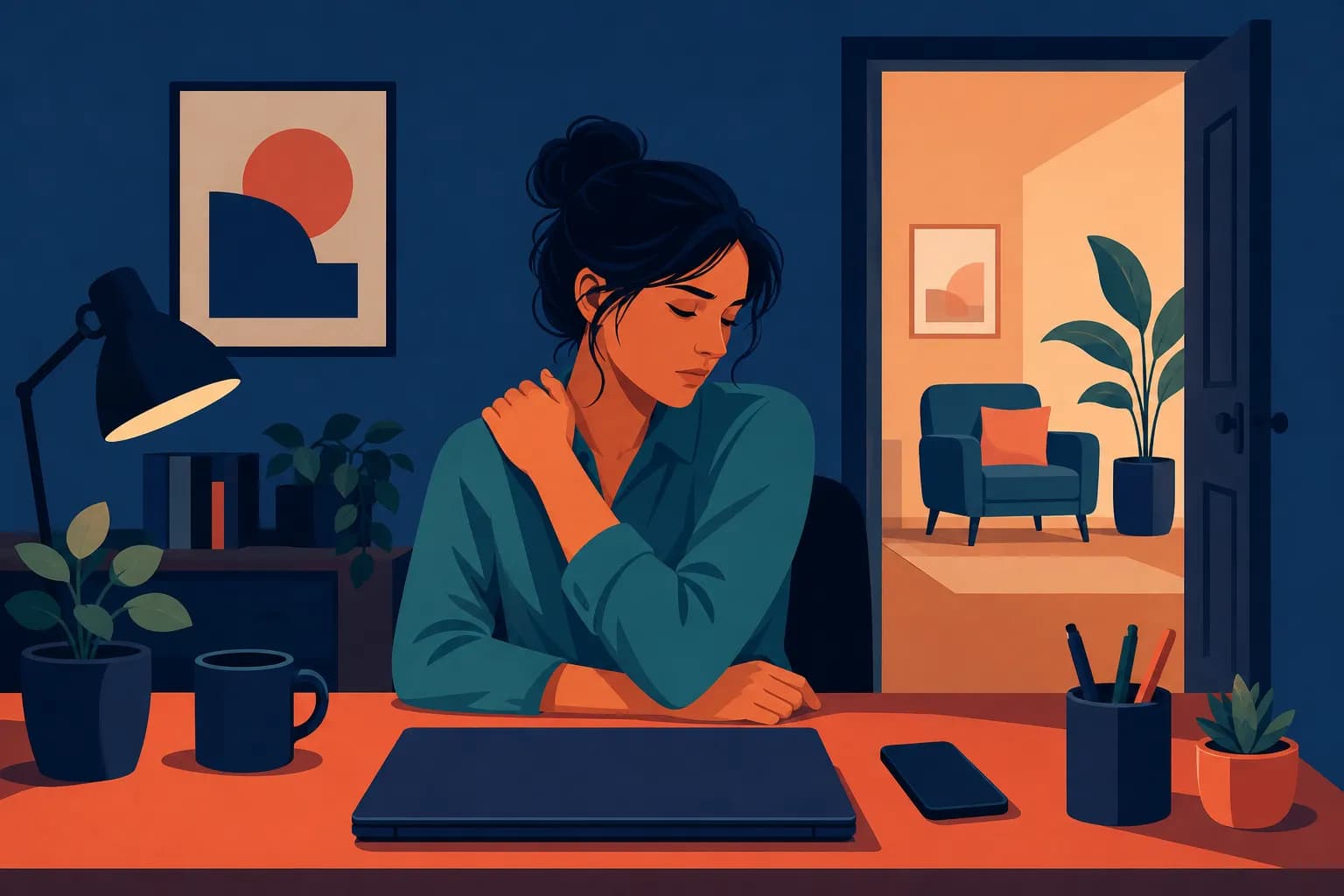
The workday is over, but you keep mentally arguing in a meeting, checking messages, and going over tomorrow’s tasks. Your shoulders are tense, it’s hard to fall asleep, and even a free evening feels like waiting for the next problem. Stress affects both our feelings and our physiology, so simply telling yourself “it’s time to relax” is sometimes not enough.
Stress management serves two purposes: it helps you recover after exertion and reduce the overload itself. Breathing exercises or a walk may ease how you feel in the moment. If demands consistently exceed your available energy and time, you may also need changes to your schedule, work arrangements, or psychological support. One technique rarely meets all these needs.
What Is Stress and How Does It Affect the Body?
How the Stress Response Works
When a situation feels threatening or too demanding, the body mobilizes its resources. The sympathetic nervous system contributes to the rapid response: under the influence of adrenaline and noradrenaline, the heart beats faster, breathing quickens, and the body prepares to act.
Another mechanism, the hypothalamic-pituitary-adrenal axis, or HPA axis, regulates the release of cortisol by the adrenal glands. This hormone helps provide the body with energy and tune its response to demands. Both mechanisms are described by the Harvard Stress and Development Lab. Cortisol is essential to the body; it is inaccurate to regard it solely as a harmful “stress hormone.”
How Acute Stress Differs from Chronic Stress
An acute response occurs around a specific event: a difficult conversation, an exam, or danger on the road. Once the situation is over, there is an opportunity to recover. With chronic stress, demands persist or keep recurring, and there are not enough breaks.
The workday may officially end, but you can keep replaying a conflict in your head for hours. Repeatedly going over unpleasant events sustains worry; checking email brings your attention back to new demands. This is one way work takes up your time off, even when your laptop is closed.
Why Stress Isn’t Always Harmful
Short-term mobilization helps us respond to danger and cope with difficult tasks. What matters is the intensity and duration of the demands, how much control you have over the situation, and whether you can recover. According to the U.S. National Center for Complementary and Integrative Health, prolonged stress may contribute to sleep and digestive problems and headaches. However, chronic stress cannot be reduced to the idea that “cortisol is constantly elevated”: the stress systems work in more complex ways.
How to Recognize Stress: Physical and Psychological Signs
Cognitive: constantly thinking about problems, distractibility, difficulty making decisions.
Behavioral: avoiding tasks or social contact, changes in eating habits, increased alcohol or tobacco use. Sometimes people start drinking more coffee to compensate for fatigue.
It is more useful to notice changes from your usual state than to look for the largest possible number of symptoms. For example, you may find yourself snapping at loved ones, skipping lunch, and rereading the same email several times. Difficulties with concentration do not diagnose anything by themselves: sleep deprivation, distractions, and other circumstances can also affect it.
Stress, Anxiety, or Burnout: What’s the Difference?
State
How it typically differs
Stress
More often linked to specific demands or difficulties: overload, conflict, or financial problems.
Anxiety
Can persist without an immediate threat. Anticipating an adverse event becomes a source of tension in itself.
Occupational burnout
Linked to chronic workplace stress and involves exhaustion, distancing or cynicism toward work, and reduced professional effectiveness.
These states can overlap. A list of signs is not a substitute for a diagnosis, and palpitations, pain, or insomnia should not automatically be attributed to stress.
How to Relieve Stress Quickly: Five Self-Help Techniques
The goal of these exercises is modest: to try to ease current tension and restore your ability to choose what to do next. These options have varying levels of supporting evidence; they are not five equally effective ways to guarantee calm. Choose one that suits the situation.
1. Slow, Comfortable Breathing
Sit with your back supported and loosen any tight clothing. Gently breathe in through your nose and out through your mouth. Breathe without effort; don’t try to take in as much air as possible. If you like, count slowly from one to five as you breathe in and out, but don’t force your breathing into an uncomfortable rhythm. Continue for 3–5 minutes, without holding your breath. This is the guidance offered by Leicestershire Partnership NHS Trust.
Slowing your breathing may affect heart-rate regulation. But physiological changes and a feeling of calm are not the same thing. A meta-analysis of 31 studies with more than 1,100 participants, published in Mindfulness in 2024, found short-term changes in cardiovascular measures. It did not find convincing evidence of a reduction in negative emotions in the pooled analysis.
If you feel dizzy or uncomfortable, stop the exercise and return to your normal breathing. Deeper and more frequent breaths do not make the practice more effective.
2. Grounding Through the Senses
Notice: “I’m tense right now, and I’m thinking about that conversation again.” Feel your feet on the floor and stretch gently. Then turn your attention to your surroundings: name a few objects, listen to the sounds, and notice the surface of the chair or the fabric of your clothes.
This approach appears in the WHO’s Doing What Matters in Times of Stress guide. You can try it when you have a minute or two to spare. The goal is to notice what is happening around you again, while still allowing yourself to have difficult feelings.
3. Progressive Muscle Relaxation
Gently tense your hands for a few seconds, then release the tension and compare how they feel. Continue with your shoulders, legs, or other muscle groups that feel comfortable. Don’t hold your breath or tense your muscles to the point of pain, and skip any injured areas.
Progressive muscle relaxation can help you learn to distinguish tension from relaxation. This practice, as well as the next one, is described in the NCCIH overview of relaxation techniques.
4. Soothing Visualization
Recall or imagine a place associated with calm: a quiet room, a familiar garden, or a beach. Add a few details: sounds, the temperature of the air, the feeling of being supported. You don’t have to close your eyes. If images don’t come to mind, you can skip this exercise.
There’s no need to push through discomfort. Sometimes trying to relax can intensify anxiety, intrusive thoughts, or fear of losing control. If that happens, it may be better to focus on objects around you or move gently.
5. A Short Walk
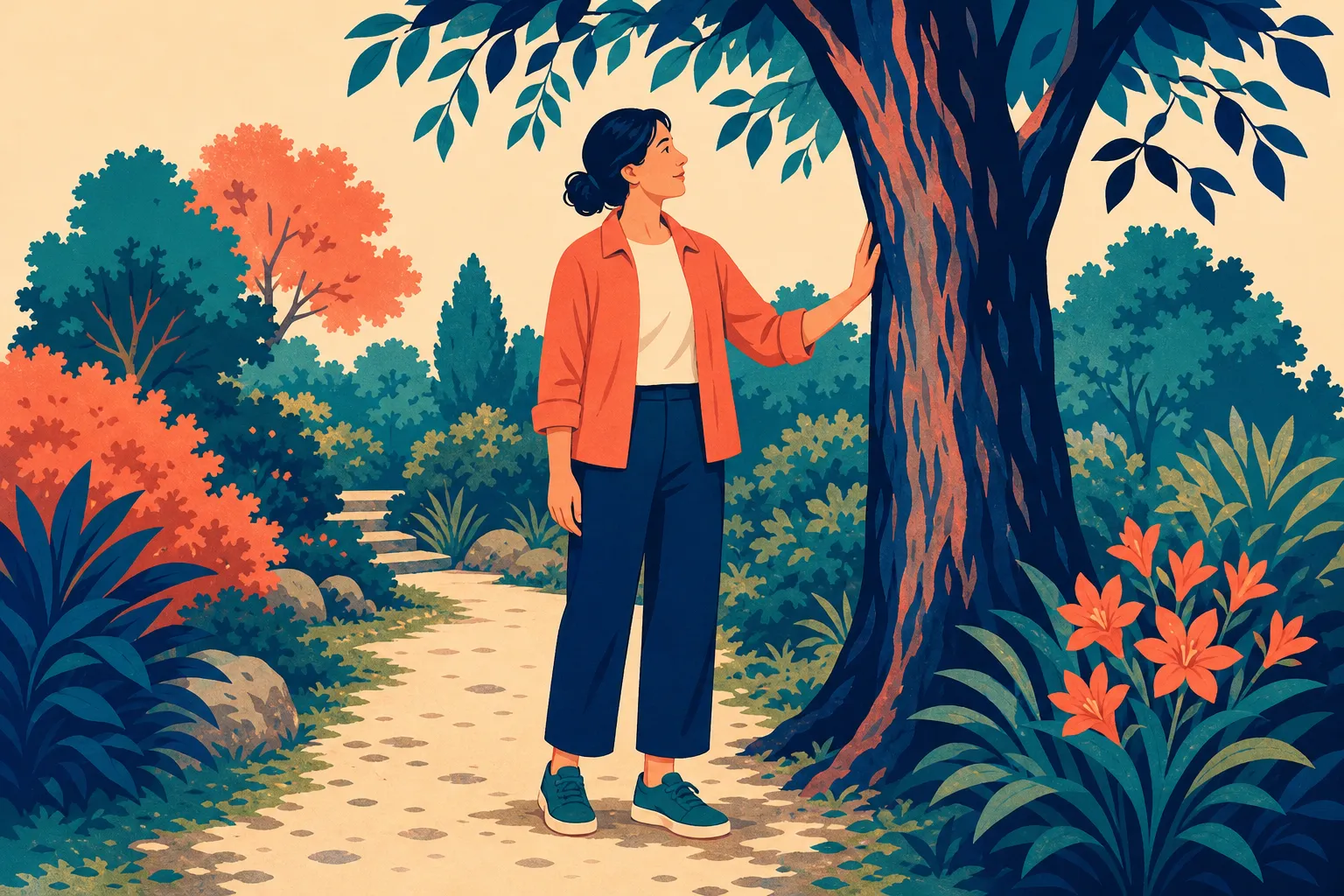
If your surroundings and how you feel allow, go outside for a few minutes without checking work messages. Walk at a comfortable pace and pay attention to your route and the sounds around you. This is an accessible way to break up sitting and stop thinking about a task nonstop. If your mobility is limited, you can change position and choose movements that feel manageable.
A walk doesn’t have to noticeably change your mood the first time. It can be enough that you don’t work for a few minutes.
In grounding practice, attention is directed to the body’s support, sounds, and other sensations available to you. You don’t need to suppress your thoughts.
Daily Recovery Practices: Sleep, Movement, and Connection
One-off exercises can be complemented by creating conditions that make recovery possible in the first place. The WHO’s stress management recommendations include a regular routine, enough sleep, physical activity, nutrition, and connecting with loved ones.
Sleep. Try to keep your wake-up and bedtime relatively consistent. Leave some time before bed without work tasks; limit caffeine and alcohol in the evening.
Movement. Choose an activity you can manage and realistically repeat: a walk after lunch, swimming, or a warm-up at home. An exhausting workout isn’t necessary.
Meals and breaks. Decide in advance when you can eat and step away from work briefly, so these needs don’t depend on whether your tasks are finished.
Time with people. Arrange a walk or a conversation with someone around whom you don’t have to keep demonstrating how composed you are.
To transition into your evening, try a short end-of-work ritual: write down unfinished tasks, decide on the first step for tomorrow, and close your work apps. Writing things down won’t guarantee that your thoughts disappear, but it can free you from having to keep the whole list in your head.
Start with one change. If a new routine takes as much effort to manage as work does, simplify it.
Chronic Stress: What to Do About the Causes
When tension lasts for weeks, it can help to write down the sources of the strain separately. Make them specific: “four urgent projects at once,” “messages from my manager at night,” “caring for a relative with no one to take over.” Saying “I’m not coping well” doesn’t show what can be changed.
Ask three questions about each source:
What can I change myself? For example, turn off nonessential notifications or reduce the extra tasks I’ve taken on.
Where do I need to reach an agreement? Redistribute household responsibilities, revisit deadlines, or ask someone to cover for you.
Where do I need outside resources? Find social, legal, financial, or psychological support.
Not every circumstance can be changed quickly. For example, financial instability limits your options and can itself become a constant source of worry. In this situation, self-help may help sustain your energy, but being told to “just worry less” ignores the real problem.
Relieving symptoms and reducing overload are worth planning for at the same time. A walk may make it easier to have a difficult conversation, but the walk itself won’t replace that conversation.
How to Know When Self-Help Isn’t Enough
Assess changes in terms of daily life: Is it easier to fall asleep? Can you rest? Do you have enough attention for everyday tasks? Constantly monitoring your pulse or trying to achieve complete calm can turn recovery into yet another task.
NIMH recommends seeking professional help if symptoms persist, interfere with daily life, or make you avoid your usual activities. You don’t have to wait until things become severe. It’s especially sensible to book a consultation if your sleep is regularly disrupted, tension is affecting your relationships and work, or you increasingly rely on alcohol to relax.
A family doctor or general practitioner can assess physical symptoms and other possible causes of fatigue, palpitations, or insomnia. A psychologist or psychotherapist can help you understand persistent responses and find a suitable way to work with them.
If you develop severe chest pain, significant shortness of breath, or fainting for the first time, seek urgent medical assessment. If you’re thinking about harming yourself, reach out for urgent support; if you might act on those thoughts, contact your local emergency services and ask someone you trust to stay with you. Relaxation exercises are not a substitute for this kind of help.
CBT and Mindfulness: Psychological Approaches to Stress Management
How the Cognitive Behavioral Approach Works
Cognitive behavioral therapy, or CBT, looks at the connection between thoughts, feelings, and actions. As the NHS guide to CBT skills explains, some cycles reinforce a problem: a frightening thought increases anxiety, anxiety leads to avoidance, and avoidance strengthens the original belief.
For example, the thought “If I don’t reply in the evening, they’ll think I’m unreliable” causes tension. Checking email brings temporary relief, but the evening is once again taken up by work. In CBT, you can explore how well this expectation matches the facts and which actions are sustaining the cycle.
To observe your own patterns, write down the situation, the thought that arose, the emotion, and what you did. Then ask: What facts support this fear, what facts contradict it, and can I test my assumption in a safe way? If you really are required to be available in the evening and refusing could have consequences, simply reappraising your thoughts won’t be enough: this is also a question of working conditions.
What We Know About Mindfulness
Mindfulness involves noticing your present experience and bringing your attention back to a chosen focus, without trying to immediately change what you feel each time. A brief practice: feel the support beneath your feet, notice your attention drifting to a work thought, and gently return to the sensations.
A meta-analysis of individual data from 13 randomized studies, published in Nature Mental Health in 2023, included more than 2,300 adults. After structured programs, psychological distress over the following 1–6 months was, on average, lower than in groups that did not take part in an active program.
The average effect was small to moderate. When compared with other active interventions, no convincing advantage was found, and confidence in this assessment was very low. The results of programs lasting several weeks cannot be applied to a one-minute meditation. Both CBT and mindfulness need to be offered in a suitable format; there is no universally best method for everyone experiencing chronic stress.
How to Cope with Stress at Work
If the workload consistently exceeds the time available, individual practices need to be accompanied by changes in working conditions. The WHO recommends organizational measures that address the risks themselves, rather than limiting support to training employees in self-regulation. At the same time, research on specific organizational interventions is still of low certainty: no single approach will suit every team.
The NHS practical recommendations include discussing workload and priorities, setting realistic deadlines, taking breaks, and finishing work on time. You can prepare for the conversation like this:
List your tasks and estimate how long they will take. This makes the overload visible.
Ask your manager to set priorities: “I can prepare the report or the presentation by Friday. Which is more important, and what deadline should we move?”
Clarify the rules for contact after work: what is genuinely urgent, which channel to use, and when you’re expected to reply.
If the agreement isn’t working, document it in writing and discuss the next step with your manager, HR, or a workers’ representative, if this is available and safe.
People have different levels of influence over their working conditions. If a direct conversation could put your position at risk, you may first need a confidential consultation and to assess your options. Chronic understaffing or impossible deadlines cannot be blamed on someone’s inability to breathe correctly.
Do I need a cortisol test for chronic stress?
A cortisol test is not usually needed to assess everyday stress. Cortisol levels depend on the time of day and other factors; one result does not measure the degree of overload. A doctor orders these tests for specific medical reasons, for example, if an endocrine condition is suspected.
Will a vacation help if my stress is work-related?
A vacation may provide a break, but it doesn’t guarantee lasting relief after you return. If the same deadlines, conflicts, and expectation of constant availability remain, the source of the strain is still there. If possible, discuss priorities and workload before you return, so that the backlog doesn’t wipe out the benefits of your time off.
What should I say to loved ones who tell me to just pull myself together?
Describe the specific difficulties and ask for clear, practical help. For example: “I’m having trouble sleeping and switching off from work. It would help this week if you took care of dinner” or “Right now, I need you to listen without giving advice.” You don’t have to prove how serious things are to seek professional support.