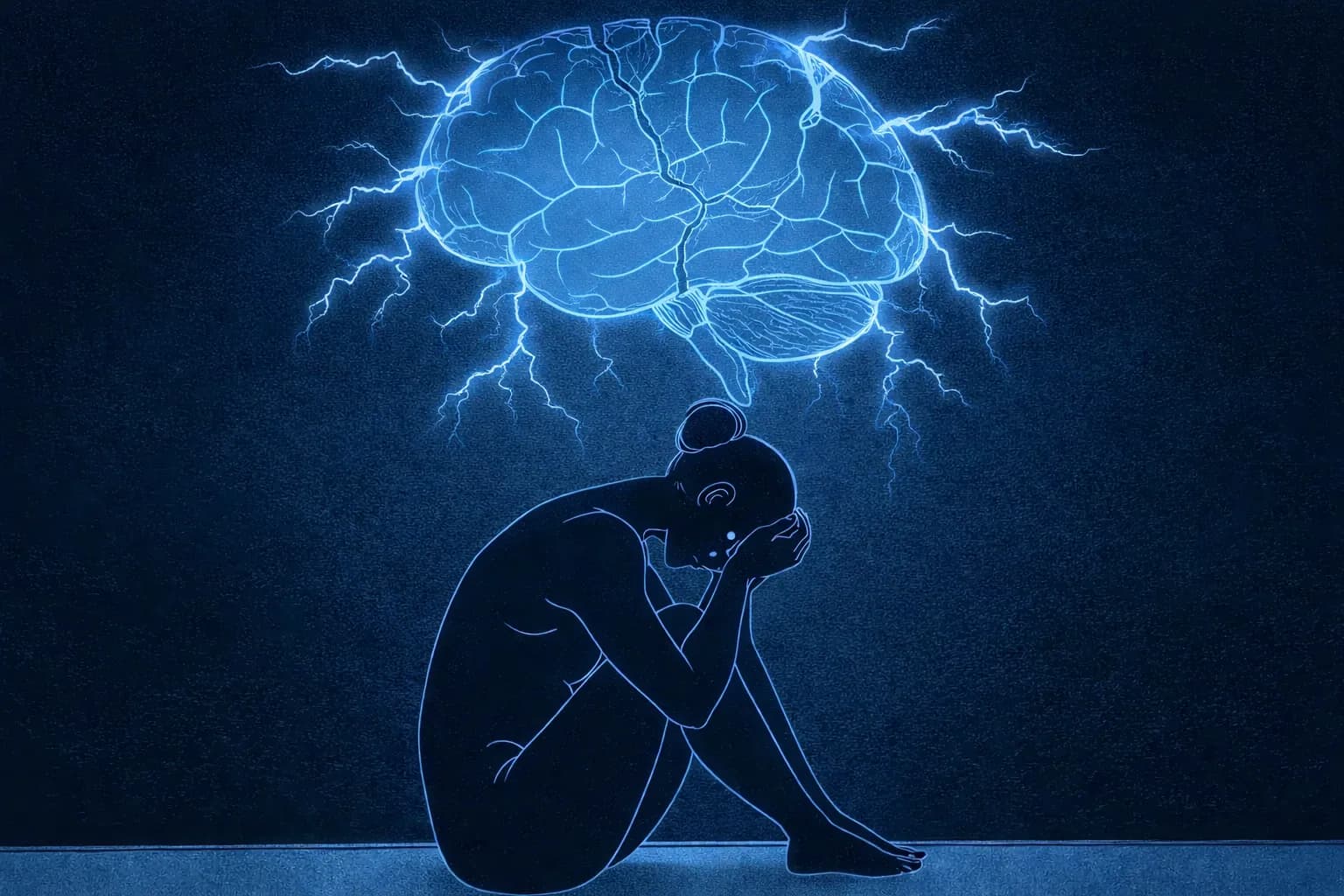
Why Financial Instability Changes the Way You Think—and Why It Is Not a Weakness
Published on: ⋄8 min read
You open your banking app, see the balance in your account—and suddenly the whole evening seems covered by a thin hum of anxiety. The rent needs to be paid, your child needs sneakers, and a warning light has come on in the car. At such a moment, it is difficult to listen to someone, prepare a report, remember a password, or make plans for the autumn.
Financial instability can temporarily impair concentration, memory, and the ability to plan because chronic uncertainty consumes mental energy through constant threat monitoring. This is not a character flaw and not proof that you “do not know how to manage money.”
Financial stress is the tension that arises when income is insufficient for essential expenses or when a person is unsure whether that income will continue. It is fueled by debt, irregular payments, rising prices, illness, the risk of losing a job, and having no reserve even for a single unexpected expense. The most difficult component is often chronic uncertainty: you do not know what the next month will look like.
Why money takes up so much space in your mind
Money provides access to very concrete things: housing, food, medical care, transportation to work, and the ability to leave a dangerous or humiliating situation. That is why anxiety about money is rarely “materialism” or excessive dramatization. The brain tries to calculate the risk: will there be enough until Friday, what to do if the salary is delayed, whom to call, and which expense to cut.
The problem is that this calculation has no natural stopping point. The mental counter keeps running in a queue, during a meeting, and at night before sleep. A person may check the balance ten times, repeatedly recalculate the total in the shopping cart, or postpone an email to an employer or a conversation with a bank—even while understanding rationally that avoidance will solve nothing.
Psychologists Sendhil Mullainathan and Eldar Shafir called this effect scarcity—“scarcity” or “scarcity mindset.” When an essential resource is limited, attention narrows around the shortage. This helps deal with urgent matters quickly: finding money for medication, arranging a payment extension, or choosing the cheapest route. If basic needs are not met, less mental space remains for other tasks.
What happens to attention and planning under financial stress
When all your resources go toward the next payment, long-term plans become harder not because of laziness, but because of overload.
In a study by Anandi Mani, Sendhil Mullainathan, Eldar Shafir, and Jiaying Zhao, published in Science in 2013, participants were asked to think about an expensive car repair and then complete cognitive tasks. The authors found that among people with low incomes, thinking about a major expense impaired performance more strongly than it did among people with high incomes. In another part of the same study, farmers performed better on the tasks after the harvest, when they had money, than before it.
This study does not say that income determines intelligence. It shows something more difficult and more human: worrying about scarcity can take away part of your “mental bandwidth” in the here and now.
This leads to familiar consequences:
it is difficult to finish reading a work email and retain its meaning;
a simple task seems enormous because it requires several steps;
a person grabs onto what is urgent and postpones what is beneficial but more distant;
impulsive purchases arise for the sake of brief relief—or, conversely, a painful inability to buy even what is necessary;
every mistake feels like a catastrophe: “If I miscalculated by a thousand, everything will collapse.”
If you are familiar with the feeling of reading a page and not remembering the previous paragraph, it may be useful to read about maintaining attention amid distractions. Financial anxiety is one of the stickiest distractions: you cannot simply close the tab.
Why “pull yourself together” usually makes things worse
The advice to “stop worrying” sounds roughly like being asked not to notice a fire alarm. Of course, anxiety sometimes misjudges and exaggerates risk. But when your account is running low, it has a real object. Shame adds a second layer of pressure: the question “How will I pay?” is joined by “Why am I so disorganized?”
As a result, a person spends energy on self-criticism, hides the problem from loved ones, avoids numbers, and postpones actions that could clarify the situation even slightly. Paradoxically, financial chaos often intensifies not irresponsibility, but attempts to avoid feeling fear at any cost.
If it is difficult for you to plan your life with an unstable income, this is not a verdict on your abilities. First, your brain needs at least a little predictability restored.
It is more useful to replace the question “What is wrong with me?” with another one: “What uncertainty can I reduce today in twenty minutes?” Sometimes the answer is modest: find out the debit date, write to your landlord, cancel a forgotten trial subscription, or gather documents for benefits. A little clarity does not solve the entire situation, but it reduces the number of open loops in your mind.
Where is the line between ordinary money anxiety and exhaustion?
It is normal to worry before a major payment. It is worth paying attention when financial stress changes your sleep, relationships, work, and attitude toward yourself for months. This is not a diagnosis based on a checklist, but a reason to acknowledge the scale of the burden and seek support.
You check your balance many times a day even though you are not expecting any new deposits or withdrawals.
You look at the numbers and almost immediately feel nausea, trembling, a racing heart, or the urge to close the app.
You cannot remember what was said in a work conversation because you were counting debts at the same time.
You regularly skip food, medication, sleep, or medical appointments because of anxiety and attempts to save money.
You have stopped responding to loved ones, creditors, or your employer because any conversation about money feels unbearable.
Thoughts about debt are accompanied by a sense of hopelessness or thoughts of harming yourself.
The last point requires urgent help: talk to a psychologist or call someone who can stay with you. You do not need to face financial difficulties alone, especially if they have begun to threaten your safety.
How to reduce cognitive load when money is tight
A plan for the next seven days is more useful than a perfect budget that requires energy for an entire month ahead.
A complex financial plan is useful only when you have the resources to follow it. During an acute period, try creating a “next seven days dashboard” on paper or in your phone’s notes:
Write down the amount available right now.
Separate essential expenses due before the next payment: housing, food, transportation, medication, and communication.
Put the dates and minimum payment amounts next to them.
Choose one action that changes the situation: request a deferral, clarify a payment, sell an unnecessary item, or seek social or legal advice.
Take the calculations out of your head: set aside 15 minutes a day, make a list of expenses, and do not carry them in the background from morning until night.
This is not a magic spreadsheet and not a call to “just make a budget.” It creates external support for memory and attention. When the numbers are in front of you, you do not have to hold them in your mind endlessly.
Another practical step is to separate decisions by time. Today, choose how to get to the next date without harming your health. During a separate, calmer period, think about debts, finding work, increasing income, and negotiations. Trying to solve everything in one anxious evening usually ends in exhausting scrolling and a sense of failure.
A phrase for a difficult conversation
“My income is unstable right now. I can pay this amount on this date. What options for postponement or installments do we have?” Specificity reduces shame and helps start negotiations.
Why support restores the ability to think
A financial problem may seem personal, although it is often created by a combination of circumstances: redundancy, illness, caring for a child or relative, relocation, discrimination, or high housing costs. One person does not have to heroically endure all of this in silence.
Support can take different forms: a loved one with whom you can lay out payments without judgment; free debt counseling; a union or lawyer; a psychologist if the anxiety has become constant; or a doctor if insomnia and panic symptoms do not go away. Sometimes it helps to ask a friend simply to sit nearby while you open letters and make calls. This is not childishness. Another person’s presence reduces the sense of threat.
When you have more energy, you can return to longer-term tasks: update your résumé, check your benefits, build a small reserve, learn a skill, plan debt repayment, and review unnecessary expenses. For more on sustaining motivation during a period when you want to abandon everything halfway through, see the article about sustained motivation.
Money affects cognitive abilities neither mystically nor because “poverty ruins people.” Scarcity makes the brain stand guard at a door behind which something bad may happen. Any clear source of support—a list, an agreement, help, a deferral, or an honest conversation—allows it to step away from that door for at least a little while and see life beyond the next payment again.
Can financial stress worsen memory?
Yes. Against a background of constant anxiety, memory often works less effectively because a significant part of attention is occupied by calculations and worries. If forgetfulness has appeared suddenly, seriously interferes with your life, or is accompanied by other symptoms, discuss it with a doctor.
Why do I avoid looking at my bank account?
Avoidance often protects you from a short but intense wave of fear and shame. Try opening the app with a supportive person nearby and limit the task to one action: checking the balance without trying to solve every problem immediately.
Can meditation help me stop worrying about money?
Meditation may slightly reduce physical tension, but it will not replace paying for housing, negotiating, or getting help with debt. Use it as a brief pause before a concrete action, not as a demand to calm down at any cost.
How can I talk to my partner about not having enough money without arguing?
Start with the shared figures and the immediate goal: “We have this much until this date; let’s decide what to pay first.” It is better to have the conversation at a neutral time, while leaving accusations such as “you always” and “you never” at the door.
When should I see a psychologist because of money anxiety?
Consider seeking help if anxiety interferes with sleep, work, eating, or communication, or leads to panic attacks and hopelessness. A psychologist does not have to be a financial advisor: their role is to help you regain stability and the ability to act.
Do I need to tell my employer about my financial difficulties?
No, you are not required to disclose your personal circumstances. Share only what is necessary for the work-related issue: for example, ask about the payment date, available advances, or the procedure for arranging an additional shift.