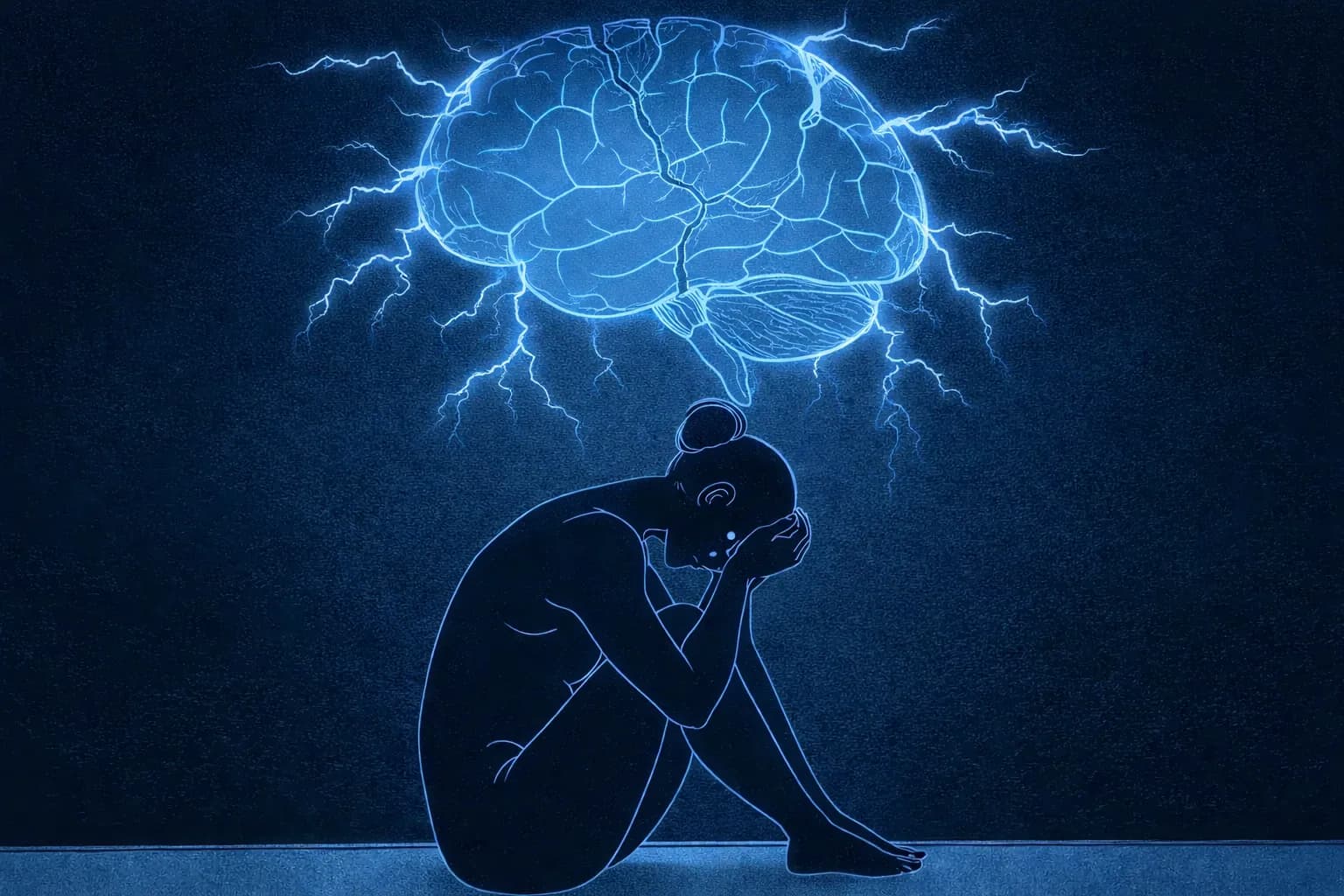
We often feel ourselves to be in a state of “stress,” but we usually do not understand what exactly is happening to us. After all, stress in the first week of a deadline and stress after six months without days off are two different states. And you need to interact with them in completely different ways. Let’s figure out how stress works, which stage you are in, and what exactly you can do.
Bad and good stress
In the mid-20th century, Canadian scientist Hans Selye not only introduced the concept of “stress” into medicine, but also noted: stress is not always bad.
Eustress — “good” stress. Imagine: you’re preparing for an important presentation, your heart is racing, but you are composed and focused. The body releases adrenaline and cortisol, turns all systems to maximum — and you cope. After that comes relief, even pleasure from what you achieved. This is eustress: a short mobilization followed by recovery.
Distress — that very “bad” stress. When the tension does not let up for weeks and months. The brain’s anxiety system (scientists call it the HPA axis: the connection of the hypothalamus, pituitary gland, and adrenal glands) simply does not turn off. Cortisol remains elevated and the body wears out — and eventually starts to break down: problems with sleep, digestion, immunity, mood, and adrenals become exhausted.
Where stress comes from
Sources of stress can be very different:
Physical stress — when the body suffers directly: chronic pain, sleep deprivation, cold, exhausting workouts.
Psychological — when your “self” is under attack: criticism, uncertainty, the feeling that you have no control.
Social — conflicts at work, toxic relationships, loneliness or, on the contrary, too many social demands.
Existential — when meanings crumble: “why am I doing this,” “who am I at all,” “what’s wrong with me.”
Another important parameter is duration:
Acute stress — short and bright, caused by a sharp event such as an quarrel, fear, accident. After the event, stress subsides. Acute episodic — when “short flashes” happen constantly. You live from deadline to deadline, from conflict to conflict.
Chronic stress — the most dangerous. Background tension that doesn’t go away. It is this that really destroys health. Meta-analysis shows that on average ~25% of adults experience a level of stress they would classify as high/significant (according to various survey scales).

Three stages of stress: where you are now
Hans Selye described how the body goes through stress, and called it the general adaptation syndrome. It sounds complicated, but in practice it is logical.
Stage 1: Alarm
This is the moment when a stress event occurs. This is a physiological reaction, not a cognitive process. The body switches to emergency mode: the sympathetic nervous system (the one responsible for the “fight or flight” response) releases adrenaline. It’s important not to confuse it with anxiety as a thought process.
How to recognize:
This is a normal bodily response to an event if it lasts for a short time. Evolutionarily, stress is needed to mobilize in life-threatening situations. When the threat disappears, the body should calm down and the entire chemical cocktail of cortisol and adrenaline should subside. But if anxiety does not subside for days — you are moving to the next stage.
Stage 2: Resistance
Externally you seem to cope. You go to work, socialize, function. But inside the body is operating at the limit. Cortisol remains elevated, immunity decreases, sleep quality worsens. You have adapted to stress — but this adaptation is costly.
How to recognize:
You crave “fast dopamine”: sweets, alcohol, social media, TV shows, etc.
This is the most insidious stage. You’re still holding on, but the resource is melting. And if you don’t change anything, the third stage comes.
Stage 3: Exhaustion
The body can no longer. Adaptation breaks down. This is burnout, depression, psychosomatics: gastritis, migraines, persistent colds, panic attacks. It’s not “just tired” — it’s a state where even simple tasks seem insurmountable.
How to recognize:
How the resistance stage differs from adaptation
Important question. After all, adaptation is good, right? We must adapt?
It’s about cost. Adaptation is when you have mastered a new skill, become used to the load, and the body works efficiently without overloading. You have grown, become stronger.
Resistance stage is when you hold on only due to constant tension. You are not growing, you are surviving. The main marker: you need more and more effort to do the same thing. And recovery does not occur.
How to understand what stage you’re in
There are objective and subjective ways to test this.
Psychological questionnaires
Scientists have developed special tests to help measure stress:
PSS (Perceived Stress Scale) — a simple questionnaire that shows how stressed you feel. It is a subjective assessment, but it is very indicative.
DASS-21 — a more detailed test that separates stress, anxiety, and depression. Helps understand what exactly is happening to you.
MBI (Maslach Burnout Inventory) — a test for professional burnout. If work drains the life out of you, it will show it.
Holmes and Rahe Scale (SRRS) — assesses how many stressful events occurred in your life over the past year (move, divorce, job change, etc.). Scoring more than 300 points indicates a high risk of adaptation failure.
Physiological indicators
The body is not good at lying. Even if you say “everything’s fine,” the body tells the truth:
Cortisol — the stress hormone. You can take a saliva or blood test. It’s important to take 2 measurements: upon waking and in the evening. Normally it is high in the morning and falls by evening. With chronic stress, this rhythm is disrupted.
HRV (heart rate variability) — a measure of how flexibly your nervous system responds to changes. Low HRV indicates the body is exhausted. It can be measured by smart trackers (Whoop, Oura) or special apps. This indicator is considered key in restoring the body.
Resting heart rate — if it has become higher than usual and stays that way for weeks, this is a red flag. The ideal state before sleep is 45-50, not higher.
Sleep quality — do you fall asleep after more than 30 minutes? Do you wake up in the middle of the night? Do you wake up feeling exhausted? This is a sign of an overloaded nervous system.
Behavioral signals
Pay attention to how you live:
What to do at each stage
The most important thing to understand is that stress management methods differ radically depending on the stage. What works beautifully at the very beginning can prove completely useless or even harmful when you are on the edge of exhaustion.
In the alarm stage: help the body exit the panic mode
Your main task now is to turn off the emergency signal that the body has switched on at full power.
Start with breathing. This is the fastest and most accessible way to calm the nervous system. Try breathing slowly, exhaling longer than inhaling: for example, inhale for four counts and exhale for six. This breathing activates the vagus nerve — the switch that says the brain, “okay, danger has passed, you can relax.” Five to ten minutes is usually enough to feel the difference.
Give the body a physical release. The adrenaline circulating in the blood right now evolved for action — to run or to fight. If you just sit, it won’t go anywhere and will keep you tense. A short jog, a few sets of squats, or even a brisk walk around the block will help burn off stress hormones naturally.
Protect your sleep at all costs. In a state of acute stress, sleep is often the first casualty, but it is exactly what is critically important for recovery right now. Try to go to bed at the same time every night, put the phone away at least an hour before bedtime, darken the room. These are basic things, but they work.
What else helps at this stage? Breathing techniques like the 4-7-8 method (inhale for 4, hold for 7, exhale for 8), short meditations, or body scan practice where you mentally move attention through each part of the body and note tension. A warm bath or shower, fifteen minutes in the park, a conversation with a loved one — not necessarily solving the problem, sometimes it’s enough just to be heard.
In the resistance stage: establish a support system
If you are here, it means stress has already shifted into chronic mode. The body is at the limit, and point solutions are not enough. A systemic approach is needed.
Begin cognitive-behavioral therapy. A therapist will help you start noticing your automatic thoughts — the ones that run through your head on autopilot: “I won’t cope,” “this is a disaster,” “I’m doing everything wrong.” When you catch such a thought, ask yourself simple questions: is this really true? What evidence exists for and against? What would I tell a friend who thinks this about themselves? It often turns out we are much harsher to ourselves than to anyone else.
Build a real balance between workload and recovery. Take a sheet of paper and honestly write down: how many hours a day do you work, how much do you sleep, when do you exercise, when do you do nothing at all. Recovery is as much a part of productivity as work itself. If you constantly spend resources without replenishing them, eventually the reservoir will run dry.
Try biofeedback technologies. There are apps that track heart rate variability (HRV) and teach you to manage it through breathing. Essentially, it’s training for your nervous system to help it switch faster between tension and relaxation.
Add regular movement. It’s proven that moderate aerobic activity — running, swimming, cycling — 30-40 minutes three to four times a week reduces cortisol levels and improves mood. You don’t need to exhaust yourself in the gym until you sweat. Regularity and moderation are key.
When should you see a doctor? If you have been in the resistance stage for several months in a row, and self-help does not yield results — this is a signal to see a specialist. Especially if persistent sleep disturbances, sharp weight changes (gain or loss), panic attacks, constant anxiety and depression, thoughts like “I can’t cope with life anymore” appear. A psychotherapist will help analyze the situation more deeply, and a physician (a general practitioner or endocrinologist) will check for somatic causes: thyroid problems, vitamin deficiencies, hormonal imbalances.
In the exhaustion stage: allow yourself to stop
At this stage the body needs serious help and time to recover.
The first and most important thing is to lower your expectations of yourself. You may need to take time off, reduce work load, delegate some tasks, or take a pause altogether.
Find a psychotherapist. At this stage it is almost impossible to get out on your own. Cognitive-behavioral therapy, acceptance and commitment therapy (ACT), body-oriented therapy — these approaches will help you relearn how to feel, reconnect with your body and life.
Undergo a medical examination. Check sleep quality (there may be sleep apnea — pauses in breathing during sleep), rule out clinical depression, test thyroid hormones, cortisol, sex hormones. Sometimes physiological causes aggravate psychological state, and they need to be corrected separately.
Prepare for a long recovery. Burnout is not cured over a weekend or even a month of vacation. Usually it takes 8 to 12 weeks, and sometimes longer. This time is needed to rebuild routines, restore connection with the body, find or reassess the meanings in what you are doing.
What exactly does recovery look like? In the first month, do not set ambitious goals. Just sleep as much as you want, eat normal food, walk outdoors. No heroic achievements. In the second month you can add light activity — yoga, gentle walks — and start therapy if you haven’t already. By the third month gradually increase load, but with clear boundaries: the workday ends strictly at six in the evening, weekends are sacred and inviolable. The main rule at all stages is not to hurry. The nervous system recovers slowly, and trying to speed up will only push you back.
Three things it is important to understand
Chronic stress is not a matter of weak character or lack of willpower. It is a malfunction in the body’s regulatory system that occurs when the load exceeds resources for too long. Any person in such conditions will sooner or later break; it is a matter of physiology.
The goal of working with stress is not to get rid of it completely. Stress is inevitable, it is part of life. The real goal is to increase your adaptive capacity, i.e., the ability to cope with loads and recover after them. The higher this capacity, the more you can endure without harming your health.
Objective metrics like heart rate variability, sleep quality, cortisol level are tools for prevention. The earlier you notice that the system is failing, the easier it will be to fix it.