Why We Give Up One Step Before the Goal: What Orexin Knows About Sustained Motivation
Published on: ⋄7 min read
We often give up one step before the goal when the brain assesses the remaining effort as too costly, while a nearby reward—sleep, food, a feed, silence—seems more accessible and safer. On the home stretch, this is often accompanied by fear of evaluation: submitting the work, naming a price, hearing the answer. The orexin system helps maintain wakefulness and readiness to act, but it is sensitive to sleep deprivation, stress, overload, and uncertainty.
Why Motivation Falls on the Home Stretch
In the evening, you open the document you have been working on for two weeks. All that remains is to write the conclusions, check the figures, and send the email. An hour of work—and it will be done. But instead of relief, a strange heaviness arrives: you want to clean the kitchen, scroll through your feed, or go to bed. A familiar thought sounds inside: “I’ll do it properly tomorrow.”
It is especially frustrating when the goal truly mattered to you. You prepared for an exam, assembled a portfolio, treated your teeth, or learned to say “no” in relationships. And suddenly you stopped literally on the home stretch. In such moments, it is easy to label yourself as weak, lazy, or undisciplined.
Persistence depends both on character and on whether the brain can sustain effort while the reward is still far away and barely perceptible. Orexin—a group of signaling substances and neurons associated with wakefulness, attention, searching, and readiness to act—is involved in this process.
Sustained motivation is the ability to distinguish a tired brain from fear, overload, and situations in which you genuinely need help.
This perspective does not eliminate responsibility for your decisions. It removes a false task: forging willpower when your body is already asking for sleep, food, or a break.
Orexin and Sustained Motivation
On the home stretch, the brain evaluates the cost of the remaining effort especially acutely.
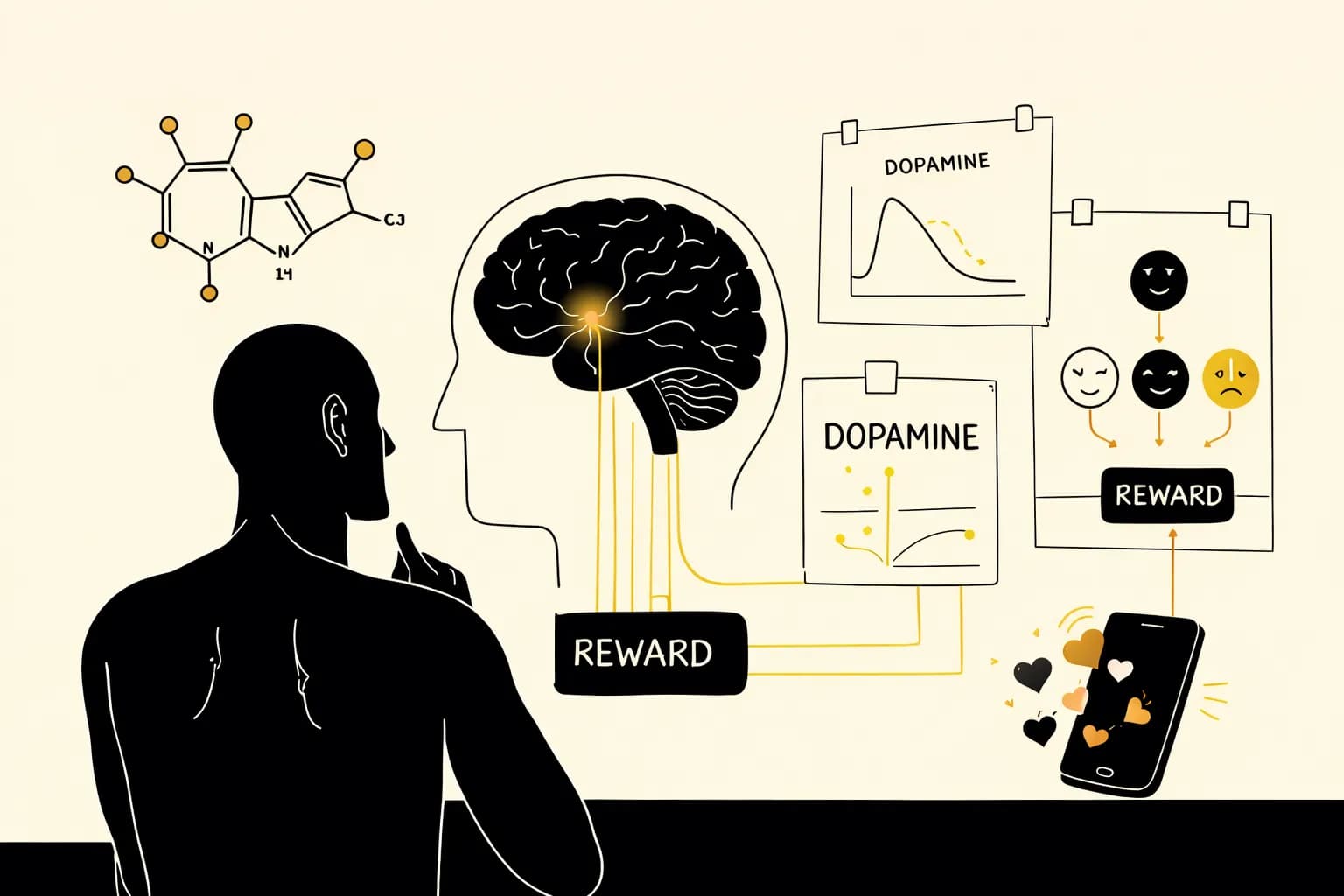
Orexin is often mentioned alongside dopamine, but they are different systems. Dopamine is involved in learning through the anticipation of reward and in striving toward it. The orexin system, located mainly in the lateral hypothalamus, supports a state of active readiness: waking up, noticing a significant signal, and not switching off in the middle of a search.
Orexin was discovered by Masashi Sakurai and his colleagues in 1998. A year later, Lawrence Chemelli and his co-authors described mice without an orexin receptor in the journal Cell: the animals developed symptoms resembling narcolepsy. The loss of orexin neurons has also been described in people with narcolepsy.
A single molecule cannot make a person finish a quarterly report. Orexin neurons receive information about the time of day, energy levels, stress, novelty, and probable reward. They help assess: “Is it worth staying focused a little longer?”
Most experiments on the connection between orexin and persistent seeking and reward have so far been conducted on animals. Their application to human procrastination should be approached cautiously. But the mechanism explains a familiar feeling well: when the result moves farther away, the effort loses its vivid sense of direction. Also read the article about procrastination and anger.
Why the Brain Chooses an Immediate Reward
The nervous system prefers predictable and immediate results. A cup of tea, a message from a friend, a short video, or a warm blanket provides feedback now. The benefit of a diploma, renovation, or career change is promised sometime later—and is not guaranteed.
The more uncertainty there is in a goal, the more costly it feels. “Launch your own project” is a phrase that can be exhausting before the first action. “By 7:30 p.m., choose three topics and write five lines about each” is a task with a clear boundary. It is easier for the brain to sustain effort when it can see the next meter rather than the entire mountain trail.
Another trap appears at the finish. You have already invested a great deal of effort, but there has been no pleasure yet: the work has not been sent, the money has not arrived, and the conversation has not happened. The temptation arises to postpone the last unpleasant action—pressing the “send” button, naming a price, or asking for feedback. Sometimes we avoid testing reality: what if the result is average and the response is cold?
Ask yourself without blame: “What exactly do I not want to experience right now?” Boredom? The risk of making a mistake? Awkwardness? Fear of judgment? The answer is often more precise than the command “pull yourself together.”
How to Distinguish Fatigue, Overload, and Depression
A short and clear next step restores tangible boundaries to the task.
The same desire to give up can have different causes. It is useful to distinguish between them, at least approximately—the next step depends on it.
Condition
How it usually feels
What changes after rest
What you can do
Ordinary fatigue
It is connected to a specific workload; it is difficult to look at the task, but a small step is possible.
Sleep, food, a walk, or a free evening partially restore your energy.
Rest and reduce the task to a manageable action.
Overload
There are too many tasks, they conflict, and deadlines are pressing; irritation, jumping between tabs, and forgetfulness appear.
A short break often does not bring a feeling of recovery.
Reduce the workload, postpone the deadline, ask for help, or give up some responsibilities.
Depressive state
Emptiness, loss of interest, slowing down, meaninglessness, and painful thoughts about yourself; sleep and appetite disturbances may occur.
Rest alone usually does not restore interest or the ability to live your usual life.
Contact a psychiatrist or psychotherapist.
If symptoms of a depressive state persist for two weeks or longer and interfere with work, self-care, or communication, it is better not to postpone speaking with a specialist. If you have thoughts of self-harm or do not want to live, seek urgent help: contact your local emergency service, crisis hotline, or someone who can stay with you.
Orexin, a dopamine “detox,” and a new planner are not substitutes for treatment. Asking for help in such a state is a normal form of self-care.
What to Do When You Want to Abandon Something You Started
You can make a distant goal feel closer to the nervous system. There is no need to turn life into a laboratory.
Define today’s finish line. Instead of “work on the presentation,” formulate it as “assemble six slides without design.” A completed small piece signals to the brain that the effort is not disappearing into a void.
Lower the entry cost to ten minutes. Set a timer and agree with yourself that you may stop when it rings. Resistance often arises before the start.
Remove unnecessary choices. Before a difficult task, close your email, put your phone in another room, and prepare some water. This prevents you from spending your remaining attention on a hundred micro-decisions.
Give your body a brief wakefulness signal. Light by the window, a glass of water, five minutes of brisk walking, or a few squats can change your state. If you are nodding off, try sleeping first.
Make progress visible. Mark off chapters, calls, workouts, or treatment days. It is easier for the brain to see the path already covered while the major reward is still ahead.
A Question for the Home Stretch
Ask yourself: “Do I need rest, a clear next step, or support?” Three different answers require three different actions.
For tasks that are frightening to complete, an extremely specific formulation helps. Say aloud: “I am sending Anna the draft now.” This phrase leaves less room for internal drama than “I need to finish the project.”
Recovery and Motivation: Why You Should Plan Rest
Sometimes people try to achieve their goals while constantly living in last-minute-sprint mode. They cancel weekends, eat on the go, work late into the night, and then wonder why their motivation has disappeared. The nervous system is not obliged to produce focus endlessly simply because you are trying very hard.
Plan recovery before it becomes an emergency. An evening without tasks, adequate sleep, proper food, and a conversation without discussing achievements are conditions in which you will have the resources to choose tomorrow.
Sometimes the goal needs to be reworked. If you have been unable to return to a task for months, it may have become too costly, чужой, or poorly formulated. Persistence makes sense as long as it serves your life and does not become punishment for human limitations.
This evening, choose one visible step that will take no more than ten minutes: open the file, make a doctor’s appointment, wash your brushes after painting, or send one message. Then place some water beside you, turn off notifications, and decide in advance what time you will finish. Such a small plan tests the real reason for your resistance more gently than another dose of self-criticism.
Why do I abandon something exactly when I am almost finished?
The finish often requires the most vulnerable action: showing the result, asking for payment, waiting for an evaluation, or acknowledging that the work is complete. The brain may avoid this uncertainty even when only a small amount of work remains.
Could low orexin be the cause of my procrastination?
Procrastination alone cannot indicate your orexin level. This system is primarily associated with wakefulness, while difficulties with tasks more often result from sleep, stress, anxiety, working conditions, and the meaning of the task itself.
Will coffee help if I lose motivation in the evening?
Coffee can temporarily increase alertness, but it does not resolve overload and may worsen nighttime sleep. If coffee usually makes it difficult for you to fall asleep, choose a short walk, light, and one small step for an evening push—or move the work to the morning.
What should I do if I am afraid to press the “send” button?
Reduce the action to one clear ritual: check the recipient, attach the file, write the subject, and send the email at the scheduled time. If you are afraid of evaluation, plan what you will do during the next 20 minutes after sending it, so you are not left sitting and waiting for a response.
When is loss of motivation a reason to see a doctor?
Contact a psychiatrist or psychotherapist if emptiness, loss of interest, severe fatigue, sleep or appetite disturbances, or feelings of hopelessness persist for more than two weeks and noticeably interfere with your life. If you have thoughts of self-harm or death, seek urgent help through emergency services or a crisis hotline.
What if the goal is no longer mine?
Allow yourself to reconsider it. Write down the cost of continuing, what you will gain, and whose expectations you are fulfilling; afterward, it will be easier to decide whether to reduce the task, change the deadline, or honestly abandon it.