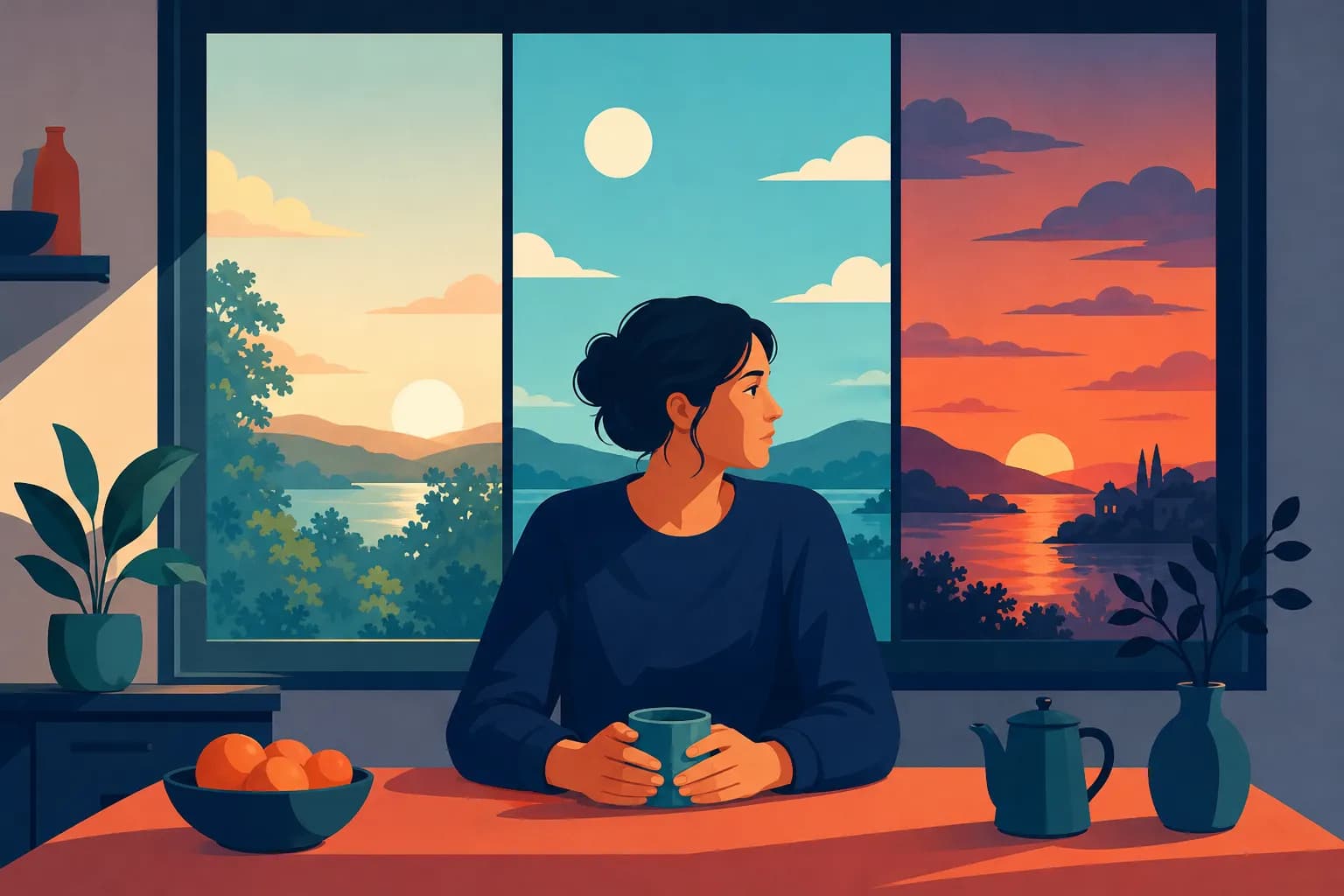
In the morning, you feel energized and confident; by midday, a minor comment irritates you, and by evening, you feel anxious, sad, or emotionally drained. Sometimes your mood shifts so quickly that it is hard to tell what triggered the reaction. These states are often called emotional swings–sudden or recurring mood changes that can affect relationships, work, and quality of life.
Why do emotional swings happen, and what goes on in the brain at these times? From a psychological perspective, emotional instability may be linked to difficulties with emotional regulation–the ability to recognize, make sense of, and regulate your emotional responses. Stress, sleep quality, hormonal changes, nervous system characteristics, and psychological experiences can all play a role.
At the same time, not every sudden mood change points to a mental health disorder. Emotional fluctuations are a natural part of being human. But if reactions become too intense, happen regularly, are difficult to control, or interfere with daily life, it is important to understand their causes. Sometimes emotional swings are rooted in chronic stress and exhaustion; in some cases, they may be one symptom of a condition that calls for professional assessment.
In this article, we’ll look at how to recognize emotional swings, why your mood may change suddenly without an obvious cause, how emotional instability differs from bipolar disorder, and which psychological methods can help regulate emotions. We’ll also explain when you can start with self-guided practices and when it’s worth seeing a psychologist or psychiatrist.
What Are Emotional Swings in Psychology?
Emotional swings usually refer to sudden or recurring fluctuations in emotional state. Different processes may underlie this description: changing feelings in response to events, accumulated fatigue, difficulty managing reactions, or symptoms of an illness.
Even scientific concepts overlap here. In a systematic review by Marwaha and colleagues that included 37 studies, definitions of emotional lability and affective instability varied considerably. This makes an accurate description more useful than a label.
Emotional lability describes how changeable a person’s emotional state is. Difficulties with emotional regulation relate to how well someone can recognize a feeling, choose how to respond, and manage their actions. You might move quickly from sadness to joy while maintaining control over your behavior. Or you might feel one emotion, such as resentment, for a long time and struggle with its effects.
Regulation involves several interacting brain systems. The amygdalae contribute to evaluating the emotional significance of events, while prefrontal areas help take context into account, keep goals in mind, and choose actions. The body’s stress systems affect arousal and readiness to respond. This is a distributed process: the formula “the amygdala switches on, the cortex switches off” oversimplifies what happens.
In a meta-analysis of functional MRI studies in Brain and Behavior, emotional dysregulation was associated with differences in the activity of networks involved in emotional responses and control. However, findings across heterogeneous clinical groups cannot reveal the cause of one person’s mood changes from a brain scan.
How to Recognize Emotional Swings: Key Signs
A single burst of irritation after a difficult week says little about your overall state. A recurring pattern tells you more:
Joy or calm quickly gives way to anxiety, irritation, or despair;
Your reaction is noticeably stronger than you would expect from yourself in similar circumstances;
It is hard to calm down after an event, and the feelings keep coming back;
At the peak of an emotion, you make decisions you later regret: sending harsh messages, spending impulsively, or breaking commitments;
Strong emotions leave you exhausted and make ordinary tasks difficult.
These are prompts for observation, not diagnostic criteria. Judging a reaction as “too strong” also requires context: people around you may underestimate the actual burden, pain, or danger of a situation.
Five Questions for Self-Observation
These questions are not a diagnostic test. They have no scores, thresholds, or “right” answers.
When did this start? How often does your state change, and how long does each period last?
What happens before the changes? Events, lack of sleep, changes in your menstrual cycle, substance use, starting a medication, or a dose change?
How intense are the feelings? How long does it take to recover, and what helps?
What are the effects? What happens to your work, studies, relationships, everyday responsibilities, and decisions?
Are there any signs of risk? Self-harm, suicidal thoughts, dangerous actions, or an unusually low need for sleep?
Instead of a vague note like “emotional swings,” it is more helpful to record a specific observation: “Slept five hours; irritation after a coworker’s comment lasted until evening; canceled a meeting.” Notes like these can support self-understanding and help you describe your experience more clearly to a professional. If there are signs of risk, you do not need to start by keeping a journal.
Why Do Emotional Swings Happen? 7 Possible Causes
Below are seven overlapping groups of factors. This is a useful map for discussion, not a medical classification. Stress can disrupt sleep, lack of sleep can make it harder to recover, and conflict can intensify both.
1. Chronic Stress and Emotional Exhaustion
When demands exceed available resources for a long time, it may become harder to shift your attention, tolerate uncertainty, and recover from unpleasant events. A small request can become the final strain on an already overloaded day.
According to the NCCIH, part of the U.S. National Institutes of Health, chronic stress may contribute to sleep problems and is associated with anxiety and depression. But explaining everything as “just stress” does not remove the need for help if your condition is getting worse.
2. Lack of Sleep and Disrupted Circadian Rhythms
Sleep directly affects emotional well-being. In a meta-analysis by Cara Palmer and colleagues in Psychological Bulletin, which combined 154 experimental studies and more than 5,700 participants, total sleep deprivation, sleep restriction, and fragmented sleep reduced positive emotions.
Findings on negative emotions were less consistent: lack of sleep does not necessarily intensify all unpleasant feelings in the same way. Most experiments examined short-term effects in healthy people, mainly young adults. Night shifts and constantly changing schedules can also make it harder to sleep regularly and align sleep with your internal circadian rhythms.
3. Hormonal and Endocrine Changes
For some people, emotional symptoms are linked to the menstrual cycle or the menopausal transition. Individual sensitivity to natural hormonal fluctuations matters; hormone levels do not have to be abnormal for this connection to exist.
Another possible factor, which can affect people of any gender, involves the thyroid gland. The NIDDK lists irritability, nervousness, fatigue, and sleep problems among the symptoms of hyperthyroidism. Mood alone cannot identify it: a doctor will decide whether testing is needed based on the full picture.
4. Anxiety and Emotional Overload
Constantly expecting something bad to happen keeps your attention focused on possible threats. An ambiguous message or a change of plans can then trigger a strong reaction. Irritability may sometimes be more noticeable than the anxiety itself.
The NIMH lists frequent irritability as a possible symptom of generalized anxiety disorder, alongside worry that is difficult to control. But irritability occurs in many other conditions and does not confirm this diagnosis on its own.
5. Emotional Regulation Patterns
Sometimes the main difficulty lies between feeling and action. A person may notice mounting tension too late, struggle to distinguish anger from fear or shame, or fall back on the same response regardless of the situation: going silent, lashing out, or demanding immediate reassurance. Other options, such as asking for a pause or expressing a need, may feel less accessible.
These patterns do not automatically point to upbringing, past trauma, or a personality disorder. Working with them can involve exploring specific episodes and expanding the range of possible responses.
6. Relationships and Interpersonal Conflict
Unpredictable contact, recurring arguments, and crossed boundaries can keep a person on edge. For example, after several days of distance, a warm conversation may bring intense relief, while the next silence feels especially painful.
However, the source of the difficulties may lie in one partner’s behavior, in the way both partners interact, or in external pressures. Mood swings alone cannot establish who is to blame or whether someone is trying to manipulate the other.
7. Mental and Physical Health Conditions, Substances, and Medications
Mood changes may accompany depression, bipolar disorder, a physical illness, or chronic pain. Alcohol, other psychoactive substances, and some medications can alter your state or intensify existing symptoms.
For example, the NHS lists mood changes among the possible serious side effects of corticosteroids, especially at high doses or with long-term use. If changes began around the time you started treatment or changed your dose, tell the prescribing doctor. Stopping a medication on your own, especially abruptly, is unsafe.
For a consultation, it can help to record the sequence of events and the effects of your reactions. A journal does not replace diagnosis.
Emotional Swings in Relationships: Why Can Love Turn to Irritation So Quickly?
Close relationships touch on our needs for acceptance, autonomy, and safety. As a result, the same person may evoke tenderness, anger, and fear of loss. It is more useful to look at how a couple handles these feelings and whether they can reconnect afterward.
In a Behavioral Sciences study with two samples, higher attachment anxiety was associated with less flexibility in seeking support depending on a partner’s availability. The study was observational and mostly involved young women. It does not prove causation or make it possible to identify an “attachment style” based on a few arguments.
A pattern of painful distance alternating with warm reconciliations is sometimes described through the model of intermittent reinforcement: occasional relief may sustain the expectation of another good period. This may explain some cycles, especially unsafe ones. It is not universal, and it does not mean someone has a “dopamine addiction to their partner.”
If you’re looking for ways to handle emotional swings in a relationship, start with the sequence: event → my reaction → partner’s response → consequences → recovery. For example: delayed reply, a string of anxious messages, a sharp response, an argument, reconciliation without discussing the cause. Writing this down can show where the interaction could change.
In a safe relationship, it can help to agree on specific actions: how to let each other know when you’re busy, how to take a break when tension rises, and when to return to the conversation. Emotional instability on its own does not prove deliberate manipulation. At the same time, the effects of someone’s behavior deserve attention regardless of their intentions.
Threats, coercion, isolation, and control call for a different approach. The WHO includes psychological abuse and controlling behavior in its definition of intimate partner violence. Safety comes first. You do not need to test the relationship through a dangerous confrontation or consider yourself responsible for someone else’s abuse. The shame after emotional abuse that may accompany this experience can make reaching out for support even harder.
Emotional Swings in Women: Are They Linked to Hormones?
Sometimes they are. But the phrase “it’s hormones” explains nothing without looking at when symptoms appear, how severe they are, and what else is going on. It can also make it harder to notice an anxiety disorder, depression, overload, or an unsafe relationship.
The RCOG describes premenstrual syndrome (PMS) as physical and emotional symptoms that interfere with everyday life during the two weeks before menstruation and usually ease after it begins. To assess a possible link, it recommends keeping a daily journal for at least two consecutive cycles.
Premenstrual dysphoric disorder (PMDD) involves more severe symptoms that can significantly disrupt work, social life, and relationships. It cannot be identified based on one irritable week before menstruation. A doctor assesses the overall pattern of symptoms, including how you feel on other days of your cycle.
If anxiety or low mood lasts all month and only intensifies before menstruation, other explanations are possible, including premenstrual exacerbation of existing symptoms. For a consultation, accurate notes are more useful than certainty about a diagnosis you chose in advance.
During perimenopause, mood can be affected by several things at once: fluctuating estrogen levels, life stress, hot flashes, and sleep problems. This multifactorial picture is described by The Menopause Society. These changes vary from person to person and do not support the stereotype that women are unpredictable. A one-size-fits-all “hormone panel” without a medical indication is no substitute for clinical assessment.
When to Seek Help and Which Professional to Contact
Consider seeking help if mood changes recur, cause distress, interfere with relationships or responsibilities, lead to risky decisions, or require more and more time to recover from. You do not have to wait until you can no longer function.
The NIMH recommends professional help for severe or distressing symptoms lasting two weeks or longer. This is a guideline, not a required waiting period: if your condition is deteriorating quickly or the effects are significant, seek help sooner.
Primary care or family doctor: if the cause is unclear, your condition has changed recently, you have physical symptoms, or medication may be involved. The doctor can determine whether you need tests or referrals.
Psychologist or psychotherapist: if you want to work on recognizing emotions, impulsive reactions, or recurring conflicts. Professional titles and scopes of practice vary by country.
Psychiatrist: for pronounced mood changes, suspected mania or psychosis, or a significant disruption to daily life.
Gynecologist: if symptoms are clearly linked to your cycle or the menopausal transition. If needed, this care can be combined with psychotherapy or psychiatric care.
Feeling energized in the morning and low in the evening does not, by itself, mean you have bipolar disorder. According to the NIMH’s overview, assessment looks at episodes of mood change alongside energy, activity, sleep, and behavior. An unusually low need for sleep combined with a sharp increase in activity, rapid speech, or risky behavior calls for prompt medical assessment. You do not need to wait a certain number of days. Psychotic symptoms also require urgent help.
While arranging a consultation, you can take a few manageable steps: set aside enough time to sleep, reduce any avoidable demands, and postpone important decisions when emotions are at their peak. During a conflict, a safe break with an agreed time to return to the conversation can help prevent further harm. These steps can support day-to-day stability, but they do not replace treatment when it is needed.
Suicidal thoughts or thoughts of self-harm call for urgent support from a professional or local crisis service. If there is an immediate threat to life, contact your country’s emergency services; if possible, stay with someone you trust. Do not delay help to keep a journal or try to determine the cause on your own.
Can I attend a consultation without a mood journal?
Yes. A journal is not a requirement for getting help. It is enough to describe what has changed, give a few examples, and list any medications or substances you take. You can decide on a way to track things with the professional later.
Could this be serious if I’m managing at work?
Yes. Being able to work does not rule out significant difficulties. You may be meeting your responsibilities at the cost of exhaustion, while struggling with emotional outbursts and low energy at home. This can also apply to depression with preserved functioning, although mood changes alone do not confirm it.
What should I do if observing my emotions makes me more anxious?
Make fewer notes or discuss a different format with a professional. You could write one short note in the evening instead of checking your state constantly. Self-observation should help you describe your experience; if it turns into a compulsive search for signs of illness, it may be worth reconsidering this approach.