Fear of Mistakes After Childhood Criticism: Can the Old Pattern Be Changed?
If you were shamed for mistakes in childhood, an adult mistake may feel like a threat. We explore imagery rescripting: how the method works in therapy

⋄7 min read

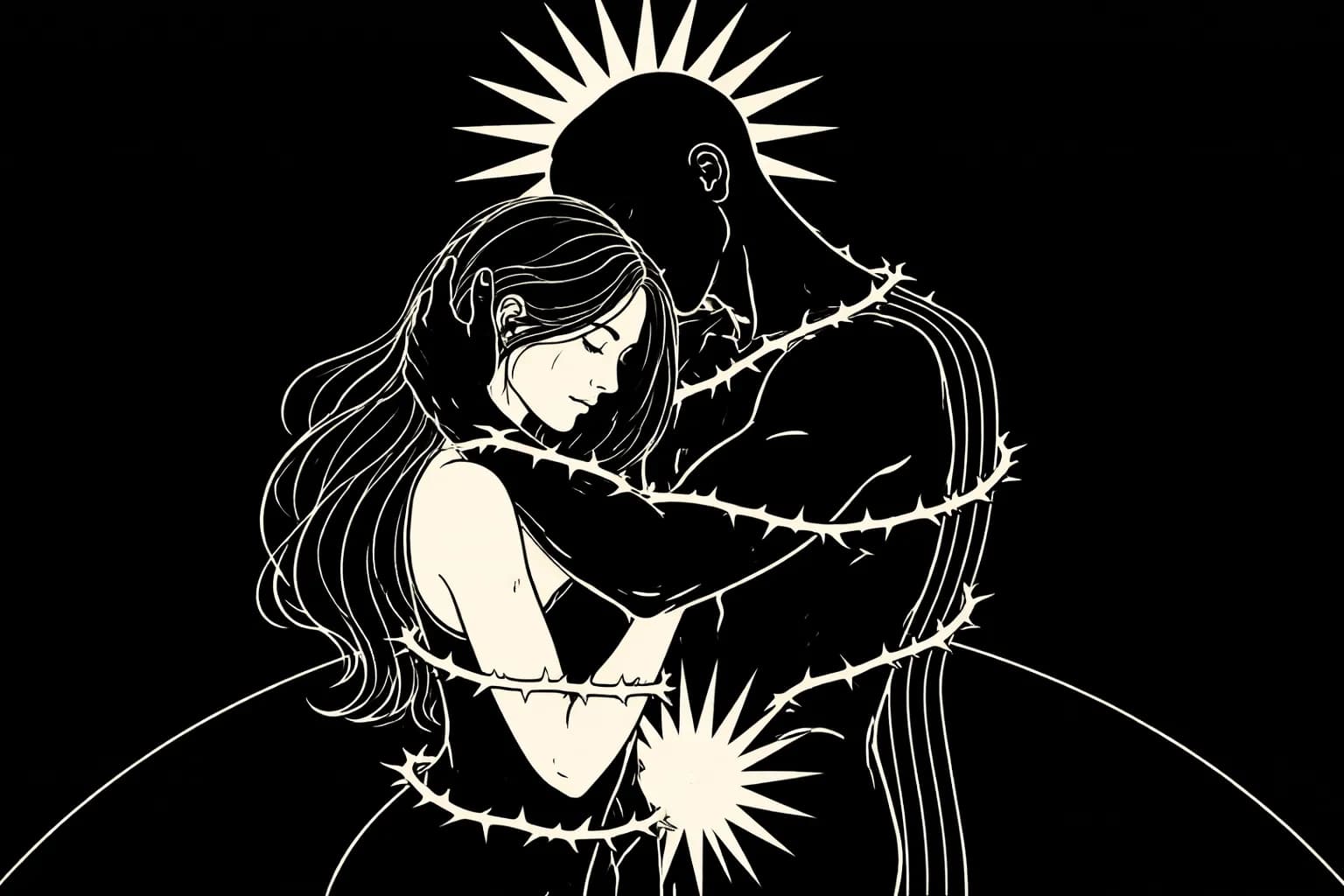
In the era of spiritual awakening, many romanticize toxic relationships, calling them "karmic" or a connection with a "twin flame". But where is the boundary between a spiritual lesson and ordinary codependency? It seems to be about love, but more often it is about a lesson that life brings to the doorstep, wrapped in a beautiful shell of pain. At first everything is perfect, and then there is a crash in emotions. This dynamic gives the brain a double thrill: a dopamine spike against a background of continuous stress that keeps the body in a state of constant readiness.
Karmic connections come into our lives as teachers. A karmic bond is born from unfinished business. These are pendulum relationships: attraction → conflict → reconciliation → break again. The brain keeps the reward system on edge: dopamine spikes against a backdrop of constant stress create a chemical loop similar to an addiction.
Karmic relationships are like mirrors that show our shadow patterns — fear of abandonment, need for control, hyper-responsibility. The lesson here is to see it, and then break the cycle, not endlessly return for a new dose of pain.
Key signs:
Instant attraction. You feel as if you’ve known this person your entire life, even though you met yesterday. This creates an illusion of "fate", but in reality it may simply be repetition of old patterns.
Cycle of conflicts. The same problems arise again and again. You break up and get back together, getting stuck in a toxic cycle. This is a crucial sign: karmic relationships repeat the same lesson until you master it.
Emotional swings. Sharp shifts from elation to despair. You feel alive only in this drama, which speaks of codependency, not love.
Mirroring. The partner reflects your unresolved traumas, fears, and shadow aspects. It is painful, but that is exactly where the lesson lies.

The concept of a "twin flame" is often used to justify unhealthy relationships.
A true twin flame connection is built on mutual growth, not on suffering.
Yes, there is a lot of exposure and honesty, but there is no chaos. The flame is a catalyst for change: a person nearby seems to accelerate your inner development, without devaluing or breaking your anchors. In scientific terms, this resembles secure attachment, where the nervous system does not live in a “fight or flight” mode, but rather calms down.
Codependency is often masked as a “spiritual connection.” The difference is simple: if you need to suffer to “feel depth,” this is not spirituality, but traumatic attachment.
Recognize the pattern. Write down what lessons repeat in your relationships. What exactly do you need to understand about yourself?
Take responsibility. Stop blaming your partner or "karma". You choose to stay in these relationships.
Set boundaries. The karmic lesson does not require your self-destruction. Healthy boundaries are not selfishness, but necessity.
Let go without drama. When the lesson is learned, the bond naturally weakens. Grandruptures are not required — just move on.
If the relationship drains you physically and emotionally, if you lose yourself for your partner and face manipulations or abuse — this is not a karmic lesson. This is toxicity that requires professional help.
A true spiritual connection helps you grow, not destroy you. It challenges your limitations, but not your dignity. The distinction is critical: the lesson should liberate, not enslave.
Any connection is part of the path, but not every one is your home. When you stop confusing lessons with love, relationships become purer, and the choice — freer.
How was this article?
Share