Why does a familiar situation prompt us to do the same thing again? One path to an answer leads through the basal ganglia, brain structures involved in choosing actions and forming habits. The international BRAIN Initiative Cell Atlas Network, or BICAN, has presented a detailed cellular atlas of these structures. Researchers characterized 25.5 million cells from humans and other primates, creating a foundation for investigating the cellular mechanisms of addiction.
The collection of studies was published on November 12, 2026, in Cell Press journals. As the U.S. National Institutes of Health (NIH) reports, the atlas brings together information about cell types, the genes they use, and their location in tissue. For now, it is a research resource, not a ready-made explanation of addiction or a way to treat it.
What are the basal ganglia?
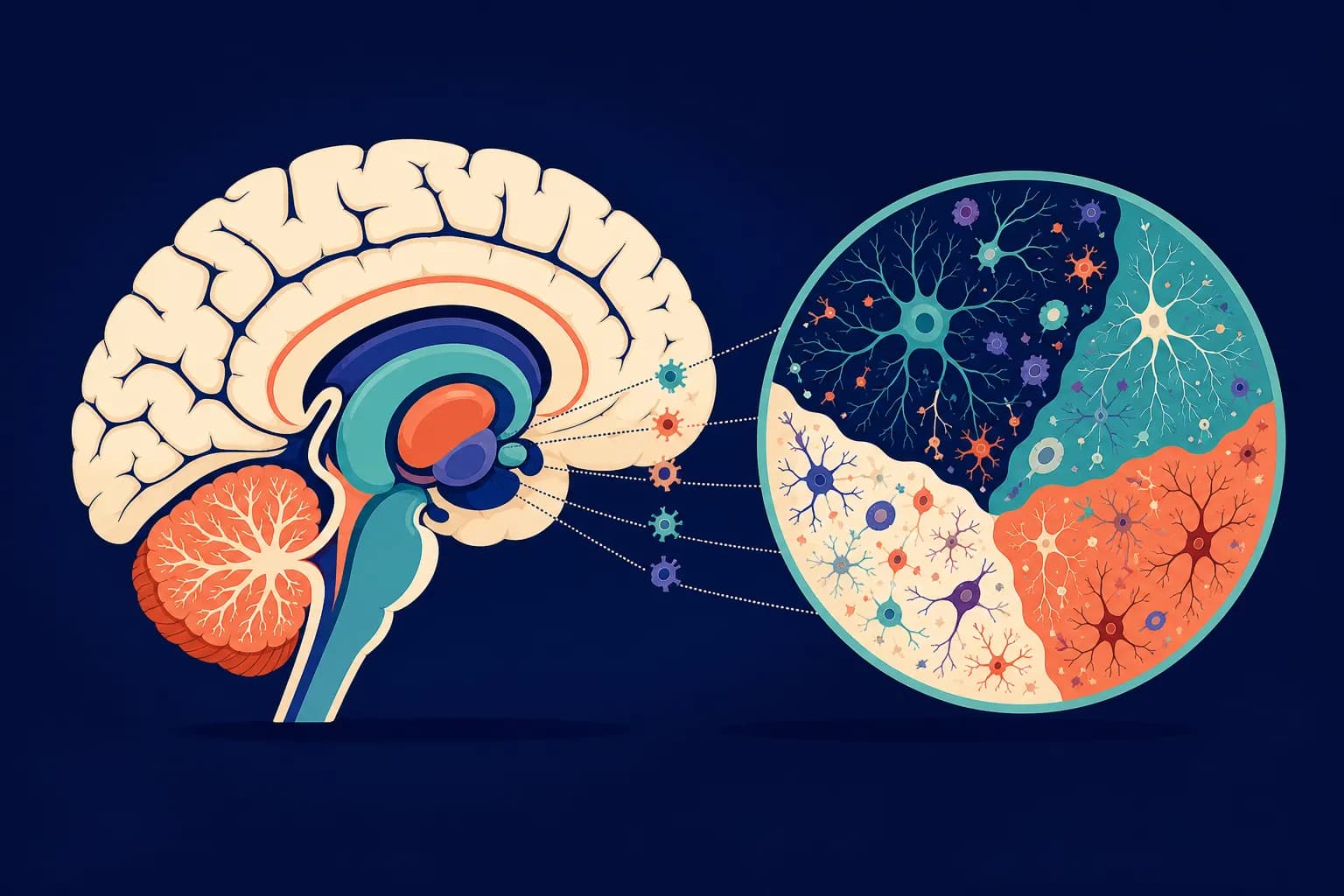
The basal ganglia are a group of interconnected clusters of nerve cells deep within the brain. They help select appropriate actions, initiate them, and suppress unnecessary ones.
They are involved in several processes:
Movement: They help regulate when movement begins, its strength, and its smoothness.
Habits and skills: They play a role in how repeated actions become automatic–for example, typing on a keyboard.
Learning from outcomes: They help us take into account which action led to a reward and adjust our future behavior.
Motivation: They are involved in choosing actions we are willing to make an effort for.
Imagine you want to pick up a cup: the basal ganglia work together with other brain regions to help you choose and carry out the right movement.
They do not function as a separate “habit center” or “pleasure center”–their functions depend on their interactions with the cerebral cortex and other structures.
How the basal ganglia reinforce familiar actions
When an action leads to a reward, the brain can reinforce it: in a similar situation, it becomes easier for us to do the same thing again. Dopamine is involved in this process. It helps change the connections between nerve cells, making familiar behaviors require less thought. So it is inaccurate to call dopamine simply the “pleasure hormone”–it is also important for learning. Read more at NIDA.
This mechanism saves us from having to learn familiar actions from scratch every time. But it can also sustain habits we want to change. For example, after lunch, someone automatically goes to get a coffee, even though they had planned not to drink one that day. This behavior alone does not mean they have an addiction.
To understand how the brain reinforces actions, scientists study the cells involved. Even within a single brain region, cells differ in their properties and functions.
What the map of 25.5 million brain cells reveals
Researchers have created a detailed atlas of basal ganglia cells. It helps us understand which cells are found in this region and how they differ from one another.
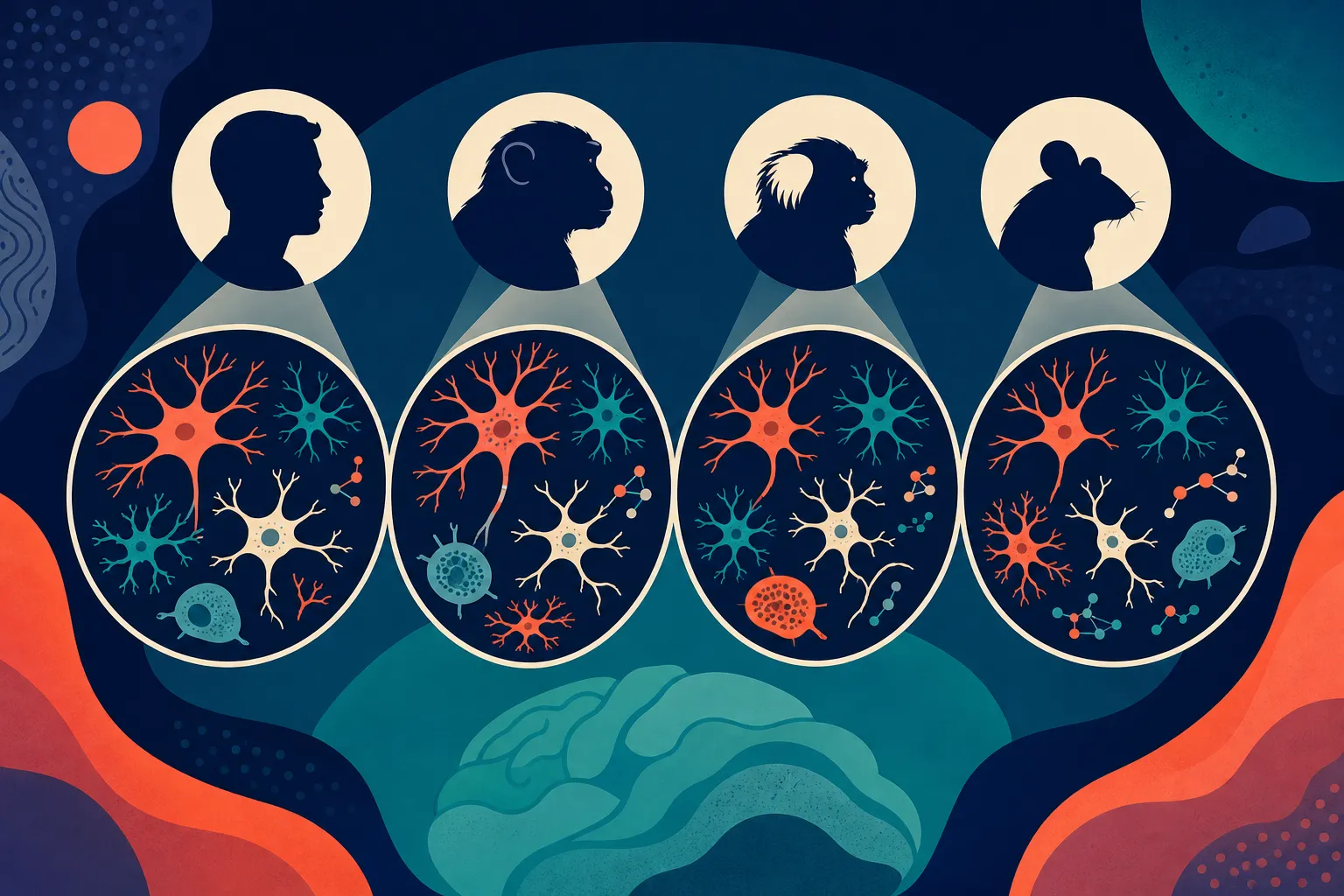
According to the Allen Institute, researchers characterized 21 million human cells, 3 million macaque cells, and 1.5 million marmoset cells. These cells came from many samples, not from the brain of a single person. They include both neurons and glial cells, which support the functioning of the nervous system. The broader project also includes data from mice.
Human brain tissue was obtained from deceased donors. The scientists studied RNA–molecules that reveal which genes are active in a cell. Using imaging methods, they also determined where the cells are located.
In this way, the atlas connects three kinds of information: what kind of cell it is, which genes are active in it, and where it is located.
For example, a team at the Broad Institute studied more than a million cells from 19 postmortem samples. In the striatum–one of the main parts of the basal ganglia–the scientists identified six zones. Neurons in these zones differed in their gene activity.
Another study by the same group found that the proportions of different cell types vary considerably from person to person. That is why it is important not only to study millions of cells but also to include samples from different donors.
The atlas shows the brain’s cellular makeup, but it does not fully explain how the brain works. It does not trace every connection between cells or record their electrical activity as a person makes a decision or experiences a craving. It is a foundation for further research, not a ready-made explanation of habits and addiction.
Comparing cells across species helps researchers choose experimental models. Similarity between cell types does not rule out differences in their molecular properties.
How the atlas could help uncover the mechanisms of addiction
The new map makes it possible to ask more precise questions. Instead of studying a large brain region as a whole, researchers can investigate exactly which cell types are associated with the process they are interested in and what molecular features those cells have.
The atlas may help identify which brain cells are associated with disease risk.
This approach is described by the Salk Institute. For example, if scientists discover genes associated with the risk of addiction, the atlas could help them determine which cell types those genes are active in. The next step would be to test how the activity of these genes affects learning and behavior.
Comparing cells across species is useful for this work. The BICAN consortium has created a shared system for classifying cells from humans, macaques, marmosets, and mice. It helps researchers determine which cells are similar across species and which have distinctive features. This matters for more accurately assessing what animal studies can tell us about the human brain.
This makes the choice of experimental model more informed. A researcher can test how closely an animal’s cells resemble human cells in the molecular features relevant to the study. But results from experiments on mice or other primates still need to be verified for their relevance to humans.
Why addiction is more complex than a habit
The basal ganglia’s role in repeating actions makes them important to addiction research. However, a habitual action and compulsive behavior that continues despite its consequences cannot be considered the same thing.
This distinction is reflected in a meta-analysis of ten rodent studies published in Translational Psychiatry in 2024. Chronic alcohol exposure weakened goal-directed control of behavior but did not lead to a complete shift toward habitual responding. These findings do not support a simple model in which addiction always means a switch to automatic behavior.
In addition, addiction affects several interacting brain systems. NIDA highlights the role of the extended amygdala in stress and withdrawal, and the role of the prefrontal cortex in planning and self-control. The basal ganglia atlas therefore reveals one important part of the bigger picture.
The main change for science is the ability to design more targeted experiments.
The next step will be to test which cellular differences actually contribute to the development and persistence of addiction, and which merely accompany it. Only then will researchers be able to assess the potential of interventions targeting specific cells and molecular processes.
Can this atlas determine an individual’s risk of addiction?
No. The atlas is not designed for individual diagnosis or risk assessment. It is a reference resource for research, created using tissue samples. It helps researchers study the cellular organization of the brain, but it does not provide a personal prognosis.
Why include glial cells in the map?
Glial cells support neurons and help create the conditions needed for signals to be transmitted. If only neurons are considered, the description of the brain’s cellular environment will be incomplete. Including glia makes it possible to study interactions between different cell types.
Why can cravings return after a long period of abstinence?
Cues previously associated with substance use can trigger cravings again. NIDA notes that this response can occur even after many years of abstinence. The new atlas does not yet explain why a particular cue triggers a craving in a particular person.