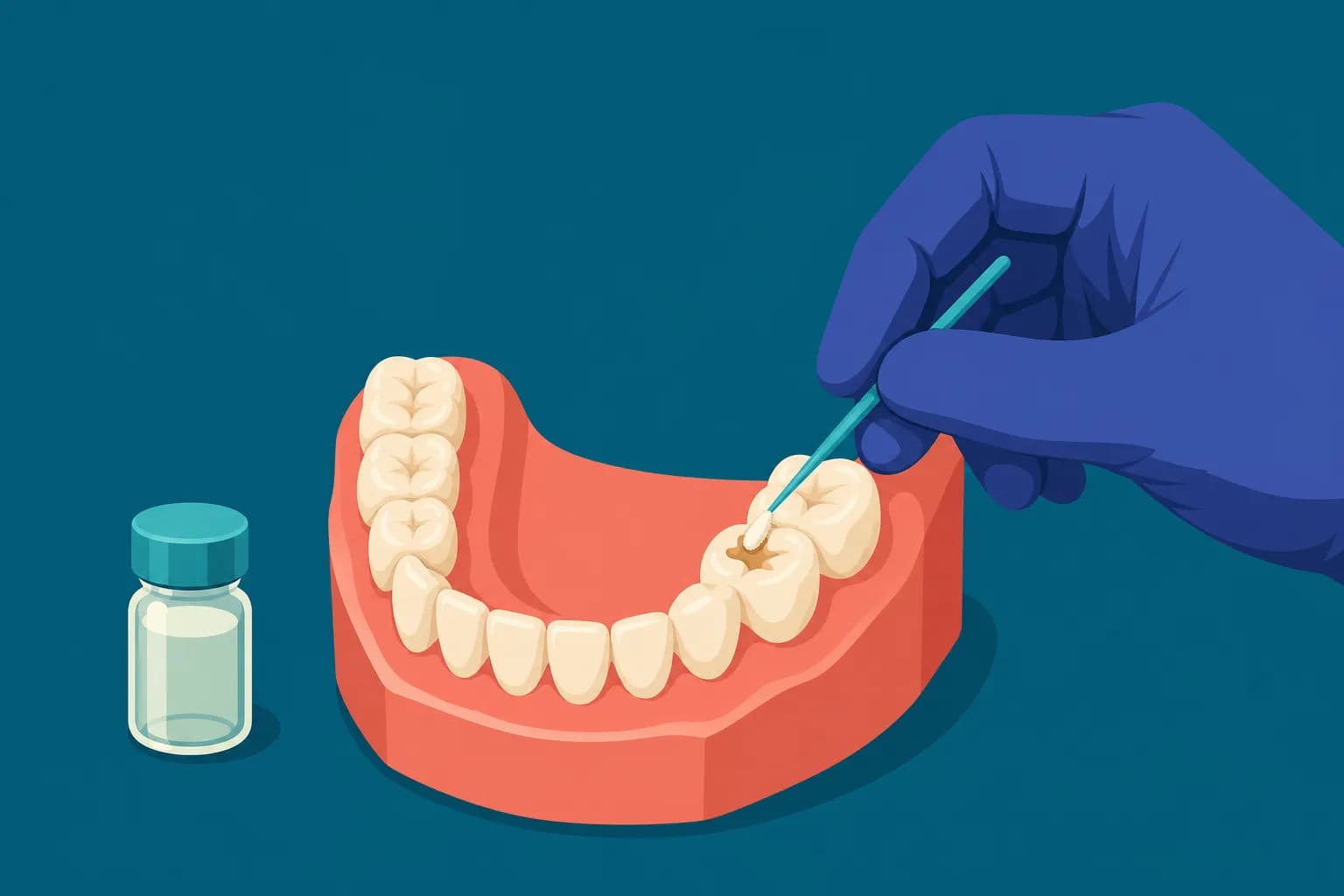
A cavity in a baby tooth can sometimes be stopped without a drill. In a large randomized trial involving 830 children, a silver diamine fluoride solution stopped about half of the treated cavities from progressing. For some teeth, this treatment may be a standalone way to manage the condition until the tooth falls out naturally.
This method is not suitable for every cavity: the solution does not restore lost tooth structure, follow-up visits are necessary, and the affected area turns permanently dark.
What the trial involving 830 children found
The study by Marguerite Fontana and colleagues was published in JAMA Pediatrics on July 27, 2026. In October, a University of Michigan article on ScienceDaily brought renewed attention to the findings. The study looked at a product already familiar to dentists: 38% silver diamine fluoride, commonly abbreviated as SDF.
Children received either SDF or a placebo. After six months, cavities had stopped progressing in 54% of treated lesions in the solution group, compared with 22.5% in the placebo group. That amounts to about 32 additional lesions stopped per 100 treated. These percentages refer to individual cavities, not to the share of children who were completely free of the condition.
Participants were followed for eight months; 584 children completed the study. With about 30% of participants dropping out, the reliability of the estimate is limited. In addition, the placebo comparison does not show how SDF performs relative to fillings or crowns.
How the solution may stop tooth decay
Tooth decay develops when bacteria in dental plaque break down sugars and produce acids. These acids cause the tooth to lose minerals. If the process continues, the cavity deepens and may reach the pulp–the soft tissue inside the tooth that contains blood vessels and nerves.
SDF has two complementary components. Silver has antibacterial properties, while fluoride supports remineralization, or the return of minerals to the tooth. Together, they can help stop the lesion from progressing. This mechanism is described by the Scottish Dental Clinical Effectiveness Programme.
The dentist applies the solution directly to the affected area using a small applicator. It is not necessary to remove all the decayed dentin beforehand. The American Academy of Pediatric Dentistry recommends keeping the solution in contact with the lesion for at least one minute, if possible.
The application itself is quick, but you cannot confirm that the decay has stopped while the solution is being applied. At a follow-up visit, the dentist checks whether the affected tissue has hardened and whether the decay has stopped progressing. Darkening of the area alone is not enough to confirm this.
When treatment is an option
SDF is used not only for early-stage lesions. According to the American Academy of Pediatric Dentistry’s guidelines, it can also be used for established cavities if they are accessible to the applicator and there are no signs of pulp involvement. An X-ray can help assess the depth of the lesion.
For some baby teeth, repeated applications can keep the condition under control until the tooth falls out naturally. If the decay has stopped, the tooth is still functional, and the cavity can be kept clean, a filling does not necessarily have to be the next step. This is an active monitoring and management strategy that requires a plan agreed on with the dentist.
In other cases, the solution is used as an interim step. Even a cavity that has stopped progressing is still a cavity: SDF does not restore the tooth’s lost shape. If the tooth is significantly damaged, it may need to be restored so the child can chew and clean it properly.
The condition of the pulp is an important limit. Irreversible pulpitis, pulp necrosis, an abscess, or a fistula require different treatment. The American Academy of Pediatrics warns that serious pulp damage in a child can sometimes occur without pain. The absence of symptoms does not mean you can decide on your own that the tooth is suitable for this treatment.
Risks and drawbacks to discuss
The most noticeable effect of SDF is that decayed tissue usually turns black. The staining is permanent and especially visible on front teeth. Discuss this before the procedure, including with the child if they are old enough to take part in the decision.
Irritation of the mucous membranes and temporary staining of soft tissues are possible. An allergy to the ingredients, including silver, is a reason not to use the product.
Applying the solution can treat a suitable cavity without drilling. This may be a helpful option for a child who finds conventional treatment difficult to tolerate. However, the trial found no significant differences in pain between the groups, and its results do not establish that SDF reduces the need for sedation.
What happens after SDF is applied
One application is not always enough. The dentist checks whether the cavity is still active and reapplies the solution if needed. If the decay continues to progress or the tooth needs restoration, the treatment plan is changed. In its follow-up recommendations, the American Academy of Pediatrics advises a checkup three months after application.
Before the procedure, it may help to ask the dentist three questions: Are there signs of pulp involvement? Could this treatment allow the tooth to be managed without a filling? What signs will the dentist use to determine whether it worked? Arrange a follow-up appointment before you leave.
Regulatory status also needs to be clarified. According to the American Dental Association, in the United States, SDF is FDA-approved to reduce tooth sensitivity, while its use to treat cavities is off-label. Professional recommendations and a product’s official approved uses may differ. For parents, the practical question is which product the clinic uses and why the dentist recommends it for their particular child.
Can I buy a cavity treatment solution and apply it at home?
You should not apply SDF yourself. A dentist first needs to assess the depth of the cavity and the condition of the pulp, and protect the surrounding tissues during the procedure. Home treatment does not replace diagnosis and follow-up visits.
Do these findings apply to permanent teeth?
The results cannot automatically be applied to permanent teeth. The findings presented here concern the baby teeth of young children. A dentist will assess separately whether SDF is appropriate for a permanent tooth.
What should I do if the tooth hurts or swelling appears after treatment?
Contact a dentist rather than waiting for the scheduled follow-up. New pain, gum swelling, or a fistula needs to be assessed. If the child has facial swelling or a fever, seek urgent medical care.