Enamel Repair Gel: A New Layer from Saliva Minerals
A protein gel helps saliva minerals form an enamel-like layer on teeth. How the technology works, what surface was restored, and what still needs to be tested in people.

⋄5 min read
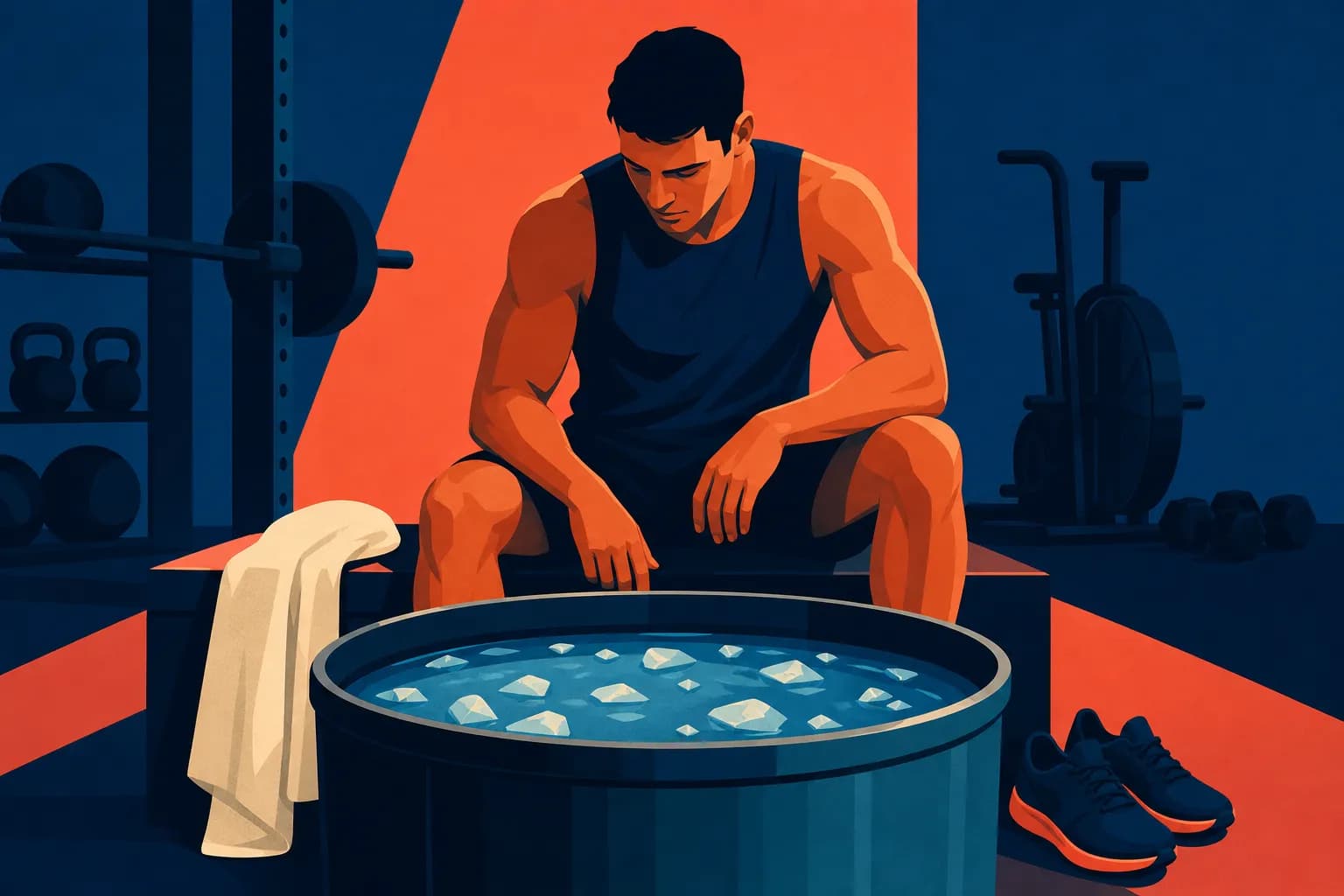
Ice baths have become a popular recovery ritual after intense workouts. Athletes and fitness enthusiasts immerse themselves in cold water hoping to reduce muscle soreness, speed up recovery, and get back to training sooner. But does cold really help muscles recover, or are its benefits overstated?
A new study by researchers at the University of East London, led by Freya Bain, has called the benefits of this practice into question. The researchers found that after cold-water immersion, levels of the muscle form of creatine kinase (CK-MM) stayed elevated longer than after ordinary rest. This enzyme is used as one of the biomarkers of muscle fiber damage and the body's response to intense exercise.
At the same time, the researchers found no substantial differences in muscle strength recovery between the groups. This means that changes in biochemical markers were not necessarily accompanied by a noticeable decline in physical performance.
The findings, published on August 20, 2026, in Journal of Thermal Biology, show that cold-water immersion does not always provide the expected benefits for muscle recovery. However, the study assessed a specific protocol and does not prove that ice baths are harmful in general or reduce the effectiveness of subsequent workouts.
The randomized study included 40 healthy, physically active adults. They were divided into four groups of ten. First, participants performed a specific exercise for the knee extensors involving eccentric contractions: during this type of work, the muscle lengthens while under tension. Exercises like these can trigger a pronounced, measurable muscular response to exertion.
The researchers then compared four recovery approaches:
immersion in 9 °C water for 15 minutes;
immersion in 42 °C water for 30 minutes;
spending 30 minutes in warm air at 30 °C;
passive rest at room temperature.
Immediately after exercise, muscle strength fell by about 36% in all groups. Over the next 72 hours, the researchers tracked maximal voluntary force, muscle soreness, and biological markers. This allowed them to compare several aspects of recovery: the ability to produce force, participants' own experiences, and changes in their blood.
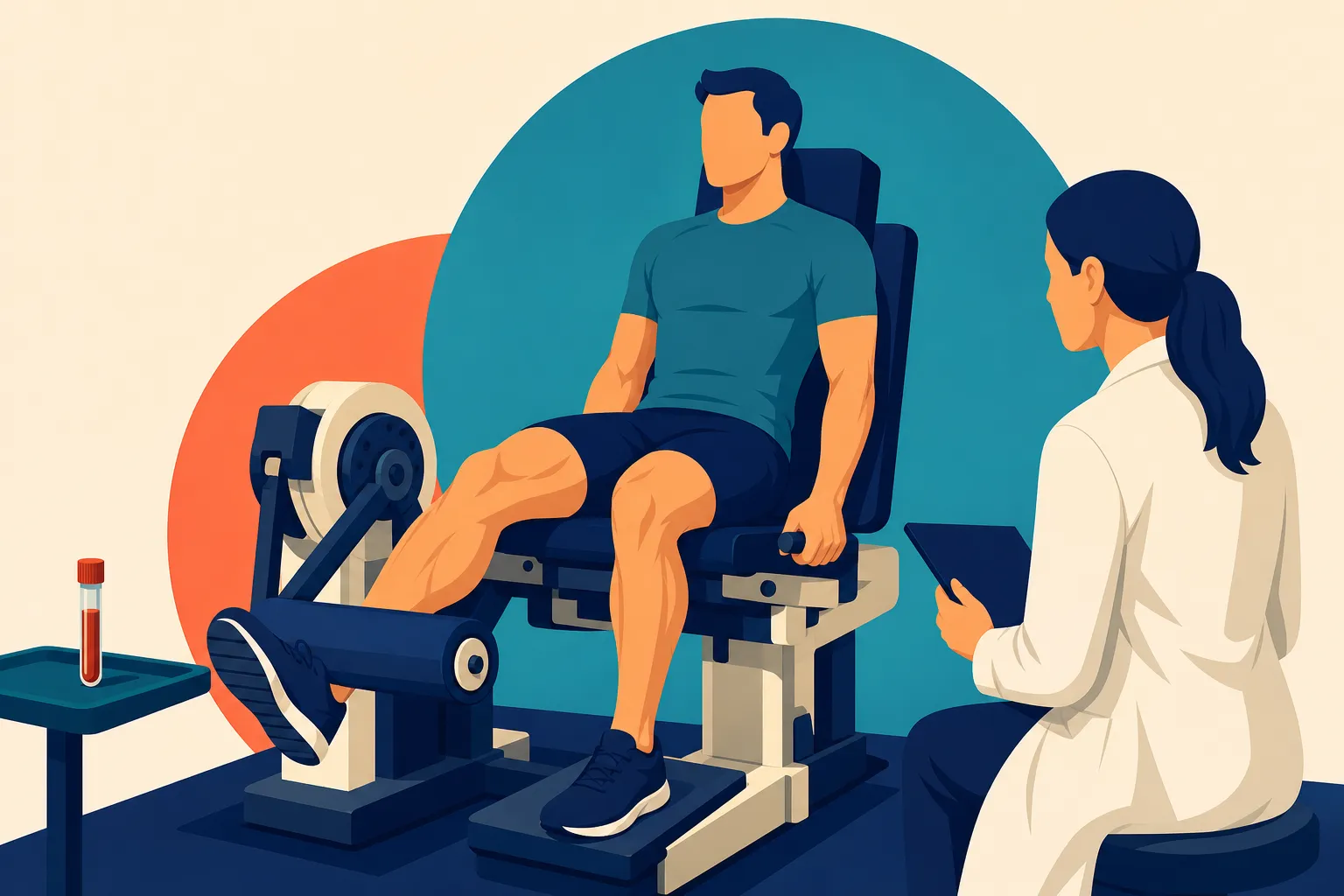
The most notable difference concerned CK-MM, the muscle form of the enzyme creatine kinase. After a damaging bout of exercise, its concentration in the blood can rise, so it is used as an indirect marker of muscle tissue damage. It does not directly measure either the extent of damage or a person's readiness for their next workout.
After hot-water immersion, CK-MM returned to baseline after 48 hours. After warm air and ordinary rest, this happened after 72 hours. In the cold-water immersion group, the marker was still elevated at the end of the observation period. The differences in its trajectory were statistically significant.
Strength followed a different pattern. After 72 hours, participants who had taken a cold bath produced about 82% of their baseline force, compared with approximately 88–89% in the other groups. However, these between-group differences did not reach statistical significance. With only ten participants per group, it is difficult to determine confidently whether the numerical difference reflects a consistent effect of the procedure or random variation.
Pain and muscle soreness increased after 24 hours and remained elevated after three days in all groups. In other words, the less favorable pattern in one test after cold exposure was not accompanied by a clearly established decline in functional recovery.
This study did not establish why CK-MM stayed elevated longer after cooling. However, the researchers also measured another marker: HSP72, one of the heat shock proteins. These proteins play a role in cellular protection under stress and help maintain the function of other proteins.
As the University of East London explains, heat treatments were accompanied by a more pronounced increase in HSP72 than cold water. This is an interesting signal of a cellular response, but it did not translate into a statistically significant advantage in strength or soreness during the observation period.
That is why these findings do not provide grounds for immediately swapping an ice bath for a hot one. A biomarker that looks favorable does not guarantee a noticeable benefit. Nor can the results automatically be applied to other heat-based practices, such as hot yoga: combining heat with physical exercise is different from passive immersion after exertion.
This new study does not mean that all previous research on cold and muscle recovery is wrong. A meta-analysis by Emma Moore and colleagues, published in Sports Medicine in 2022, combined findings from 52 studies. The authors found improved recovery of muscle power 24 hours after cold-water immersion compared with passive rest.
Power is related to both strength and movement speed. It differs from maximal voluntary force, which the new study tracked. The timing of the measurements and the exercise conditions also differed. So the question “Does cold help?” needs to be more specific: after which exercises, for which measure, and by what point in time?
Bain's experiment adds a specific observation to this picture: after the selected damaging exercise, cold water did not show an advantage over rest, and the CK-MM trajectory was less favorable.
The study invites us to reconsider whether an ice bath should be seen as an essential part of a post-workout routine. If your only goal is to speed up recovery, this study offers no additional evidence in favor of the practice. Ordinary rest remains a reasonable option.
It is worth assessing the benefits in terms of what you are recovering for: regaining strength, tolerating your usual training load, or reducing soreness. Neither a single test nor a short-lived feeling of energy can replace these measures.
There is also an important limitation: the researchers tested one procedure after a specific exercise targeting the thigh muscles. The findings cannot automatically be applied to a typical full-body workout. The observation period lasted only three days.
Recovery after exercise also depends on your overall routine. If you work out in the evening, it is useful to consider how your workouts relate to sleep–we covered this in our article on late workouts and sleep. An additional recovery practice should not distract you from assessing how well you tolerate your training schedule itself.
No, they cannot be directly applied to cold showers. The researchers tested immersion in 9 °C water for 15 minutes. A shower involves a different area and duration of cooling, and it was not studied in this research.
No, an elevated CK-MM level alone is not enough to draw that conclusion. The marker can change after physical exertion. Its medical significance is assessed alongside symptoms, the circumstances of the exertion, and other information.
It does not answer that question. A single immersion and 72 hours of observation cannot establish the long-term effects on muscle growth or training adaptation.
It should not be treated as a ready-made recommendation. Immersion in 9 °C water places considerable cold stress on the body. If you have a cardiovascular condition, discuss the safety of such procedures with a doctor beforehand.
How was this article?
Share