Late Training and Sleep: What the WHOOP Largest Study Revealed
Published on: ⋄4 min read
For many studies, sleep quality becomes the foundation for long-term good condition of a person. But how workouts and loads affect it has not been studied before.
In 2025 WHOOP published one of the most large-scale studies of sleep and training in the history of wearable data. It answered a question that for years remained at the level of feelings:
Do evening workouts harm sleep — and if so, how much?
The answer turned out to be unpleasantly definitive.
Whoop data
The study you can’t ignore
The analysis included 4.3 million nights of sleep and data from more than 15,000 people.
These are not surveys and not feelings of “how I slept.” These are real physiological measures: nocturnal resting heart rate, HRV, recovery, sleep stages, and exact training times relative to usual sleep onset.
“We are the first to obtain data at this scale where sleep and training are measured, not interpreted.”
That is what makes the study groundbreaking: it shows not perceptions, but the functioning of the autonomic nervous system.
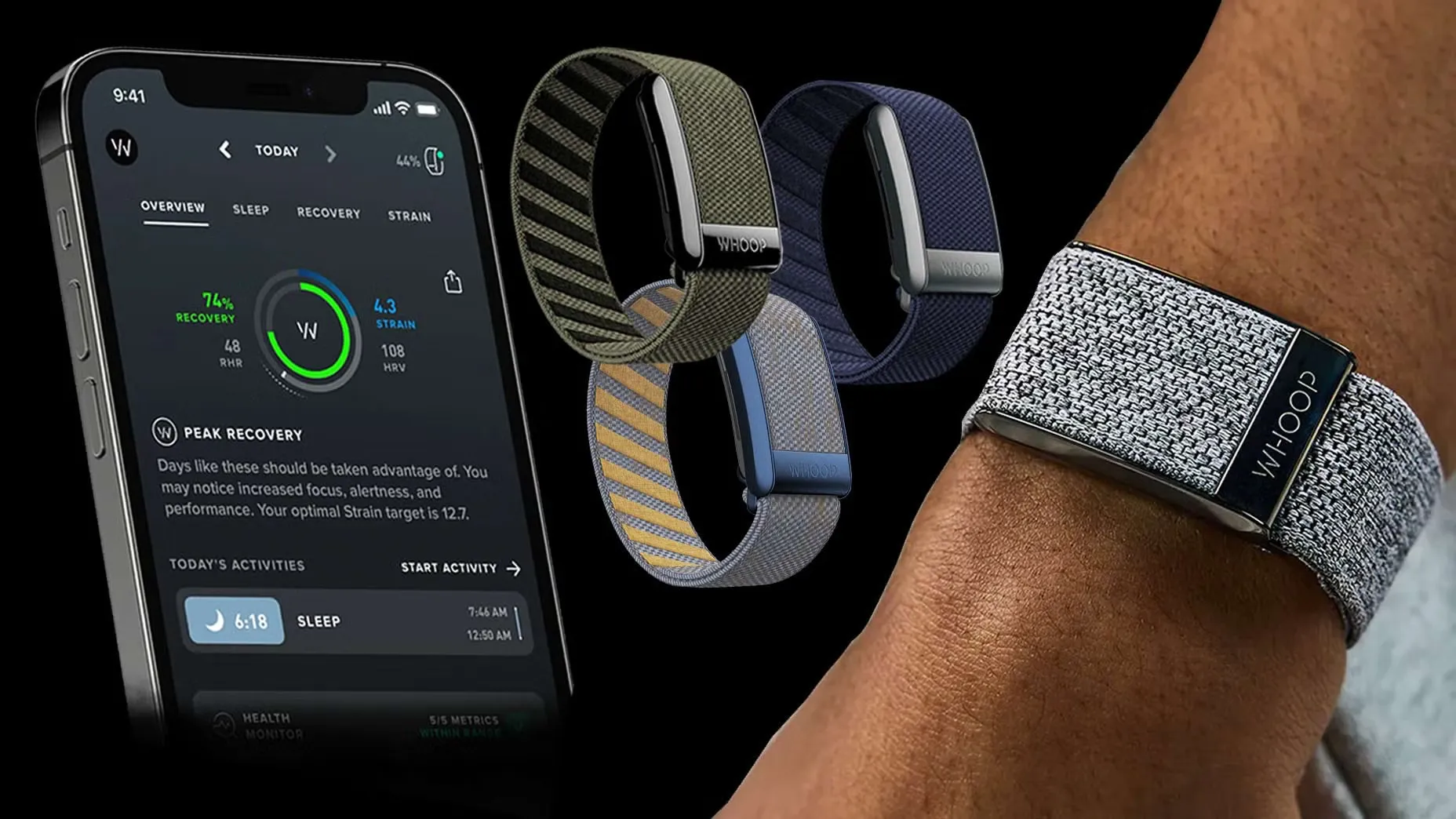
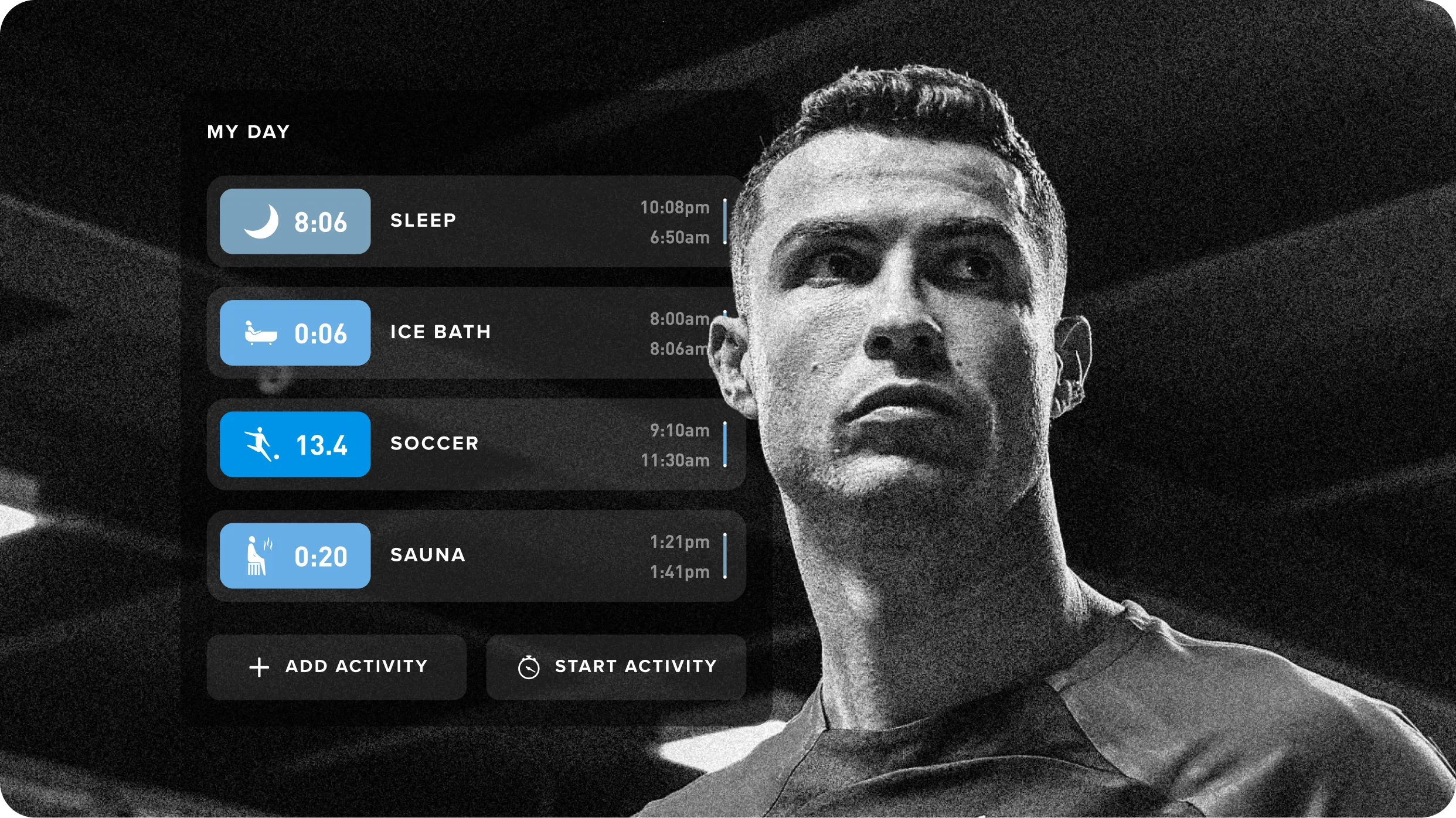
WHOOP – a bracelet-tracker of sleep, training, and recovery of the body. In 2024 Cristiano Ronaldo became an investor and ambassador for WHOOP.
Cristiano Ronaldo day with Whoop
What exactly does it measure:
HRV (heart rate variability) — a marker of balance between sympathetic and parasympathetic nervous systems.
Resting Heart Rate — an integral indicator of stress, load, nutrition, and sleep.
Sleep — stages, duration, consistency, recovery.
Loads — physiological load considering intensity and duration, not steps.
Falling asleep quickly does not mean recovering
Intense workouts finished less than 4 hours before sleepworsen its quality.
This manifests at several levels. After late exertion, resting heart rate rises at night, HRV decreases, and recovery quality drops. Even if a person falls asleep quickly, the body remains in a state of physiological arousal.
The most pronounced effect is observed if the workout ends 2 hours before sleep. In these cases resting heart rate increases by almost 4 beats per minute, and HRV falls by more than 30%. This is a serious shift for one evening — and a noticeable hit with regular repetition.
Important detail: the effect is dose-dependent
The WHOOP study uses the metric strain — the combination of intensity and duration of load. And here a simple rule works: the higher the load and the closer it is to sleep, the worse the recovery.
Even in the window from 2 to 6 hours before sleep, the body recovers weakly. A practically neutral effect is observed only when a high-intensity workout ends 6 or more hours before sleep.
“Late load does not break sleep immediately — it gradually reduces its quality.”
“But I train in the evening and feel fine”
This is the most common argument — and the most insidious trap.
The study shows: subjective sleep perception often does not match physiology.
You can fall asleep without problems, but:
the heart works faster than it should,
the parasympathetic nervous system does not engage fully,
deep and REM sleep are reduced.
And what is especially important — the effect is observed in all groups, including experienced and professional athletes. The difference is only in the scale of the reaction.
And what if the activity is light?
Light walking, gentle yoga, stretching, or breathing practices do not have a noticeable negative impact if they end at least 2 hours before sleep.
The problem is not movement per se, but high sympathetic activation.
Why resting heart rate became the key marker
A separate focus of discussion is the nocturnal resting heart rate. It turned out to be a universal indicator of how the day went.
In this single indicator, there are: food and meal timing, stress and conflicts, alcohol and stimulants, late workouts, screens, and sleep routine.
A high resting heart rate almost always means worse recovery. And then a chain reaction starts: poor sleep → lower self-regulation → poorer decisions → even worse sleep.
“Show me your resting heart rate — and I will understand a lot about your life.”
Functional optimum: ≈ 40–50 bpm
This is the range where:
the autonomic nervous system is maximally in parasympathetic mode,
sleep is deep and restorative,
HRV is high,
recovery is at maximum.
Practical conclusion
Intense workouts are better finished at least 4 hours before sleep, and ideally 6. If the evening is the only window, it is worth choosing light activity. In situations of hard choice, sleep provides a more powerful systemic effect than one more late high-intensity session.
At the same time, the study does not deny the value of training altogether. Sometimes load is more important than perfect sleep — but this should be an exception, not a strategy.