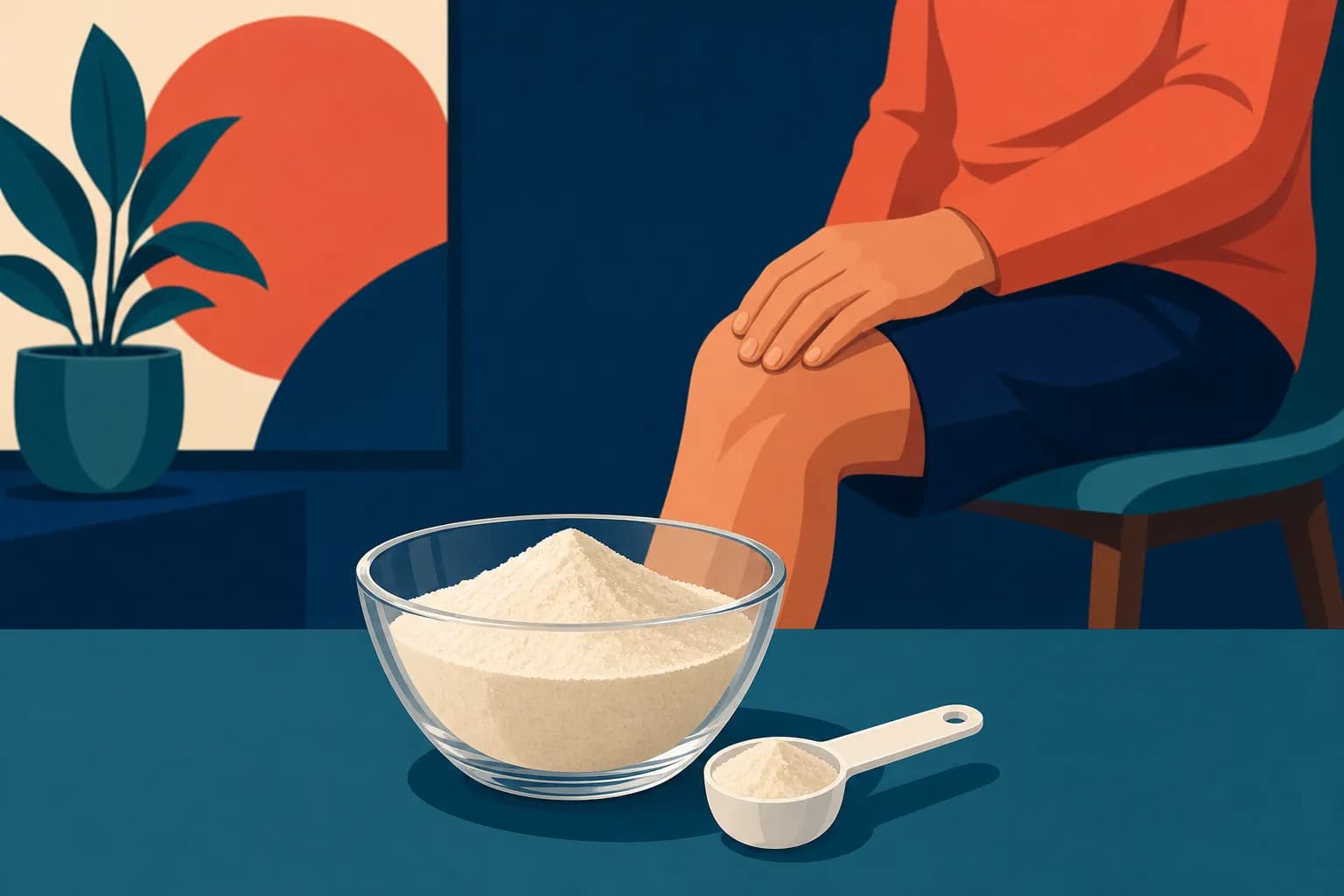
Can gut health affect joint pain? Scientists are increasingly exploring the links between the gut microbiota, inflammation, and musculoskeletal conditions. Now, researchers at the University of Nottingham have found that inulin–a type of dietary fiber that serves as food for beneficial gut bacteria–may help reduce pain from knee osteoarthritis.
In the INSPIRE clinical trial, participants who took inulin reported a greater reduction in pain than those in the placebo group. They also showed improvements in handgrip strength and sensitivity to painful stimuli.
The findings open up a promising area of research into the links between nutrition, the gut microbiota, and chronic pain. However, the study lasted only six weeks, so it is too early to say that inulin has been proven effective for osteoarthritis. Researchers still need to find out how lasting the effect is and whether dietary fiber could be a useful addition to standard treatment.
What kind of fiber did participants take?
Inulin is a prebiotic fiber: it serves as food for gut bacteria. Unlike probiotics, this supplement does not contain live microorganisms. Researchers tested a specific type of fiber at a particular dose, so the findings cannot automatically be applied to all dietary fibers.
A total of 136 people with knee osteoarthritis were randomly assigned to groups in the trial. Some received inulin, others did exercises with remote guidance from a physical therapist, and a third group combined both approaches. The control group took a placebo. A total of 117 participants completed the six-week trial.
The daily dose was 20 g of powdered inulin. The placebo was 10 g of maltodextrin. These amounts describe the conditions of the experiment and are not, in themselves, a recommendation for taking the supplement on your own.
The results were published on February 24, 2026, in the journal Nutrients. Renewed attention to the study does not mean that another independent trial has produced the same findings.
How much did knee pain decrease?
After accounting for participants' pain levels at the start of the study, inulin's average advantage over the placebo was 1.1 points on a scale from 0 to 10. This refers to the difference between the groups, not to an overall reduction in pain for every participant.
This result could be noticeable in everyday life, but the average conceals individual differences. It does not mean that everyone will feel exactly one point better. The estimate is also still imprecise: the statistical range of effects compatible with the data stretched from a near-zero advantage to about 2.2 points.
Other findings were intriguing. Taking inulin was accompanied by improved handgrip strength and reduced sensitivity to painful stimuli. This broadens the research question: the effects may be linked to processes that influence pain perception and muscle function beyond the knee itself.
However, a reduction in pain says nothing about cartilage restoration. The trial did not establish that inulin slows the progression of osteoarthritis or changes the structure of the joint.
Why are researchers studying the microbiota and joint pain?
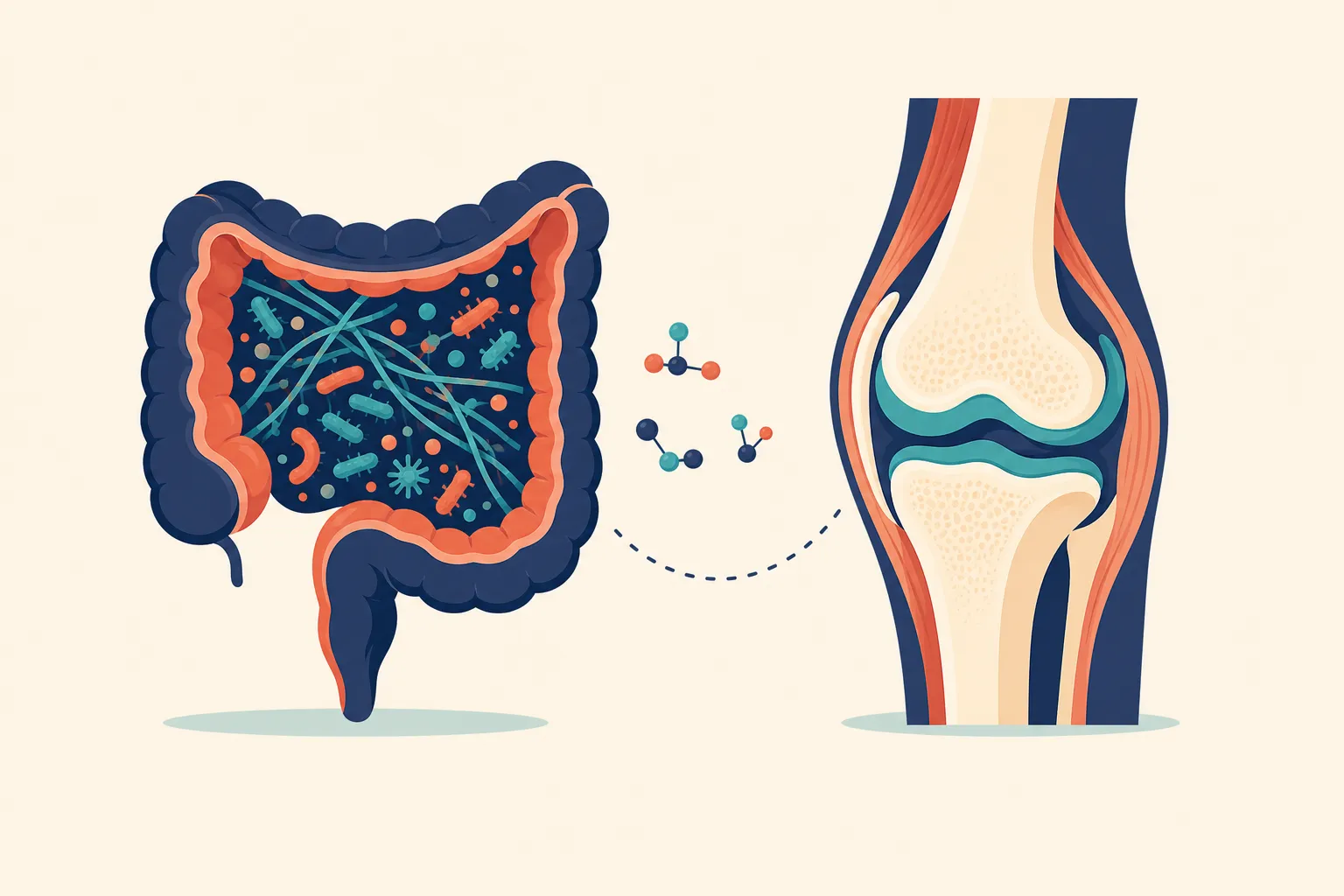
Inulin reaches the large intestine, where bacteria ferment it. This produces short-chain fatty acids, including butyrate. Read more about this process in our article on how the gut produces butyrate.
Participants who received inulin had higher levels of butyrate and GLP-1. GLP-1 is a gut hormone involved in regulating blood sugar and appetite. Higher levels of this hormone were associated with stronger handgrip.
These observations support interest in a possible chain of events: feeding gut bacteria, changing the products of their metabolism and gut signals, and then influencing bodily functions. In this model, the gut may play a role in processes related to muscle function and pain perception. This is a working hypothesis, not an established pain-relief mechanism.
In the trial itself, changes in short-chain fatty acids were not associated with changes in pain. In addition, the GLP-1 analysis was exploratory; it had not been planned in advance as the primary test of the hypothesis. So for now, it is not possible to conclude that pain decreased specifically because of butyrate or this hormone.
Bacteria ferment inulin, producing short-chain fatty acids. Their role in reducing joint pain remains to be established.
What do the findings mean for people with osteoarthritis?
The practical appeal is clear: an accessible dietary supplement showed a pain-relieving effect compared with a placebo. But it is not yet known whether the benefit will persist with long-term use or after people stop taking it. It is also unclear which people with osteoarthritis are most likely to benefit.
Tolerability matters, too. Of the 50 participants who completed the inulin treatment, 23 reported mild gastrointestinal symptoms, including gas and bloating. In other words, almost half of this group experienced discomfort. Fermentable fiber may be beneficial food for bacteria while also causing unpleasant symptoms for the person taking it.
So there is not yet enough evidence to reproduce the trial dose on your own for pain relief. If you are considering a supplement, discuss it with your healthcare provider, especially if you experience significant bloating or other digestive symptoms. Inulin should not replace exercise or prescribed treatment.
The next step for researchers is to test the findings in larger, longer trials. For clinical use, they need to understand not only the average change in pain scores, but also whether the supplement consistently helps people walk, sleep, and carry out their usual activities more comfortably.
Could fiber-rich foods have the same effect?
It is not known yet: the trial tested powdered inulin, not a change in the usual diet. The findings do not make it possible to calculate a serving of food that would bring about the same reduction in pain. A separate question is how much fiber is beneficial for the gut: dietary guidelines should not be considered a therapeutic dose for osteoarthritis.
Can inulin help with hip osteoarthritis?
This study cannot answer that question. It examined knee osteoarthritis. The possible role of shared pain mechanisms is scientifically interesting, but it does not confirm that the supplement is effective for other affected joints.
Can inulin's effect be compared with pain medication?
No. This trial did not directly compare inulin with a pain medication. A 1.1-point difference from the placebo does not mean that inulin is equivalent to any medication or can replace one.