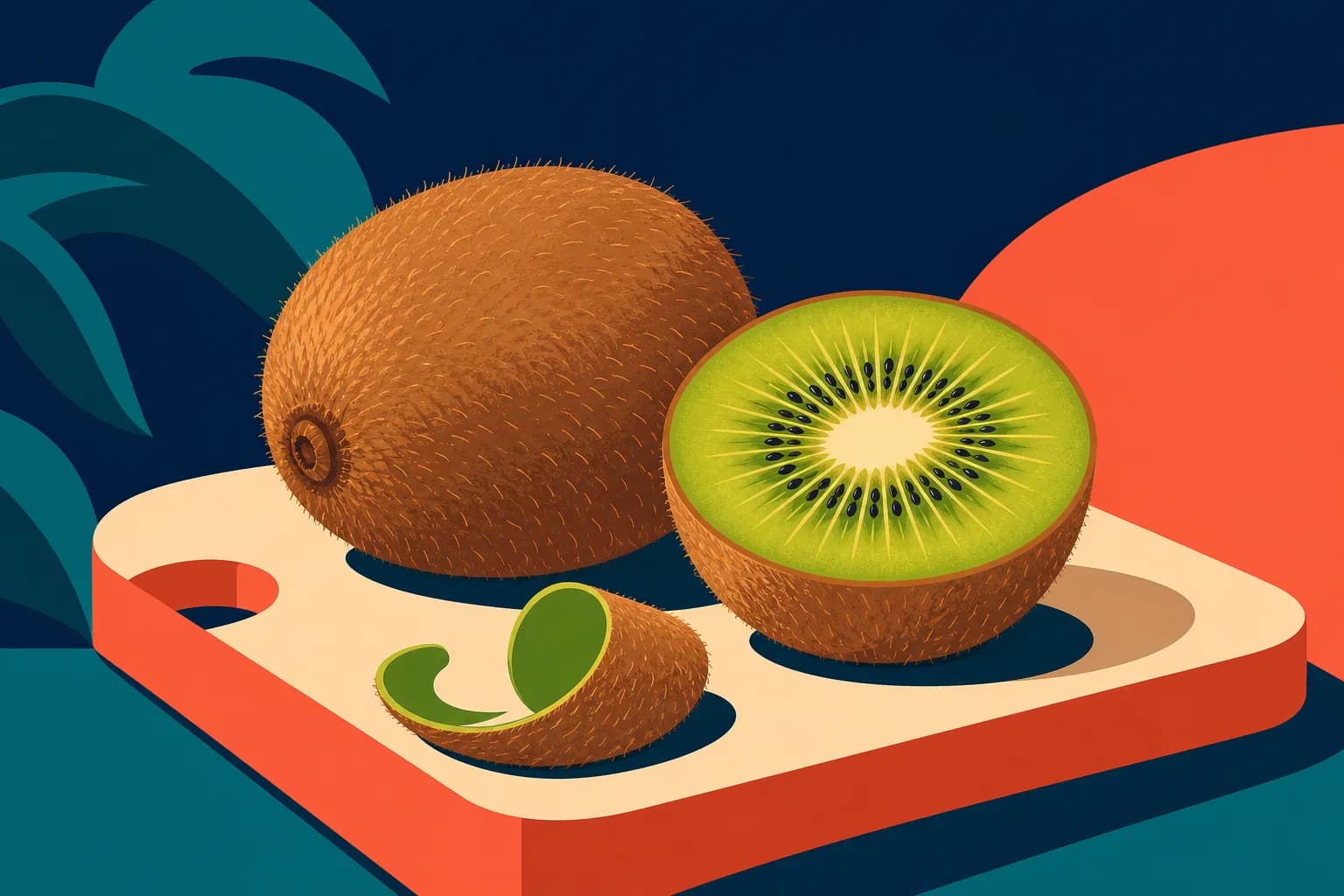
Kiwi is often called a superfood, although the word is more of a convenient label than a medical term. One fruit won’t solve nutritional problems, but kiwi does have a rich nutrient profile: vitamin C, fiber, potassium, folate, and plant compounds in a small serving of juicy flesh.
Green kiwi contains around 90 mg of vitamin C per 100 g, while golden varieties usually contain even more. That’s comparable to an adult’s daily requirement. The fruit also contains vitamin K, vitamin E, and the enzyme actinidin, which helps break down proteins. Kiwi has a bright flavor and a moderate calorie count: around 60 kcal per 100 g.
How kiwi can benefit your everyday diet
The most obvious reason to eat kiwi regularly is its vitamin C. It’s needed for collagen synthesis, immune system function, and protecting cells from oxidative stress. Still, it’s more helpful to think of the fruit as part of your diet, rather than as a cure for a cold or fatigue.
Kiwi contains both soluble and insoluble fiber. These support regular bowel movements, affect feelings of fullness, and provide a substrate for gut bacteria. To learn more about how bacteria break down fiber into short-chain fatty acids, read our article on fiber and butyrate production.
Kiwi is easy to add to breakfast: slice it into porridge, mix it with plain yogurt, or eat it after a main meal. Its tartness and sweetness pair well with cottage cheese, oatmeal, and nuts. If the fruit seems too sour, leave it at room temperature for a day or two.
The word “superfood” can sometimes encourage a strange idea: that good health depends on one special food. This approach can easily turn into rigid food rules. You can read about the risks of these beliefs in our article on dark nutrition. Kiwi is valuable as an accessible fruit that complements vegetables, legumes, whole grains, and other sources of nutrients.
Why women in particular may want to include kiwi in their diet
Women of reproductive age are more likely to experience iron deficiency due to menstruation. Kiwi itself isn’t a rich source of iron, but its vitamin C improves the absorption of non-heme iron from plant foods. A practical option: add kiwi to a breakfast of oatmeal, pumpkin seeds, or iron-fortified cereal, or eat it after a lentil dish.
The fruit contains folate, or vitamin B9. It plays a role in blood cell formation and is especially important when planning a pregnancy and during the first trimester. However, kiwi can’t replace folate or prenatal supplements prescribed by your doctor, if these have been recommended for you.
Fiber can also be helpful on days when your gut is working more slowly than usual, for example before your period. It’s best to start with one fruit a day and see how your body responds. If you experience significant bloating, pain, or irritable bowel syndrome, discuss the amount of fruit and suitable varieties with a doctor or dietitian.
Who might not tolerate kiwi well
This tart fruit can irritate the lining of the mouth, especially if you eat a lot of it. Mild tingling may sometimes be caused by actinidin, but itching in the mouth or swelling of the lips, tongue, or throat shouldn’t be dismissed as a reaction to acidity. These symptoms may indicate a kiwi allergy. Anaphylaxis UK recommends that people with a confirmed allergy avoid the fruit itself and products containing it.
If you suspect an allergic reaction, stop eating kiwi and seek medical advice. Difficulty breathing or increasing throat swelling requires emergency care.
What’s new in research on kiwi skin
You don’t have to peel kiwi: the skin is edible and adds fiber, if you like its texture and tolerate it well. A scientific paper was published online on October 29, 2026, in the International Journal of Food Sciences and Nutrition. The authors compared the parts of 12 raw fruits and vegetables that are usually eaten with the parts that are usually discarded. In 10 cases, the discarded parts contained more dietary fiber for a comparable weight.
This was a study of food composition; it didn’t test whether eating the skin improves health. A comparison per 100 g also doesn’t tell you how much fiber one fruit adds: the skin weighs much less than the flesh. Golden varieties usually have thinner, smoother skin. A 2018 review in the European Journal of Nutrition estimates that SunGold skin may increase fiber content by around 50%.
Before eating, wash the kiwi under running water, gently rubbing the skin with your fingers.
Before eating, wash the kiwi thoroughly under running water, rubbing the skin with your fingers, and pat it dry with a clean towel. Slice the fruit into thin rounds if that makes the skin more enjoyable to eat. The FDA recommends washing fruits and vegetables without soap or household cleaning products.
If you’ve only eaten peeled kiwi before, try a small piece with the skin on. If you experience bloating or dislike the texture, go ahead and peel it: you don’t need to put up with discomfort for a little extra fiber.
Can I add kiwi to a smoothie?
Yes. The flesh blends well with yogurt, banana, berries, and greens. Prepare the drink just before you have it: actinidin can change the texture of dairy products if the smoothie sits for too long.
How many kiwis can you eat in a day?
For most people, one or two fruits a day is a typical serving of fruit. Let your appetite and tolerance guide you, and follow your doctor’s advice if you have an allergy or a digestive condition.
Is it true that kiwi can help with constipation?
For some people, eating kiwi regularly helps make bowel movements softer and more frequent, thanks to its fiber and water. But if constipation persists, or you have pain, blood in your stool, or unexplained weight loss, don’t try to solve the problem with fruit alone.