You seem to eat “by the rules” — counting calories, choosing healthy foods, trying to keep your diet under control. And the body seems to live its own life. Weight is stagnant. Energy is lacking. Appetite fluctuates. And cravings sometimes occur, after which it becomes even more unclear: what am I doing wrong?
This feeling is not a illusion. It has a metabolic explanation — and this article is about exactly that. Fiber First is a nutrition approach that went viral not due to fashion, but thanks to simple mechanics and a noticeable effect. We analyzed it from two sides: how it works in practice and what science says about it.
What is the Fiber First nutrition method about?
Fiber First is not a diet, but a tool for metabolic regulation, where the key is not restrictions in amount or type of foods, but the order of meals. Fiber First offers one small rearrangement that changes everything: first fiber, then proteins and fats, and only then carbohydrates. It sounds simple, but it works at the biochemical level.
The foundation of the method traces back to classic research, in particular to the works of Denis Parsons Burkitt and Hubert Carey Trowell, who in the 1970s–80s proposed the hypothesis that a lack of dietary fiber increases the risk of obesity, diabetes, intestinal diseases, and cardiovascular diseases.
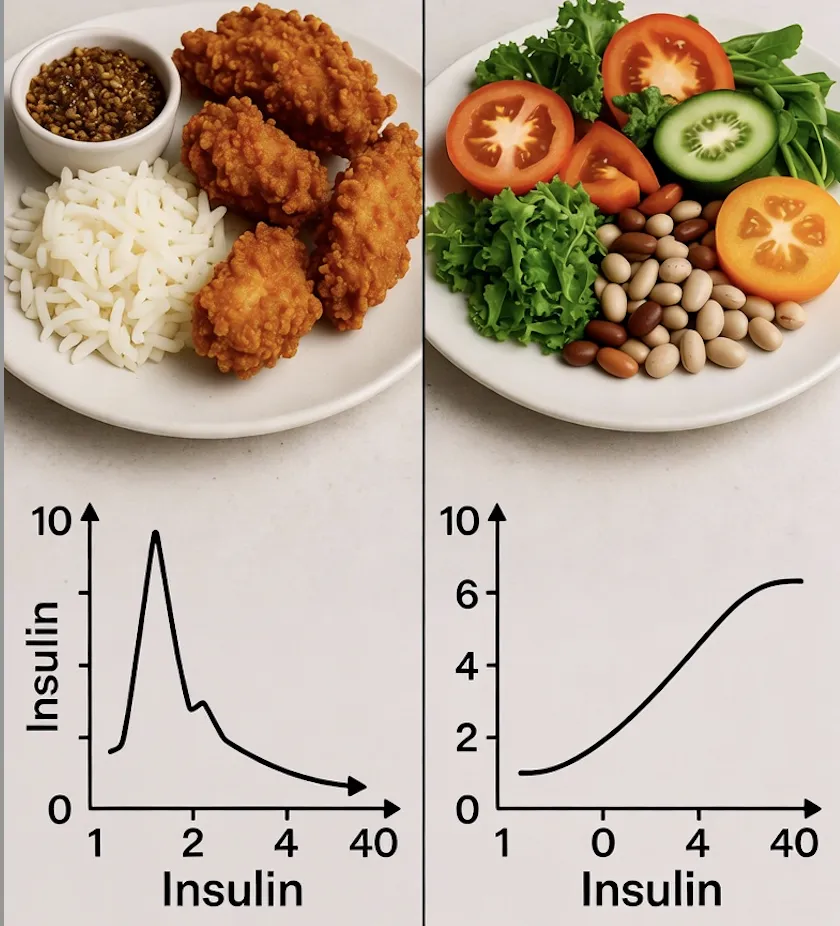
When fiber is in the stomach first and turns into a viscous gel in the small intestine. This inner coating slows glucose absorption and minimizes insulin surges.
In the Weill Cornell Medicine studies (Shukla et al., 2015) glucose peaks were reduced by 30–70% when carbohydrates were eaten after fiber and proteins.
Intestinal bacteria also release short-chain fatty acids that reduce inflammation and improve appetite regulation.
And what about proteins and fats?
After fiber follow proteins and fats as a stable support. They provide satiety and trigger fullness hormones — CCK, GLP-1, leptin. These signals “calm” the brain before carbohydrates appear. This ensures long-lasting fullness without cravings and wanting to eat again an hour after a meal.
Carbohydrates, by contrast, enter the system after two protective barriers — fiber and proteins. This reduces their metabolic “impact.”
Recommended fiber intake for a person:
• Women: 25–30 g/day
• Men: 30–35 g/day
• Optimal for weight loss: 30–40 g, if the GI tolerates it
Important nuance
Increase the dose gradually to avoid bloating and gas. Increase carbohydrate intake by 3–5 g per week.
High-fiber foods
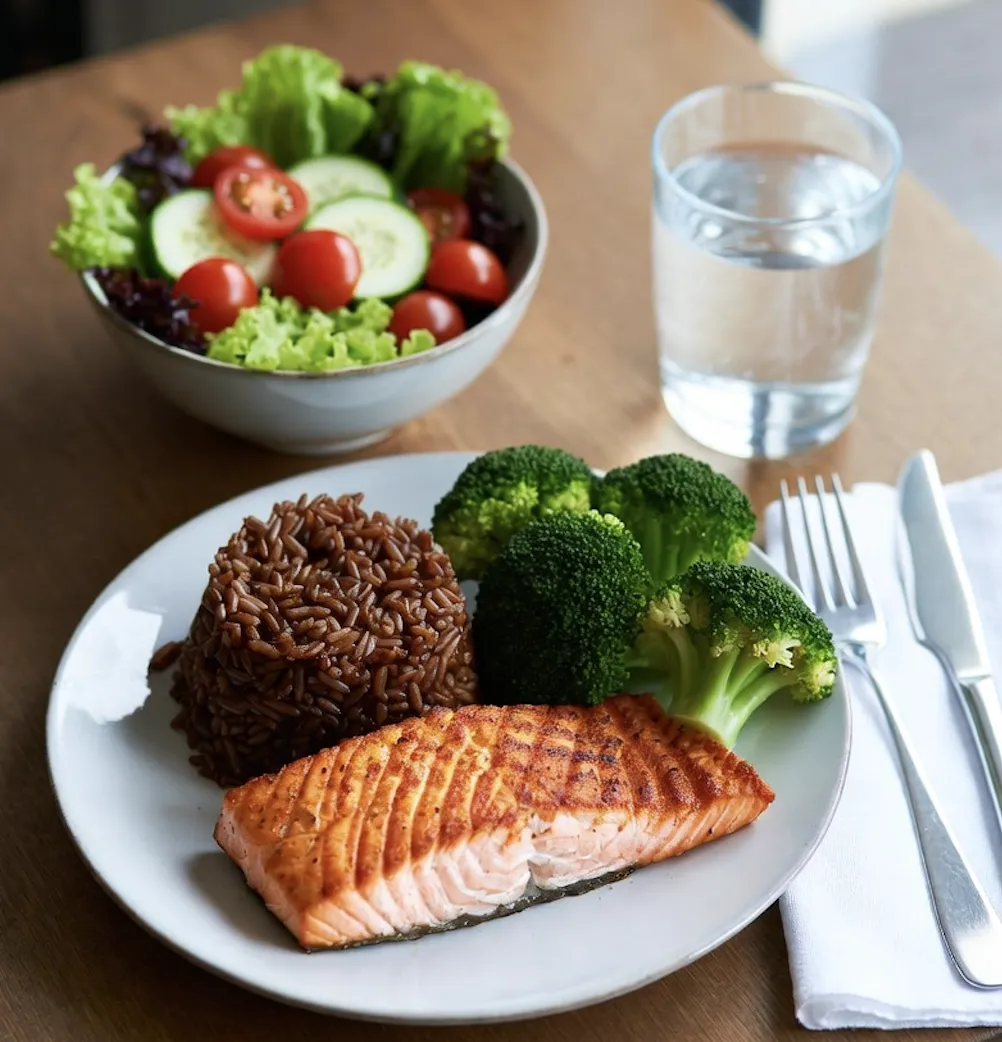
• Vegetables: broccoli, cabbage, carrots, spinach, cucumbers
• Legumes: lentils, chickpeas, beans
• Fruits: apples, pears, berries
• Whole grains: oats, whole wheat, bulgur
• Fermented vegetables: sauerkraut, kimchi
• Seeds: chia, flax
Typical meal-time mistakes
Replacing vegetables with juices or smoothies
Sweet juices are pure sugar, which cause sharp glucose spikes. And seemingly “healthy” smoothies are actually useless because the fiber is chopped and the effect is minimized. This was emphasized by Tim Spector (The Guardian, 2023).
Not enough fiber in the first stage
Two leaves of lettuce are not Fiber First! To saturate the body with fiber and create this protective coating in the stomach, you need at least 100–150 g of vegetables.
Too many refined carbohydrates
If your carbohydrates are sugar, buns, juices, then fiber will not save the situation and the effect will be minimal. There is no magic here, and it is still important to consume healthy carbohydrates, such as porridges, potatoes, whole-grain bread.
The future is in micro-steps
Nutrition is gradually moving away from “restrictions” to “strategies.” Fiber First fits into a new generation of approaches: not less food, but smarter mechanics. Not a fight with the body, but a tune-up.
Fiber First is an example of how a small rearrangement can change the behavior of metabolism, hormones, microbiota, and the brain. And most importantly, it is also preventive for chronic diseases.
According to the study, the average age of chronic disease onset decreased from 56 to 38.
In the works by Okada and co-authors (2013) patients with type 2 diabetes achieved not only an immediate effect but also improved long-term glycemic control after 2.5 years.
A review on diet and cancer prevention (Kleeman et al., 1999) shows: high fiber intake reduces the risk of chronic diseases, especially at 25–35 g/day.
Conclusions
The society has grown tired of complicated diets. Fiber First hits the mark — it is a minimal action that yields a noticeable result. Suitable for everyone: vegetarians, meat lovers, people with sensitive microbiota, those fighting insulin resistance.
And the main thing is that a person feels the changes almost immediately: calm appetite, absence of cravings for sweets in the evening, steady energy.