Fear of Mistakes After Childhood Criticism: Can the Old Pattern Be Changed?
If you were shamed for mistakes in childhood, an adult mistake may feel like a threat. We explore imagery rescripting: how the method works in therapy

⋄7 min read
NAD+ has become one of the most talked-about substances in the longevity industry. Supplements, IV drips, and biohacking protocols promise to raise its levels, slow aging, and restore energy to cells. At the heart of these promises is a popular hypothesis: NAD+ levels decline in the body with age, and replenishing them may help counter age-related changes. But does the level of this substance really inevitably fall as we grow older?
A new study involving 1,068 adults has called the universality of this idea into question. The researchers found that among healthy men, NAD levels in whole blood were not associated with age, while among healthy women, they actually increased. At the same time, lower levels were observed in participants with cardiovascular disease and hypertension.
The findings, published on November 4, 2026, in Nature Metabolism, suggest that the relationship between NAD, age, and health may be more complex than commonly assumed.
However, the study has important limitations: the researchers compared people of different ages rather than tracking changes in NAD in the same participants over their lifetimes. In addition, measurements were taken in whole blood, so the results cannot automatically be applied to the brain, muscles, and other tissues. The study also did not test the effectiveness of NAD+ supplements or IV drips.
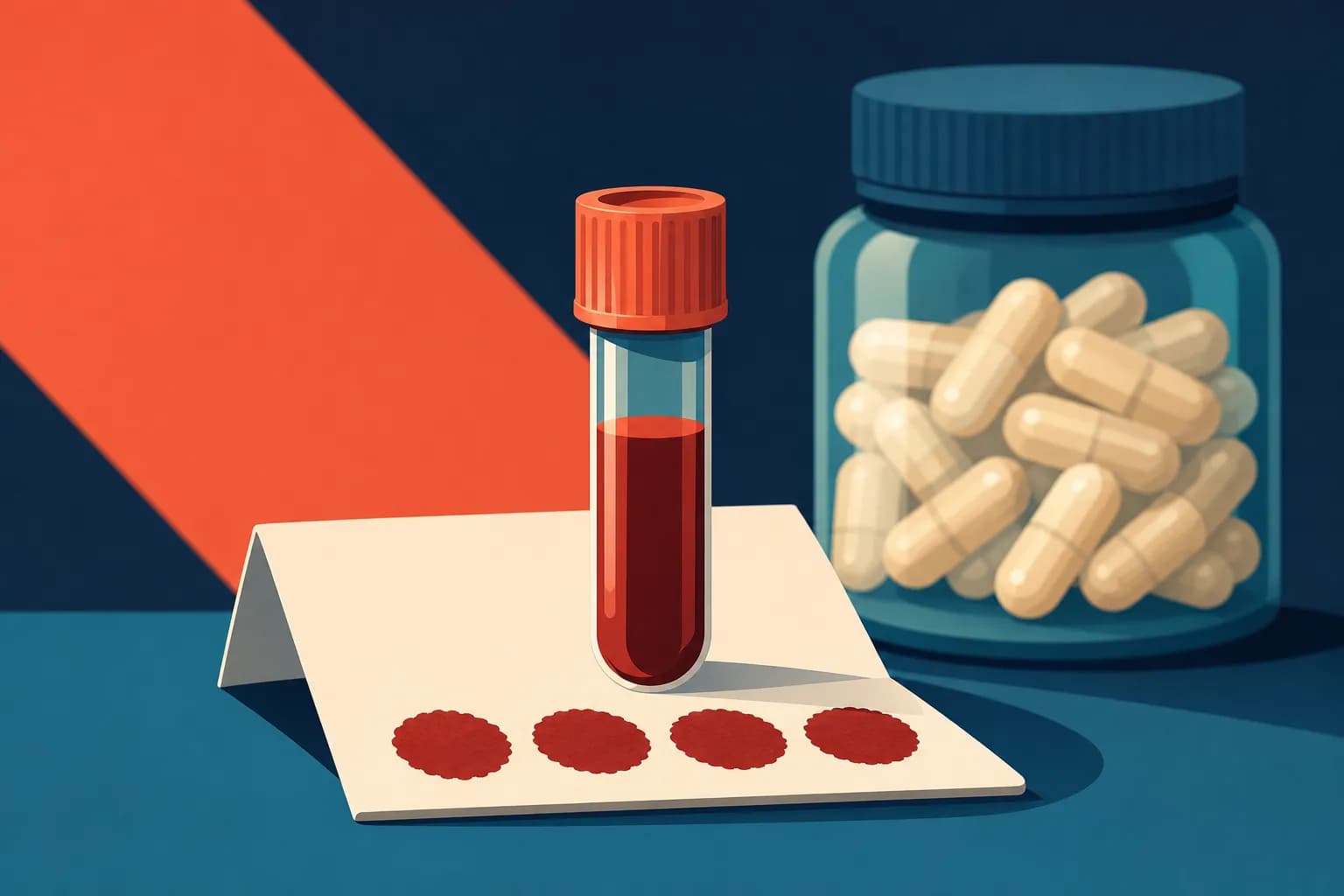
The study included 636 women and 432 men. The researchers analyzed dried blood spots and measured total NAD: the sum of NAD+ and NADH. This is an important detail: discussions of supplements usually focus specifically on NAD+, although these measures are not interchangeable.
Among healthy men, no statistically significant association between total NAD and age was found. Among healthy women, levels were higher in the older age groups. This does not mean that every woman's NAD necessarily rises over the years: the study found a difference between participants of different ages.
Men and women who reported having cardiovascular disease or hypertension had lower NAD levels. When comparing women, the researchers accounted for age, since it was itself associated with the measure.
The findings refine the common idea of an age-related NAD deficiency. At least for total NAD in whole blood, the rule “the older a person is, the lower the level” was not confirmed.
NAD, or nicotinamide adenine dinucleotide, is involved in metabolism. Its NAD+ and NADH forms accept and transfer electrons in reactions that enable cells to produce energy. In addition, NAD+ serves as a substrate for enzymes involved in DNA repair and the regulation of cellular processes.
But there is no single pool of NAD that is equally available to all organs. Its levels depend on cell type and on the synthesis and use of the molecule. Even different parts of a cell can have their own NAD metabolism dynamics.
Nearly all the NAD measured in whole blood comes from erythrocytes, or red blood cells. Mature erythrocytes have no nucleus or mitochondria; their structure and metabolism differ substantially from those of muscle cells or neurons. So a stable blood measure can coexist with changes in other tissues.
There is another distinction: the sum of NAD+ and NADH does not show the ratio between these forms. Total levels may remain similar even when the balance between them differs. The new finding should not be read as saying that all NAD-related processes remain unchanged with aging.
Lower NAD levels in people with cardiovascular disease make it an interesting subject for further research. The measure may reflect metabolic or blood composition characteristics associated with the disease. However, the direction of the association is still unknown: the data cannot establish whether NAD declined before the disease or changed along with it.
Participants reported their own diagnoses, and the medications they were taking may have affected the results. The researchers also did not directly measure hematocrit, the proportion of blood volume occupied by erythrocytes. This is a significant limitation for a measure that is primarily associated with these cells.
For now, the study does not make NAD testing a diagnostic test for hypertension or a way to assess future cardiovascular risk. Nor does it show that raising NAD with supplements lowers blood pressure.
NMN, or nicotinamide mononucleotide, and NR, or nicotinamide riboside, are NAD precursors: the body can use them to synthesize NAD. They are promoted as NAD boosters and longevity supplements. However, the ability to raise a laboratory measure and the ability to improve health require different kinds of evidence.
This distinction is clear in a randomized, double-blind NMN trial published in npj Aging in September 2026. Adults aged 65 and older took NMN or a placebo for 24 weeks. Blood NAD+ levels rose significantly in the NMN group.
At the same time, no significant improvement was found in hearing, the primary outcome being assessed. Physical performance measures also did not improve significantly. This is a specific example of a biochemical response without a confirmed improvement in the functions studied.
The results of one trial do not settle the question of all possible effects of NMN, nor can they automatically be applied to NR. But they show why an increase in NAD+ alone cannot be considered proof of rejuvenation.
No substantial adverse effects were found over the 24 weeks of this trial. This duration does not establish the safety of taking NMN for many years. The study was funded by MIRAILAB BIOSCIENCE, which supplied the NMN.
The new study does not establish a target NAD level “for youth.” Nor does it provide a basis for calculating biological age from this measure alone. It is especially important to be cautious about comparing yourself with a universal age-based norm: the associations with age differed between healthy men and women, and there were few healthy participants over 70.
For someone interested in influencing the processes of aging, a more useful question is a specific one: what change in health should follow from raising NAD, and has it been confirmed in trials? Blood pressure, physical performance, and well-being are important in their own right. A higher number on a test does not replace assessing these outcomes.
The study did not establish the reason for this association. A comparison of age groups alone cannot attribute it to hormones or establish that it is a protective mechanism. Further measurements and longitudinal follow-up of participants are needed to explain it.
Only if the sample material, NAD forms being measured, and testing method are comparable. A result for total NAD in whole blood cannot be directly compared with a test for NAD+ alone or a measure taken from a different biological sample. Before interpreting a result, it is important to clarify exactly what the laboratory measured.
This study does not provide a basis for prescribing a special diet. The body synthesizes NAD with the help of vitamin B3 and the amino acid tryptophan from food. A balanced diet supports many functions, including skin health, but meeting nutritional needs does not prove that high doses of NAD boosters provide additional benefits.
How was this article?
Share