Omega-3 for Memory: Results of a Two-Year DHA Trial
In a two-year trial, DHA levels in cerebrospinal fluid increased, but memory did not improve. We explain why absorbing a supplement does not necessarily benefit the brain.

⋄5 min read
According to the World Health Organization ~55 million people worldwide live with dementia and each year about ~10 million new cases are added. 60–70% of all dementia cases are Alzheimer's disease. Once the diagnosis "MCI" (Mild Cognitive Impairment) is made and this "age-related decline" appears, some actions need to be taken. For now it's "nothing critical." But inside there is anxiety. Because memory is not just a function. It is the sense of self.
And then an idea appears that sounds almost audacious: cognitive decline can not only be slowed, but reversed.
Thus the protocol of Dale Bredesen appeared — ReCODE (Reversal of Cognitive Decline). A method that inspires hope in patients and skepticism in academic neurology. And precisely for that reason it is worth analyzing calmly and accurately.
For many years Alzheimer's disease was attempted to be treated as a "single malfunction." Amyloid — remove it. Tau — suppress it. But dozens of major clinical trials failed, as improvements were minimal.
Bredesen proposed a different model.
Alzheimer's is not a single defect. It is a metabolic syndrome of the brain.
He compared it to a roof with 36 holes. Closing one is pointless. You need to patch them all. This is a working hypothesis. Not a proven truth, but biologically it is logical.
The basic idea of the method is simple: the brain stops maintaining synapses when the environment becomes unfavorable.
This "unfavorable environment" includes:
insulin resistance
chronic inflammation
hormonal deficiencies
sleep disturbances
toxic burden
micronutrient deficiencies
chronic stress
The protocol does not add a single drug, but tries to remove the factors that push neurons toward degradation.
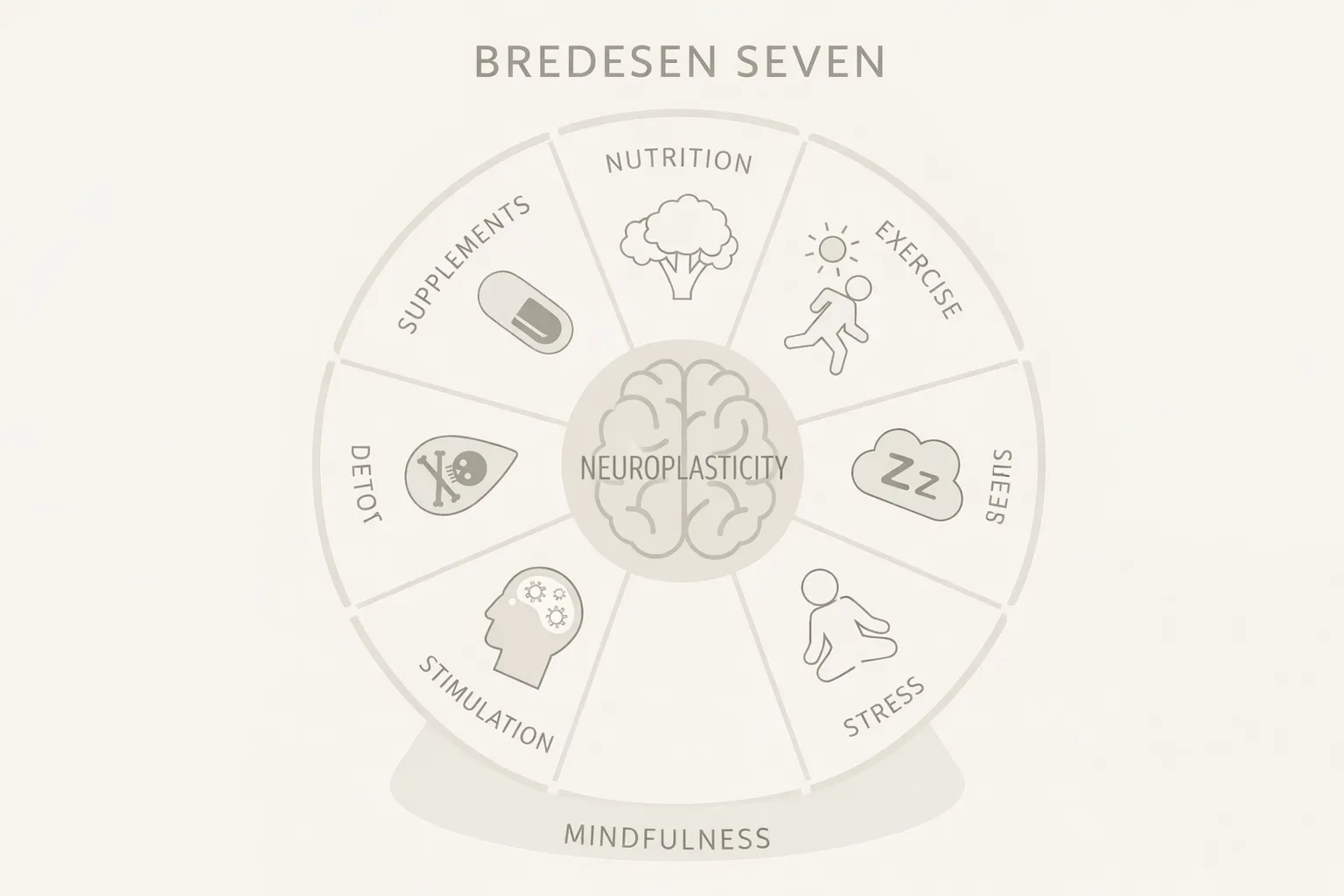
The foundation of the method lies in an initial deep assessment of the overall state of the body. And only after this is a personalized treatment protocol prescribed.
What is included in the diagnostics:
– genetics (APOE)
– levels of glucose, insulin, HOMA-IR
– inflammation markers (CRP, cytokines)
– hormones (estrogens, testosterone, DHEA, thyroid)
– vitamin D, B12, homocysteine
– lipids
– toxin markers
– infections (HSV-1, Borrelia, etc.)
– cognitive tests (MoCA, etc.)
This goes deeper than isolated neurology and is rather systemic medicine. It is here that the method becomes expensive and labor-intensive.
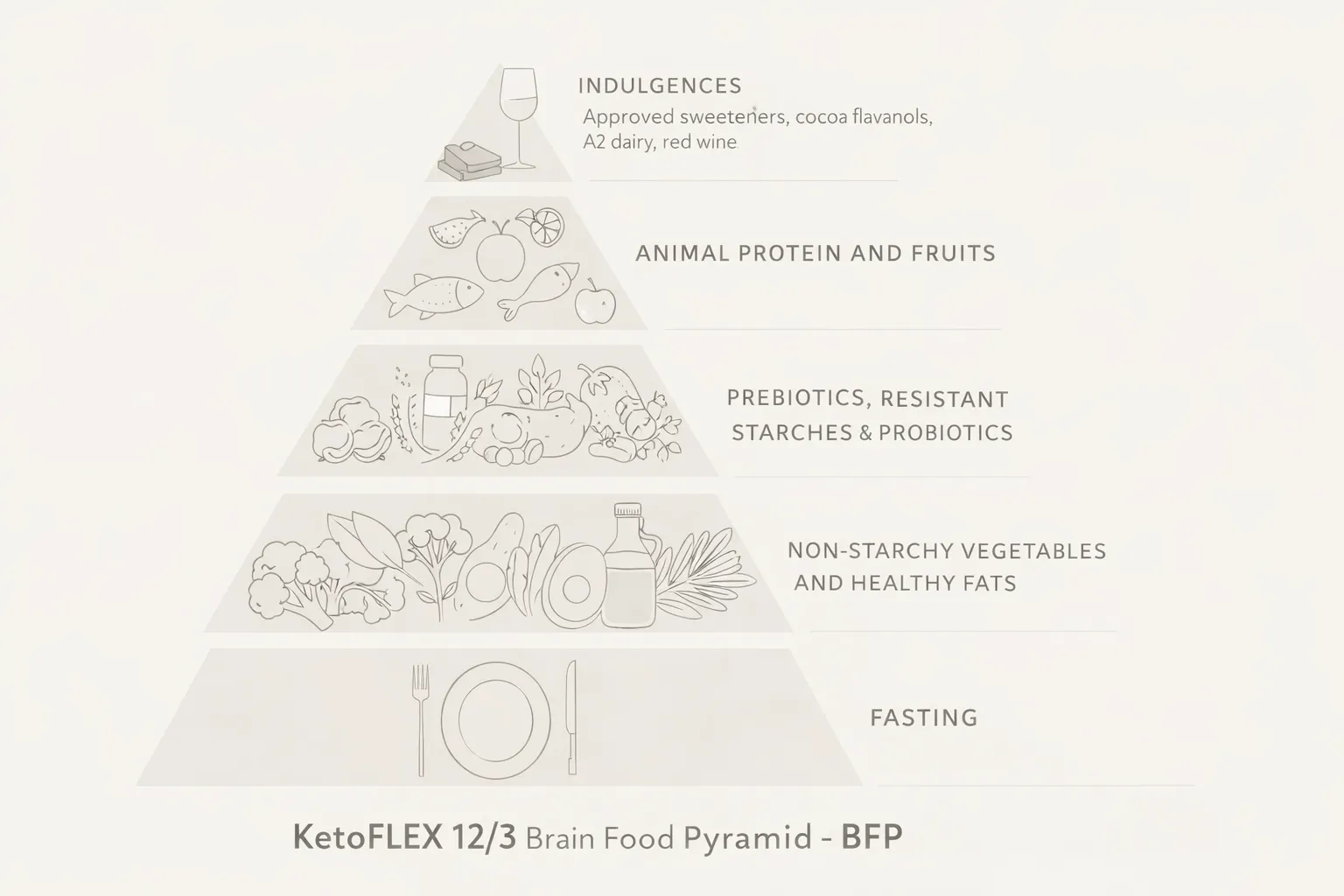
At the center of the protocol is anti-inflammatory nutrition with elements of a ketogenic approach. The goal is to lower insulin, stabilize glucose, and provide the brain with an alternative fuel in the form of ketones.
The brain in early Alzheimer's uses glucose less effectively, but the ability to use ketones is often preserved. This is not a "keto trend," but an attempt to bypass a metabolic failure.
Typically recommended:
12–16 hours of overnight fasting
elimination of ultra-processed foods
omega-3s
a large amount of non-starchy vegetables
moderate protein
carbohydrate control
The need for physical activity becomes mandatory. With age and in dementia, levels of BDNF (brain-derived neurotrophic factor) decrease. Physical activity is one of the most powerful non-pharmacological ways to increase it. Overall insulin sensitivity improves and mitochondria are activated.
Large meta-analyses show:
regular physical activity reduces the risk of dementia by 20–35%
in people with MCI (mild cognitive impairment) aerobic training improves executive functions and memory
in patients with early-stage Alzheimer's there is a slowing of functional decline
Physical activity is needed not for the body's "shape," but for the synapses.
Studies most often implement:
150–180 minutes of moderate aerobic activity per week
2–3 strength training sessions
balance and coordination training
During sleep, the glymphatic system is activated — a mechanism that removes metabolic waste from the brain. Chronic sleep deprivation is associated with amyloid accumulation.
What needs to be fixed:
– at least 7–8 hours of sleep
– treatment of apnea
– circadian rhythm regulation
– reduction of evening light
The brain is sensitive to sex hormones and thyroid hormones. In cases of deficiencies, replacement therapy may be prescribed under laboratory monitoring. This is still a controversial part of the protocol, as hormone therapy carries risks. And here a physician is critically important.
Chronic systemic inflammation is associated with neurodegeneration.
Work is done through: microbiota correction, elimination of dietary triggers, omega-3 and vitamin D, as well as reduction of visceral fat. If mold or heavy metals are identified, the protocol includes detox strategies.
Case series and prospective studies showing improvement in cognitive tests in some patients have been published. However, there are no large completed placebo-controlled trials yet and sample sizes are relatively small.
Bredesen's method breaks the paradigm, because classical medicine likes a single intervention — a single target. In contrast, ReCODE is 20–30 changes at once.
If a person's condition improves, it's hard to understand what exactly worked. And if it doesn't improve — it's hard to understand where the weakness was. But the approach reflects reality: chronic diseases rarely have a single cause.
It shifts the focus from a "hopeless neurodegenerative process" to manageable biological factors. It returns agency to the patient, where there are real levers of influence, such as control of insulin, sleep, and inflammation — these are measurable.
Most likely, the future of Alzheimer's treatment is a combination: metabolic correction, targeted drugs, genetic analysis, and early screening.
ReCODE may turn out to be a forerunner of this model, or it may be an intermediate stage of evolution. Science is still testing it, but one thing is already clear: the brain is not an isolated organ. It reflects the state of the whole system.
And in this sense the Bredesen protocol is not so much about Alzheimer's disease as about how deeply we are willing to work with our own biology. The question is whether we are ready to admit that complex diseases require complex solutions and this is an honest conversation.
The protocol requires: discipline, investment, time, and high involvement. It is not a single pill, but a lifestyle change at a systemic level. Even with perfect adherence there is no guarantee of disease reversal, but there is a clear and measurable plan that we can influence.
How was this article?
Share