Have you ever noticed that strange feeling — that somewhere inside lives a more energetic version of you? Clearer, more alive. It hasn't disappeared — it's just become a bit harder to reach. The good news: it's not your imagination. And, according to recent scientific data, you can get closer to that version of yourself.
The conversation about aging is usually reduced to one of two things: either fatalism (“what can you do, we all age”), or the sale of yet another miracle cream. But there is a third way — to understand what is actually happening in the body's cells. And then something unexpected becomes clear.
Your body ages not because it breaks down. It ages because it gradually loses the ability to read its own instructions.
This idea belongs to Professor David Sinclair from Harvard Medical School and changes everything we thought about aging.
What happens in the cells?
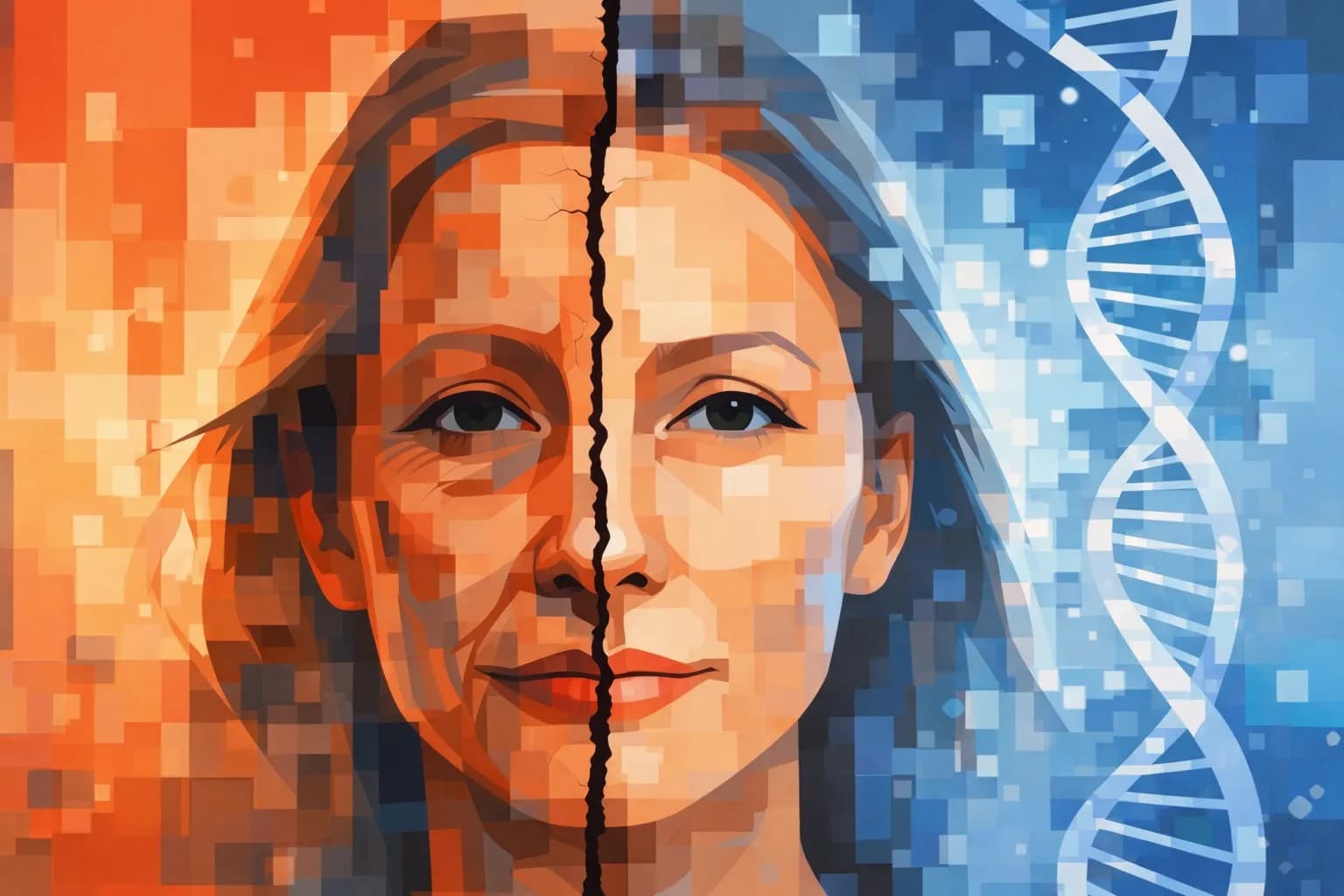
Imagine that the genome is a perfectly written book. With age the book doesn't go anywhere. But the pages begin to stick together, the letters to blur. The cell still holds the full text, but reads it worse and worse. This is exactly what researchers call epigenetic “noise.”
Epigenetics is a system for controlling genes: which are turned on, which are turned off, at what time and in which cell. With age this system loses precision. It's not the genome itself that degrades — it's the ability to use it. The cell begins to 'forget' what it should be.
NAD+: the molecule you lose with each year
Sounds like an abbreviation from a textbook — but behind it lies one of the main mechanisms of aging that are being studied today in the world's top laboratories.
NAD+ (nicotinamide adenine dinucleotide) is a molecule without which sirtuins simply don't work. Sirtuins are protective proteins that watch over the integrity of the epigenome, repair DNA damage and maintain cellular identity. The problem is that with age the level of NAD+ in the body naturally decreases. And the less NAD+ there is, the weaker the entire defense system works.
80% of our future health and longevity is determined by epigenetics — not genetics. That means control is in your hands.
Good news: NAD+ levels can be maintained. The most studied methods are fasting and aerobic exercise (they trigger NAD+ production naturally), as well as some NAD+ precursors that are being investigated in clinical trials. Sinclair personally takes NMN — a precursor of NAD+ — and notes that in study participants blood NAD+ levels doubled after two weeks of intake.
An important caveat: supplements are not a replacement for lifestyle. They can amplify the effect, but without basic habits they work poorly.
Which experiment changed everything?
In 2020, scientists from Harvard conducted an experiment that questioned the very idea of the irreversibility of aging. They took retinal cells from old mice with impaired vision and exposed them to special proteins — the so-called Yamanaka factors (Oct4, Sox2, Klf4).
After 8 weeks the biological age of the cells decreased by 75%
The cells were not 'reset' to an embryonic state. They retained their specialization but restored youthful gene expression. The mouse's vision was partially restored.
This is not a fairy tale about eternal youth or an advertisement. This is a concrete biological mechanism: a 'reboot' of epigenetic settings without loss of cellular identity. Like reinstalling an operating system — while keeping all the files.
Yes, clinical application is still far off — the process requires jeweler-like precision, otherwise the risk of cancer increases. But the very fact that a cell can 'remember' its youthful version changes the entire way we think about aging.
'Zombie cells': why the body ages from the inside
Alongside the loss of epigenetic signaling in the body, another problem accumulates — senescent cells. In popular terms they're called 'zombie cells': they have stopped dividing but are not going to die. They just hang around in the body — and constantly emit inflammatory signals, poisoning neighboring healthy cells.
These cells are one of the reasons why chronic inflammation is so difficult to stop. It is fueled not only by stress and food, but also by this internal source. With age, there are increasingly more zombie cells — and the system begins to stall.
What can already be done about it?
Fasting and intense workouts trigger autophagy — a process in which the body 'eats' damaged and nonfunctional cells, including senescent ones. This is one of the main arguments in favor of periodic fasting — not for weight loss, but for cellular cleaning.
Five habits that slow biological clocks
While scientists refine reprogramming technologies for the clinic, each of us has tools that work right now. They affect those very epigenetic mechanisms — reduce 'noise' and help the system remain precise.
Stable blood sugar
Glucose spikes accelerate epigenetic noise. Fewer fast carbohydrates, more protein and fiber — energy level becomes steadier, and cells work more accurately.
Controlled stress
The body gets younger not at rest, but in adaptation. Workouts, intermittent fasting and contrast showers activate SIRT1, AMPK and cellular repair processes.
Morning light
Circadian rhythms directly influence gene expression. 10–20 minutes of natural light in the morning is the simplest way to synchronize internal clocks and the hormonal background.
Sleep quality
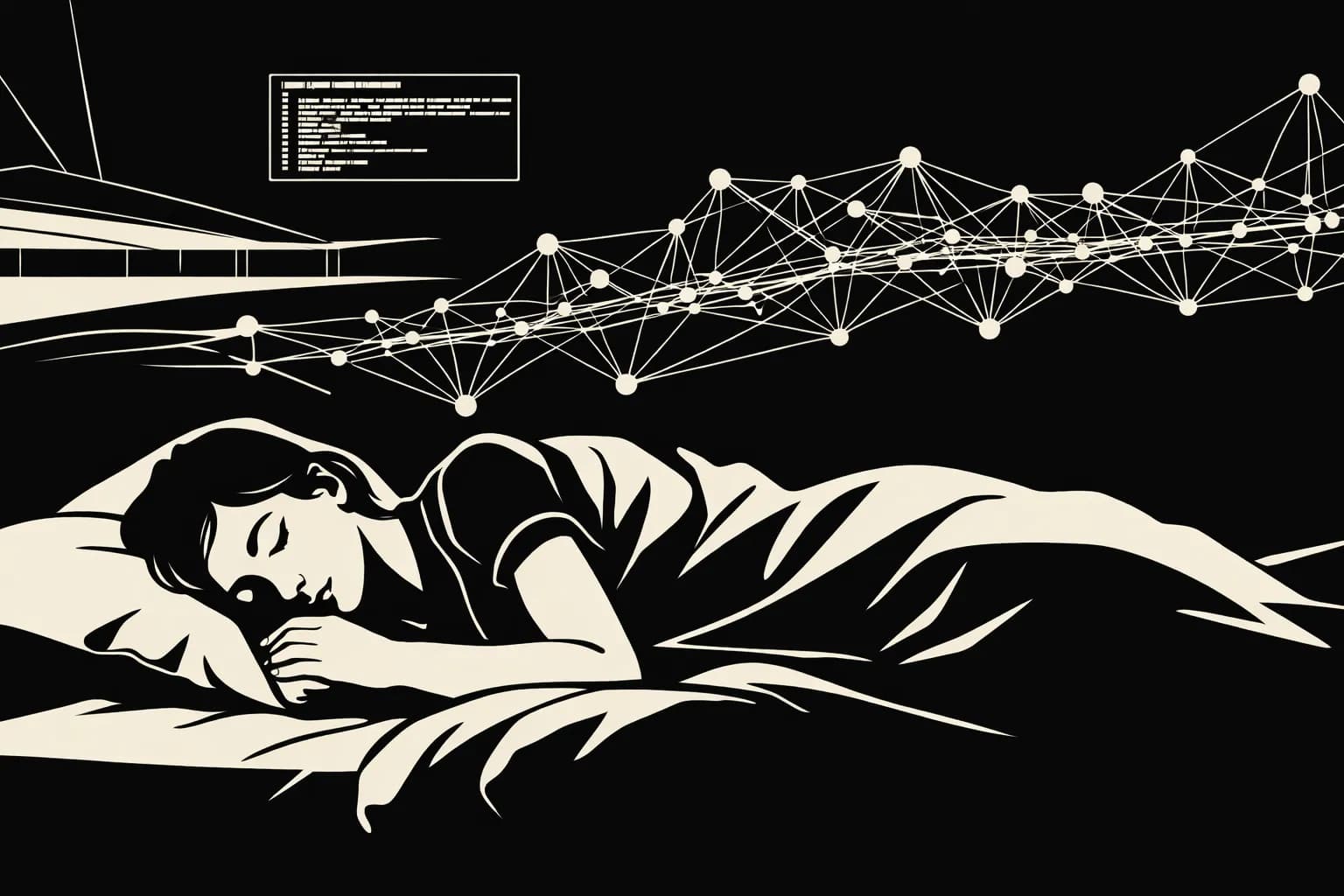
Mitochondria recover during sleep, and inflammation decreases. Poor sleep is one of the fastest accelerators of biological aging. A consistent bedtime is more important than duration.
Reducing chronic inflammation
Inflammation is the main fuel of biological aging. Stress, poor sleep and ultra-processed food keep it running in the background. Removing even one of the factors is already a significant step.
Deep fasting (the next level)
Regular intermittent fasting is good. But fasting for 2–3 days triggers a special process — chaperone-mediated autophagy. The body begins to clear out old, misfolded proteins and zombie cells. This is not for daily practice, but once a quarter — a powerful system reboot.
You age faster if you live in constant stimulation without pauses, don't give your body recovery phases and create biochemical chaos with poor sleep and food. This is not moralizing — it's mechanics. Chaotic input signals produce chaotic epigenetic noise.
Conclusions: what awaits us
Researchers are already testing partial reprogramming of tissues — not only eye cells, but also muscles, neurons, immune cells. At the same time epigenetic clocks are developing — precise tools that measure the real biological age of a specific person, not the passport age.
All this is not yet available at the pharmacy or in the clinic around the corner. But this is no longer theory — it is working science that is moving in one direction: toward age becoming a manageable parameter.
The rejuvenation of the future is not a single injection. It is a combination of technologies and daily decisions that either create noise or restore clarity to the system. You can start the latter today.