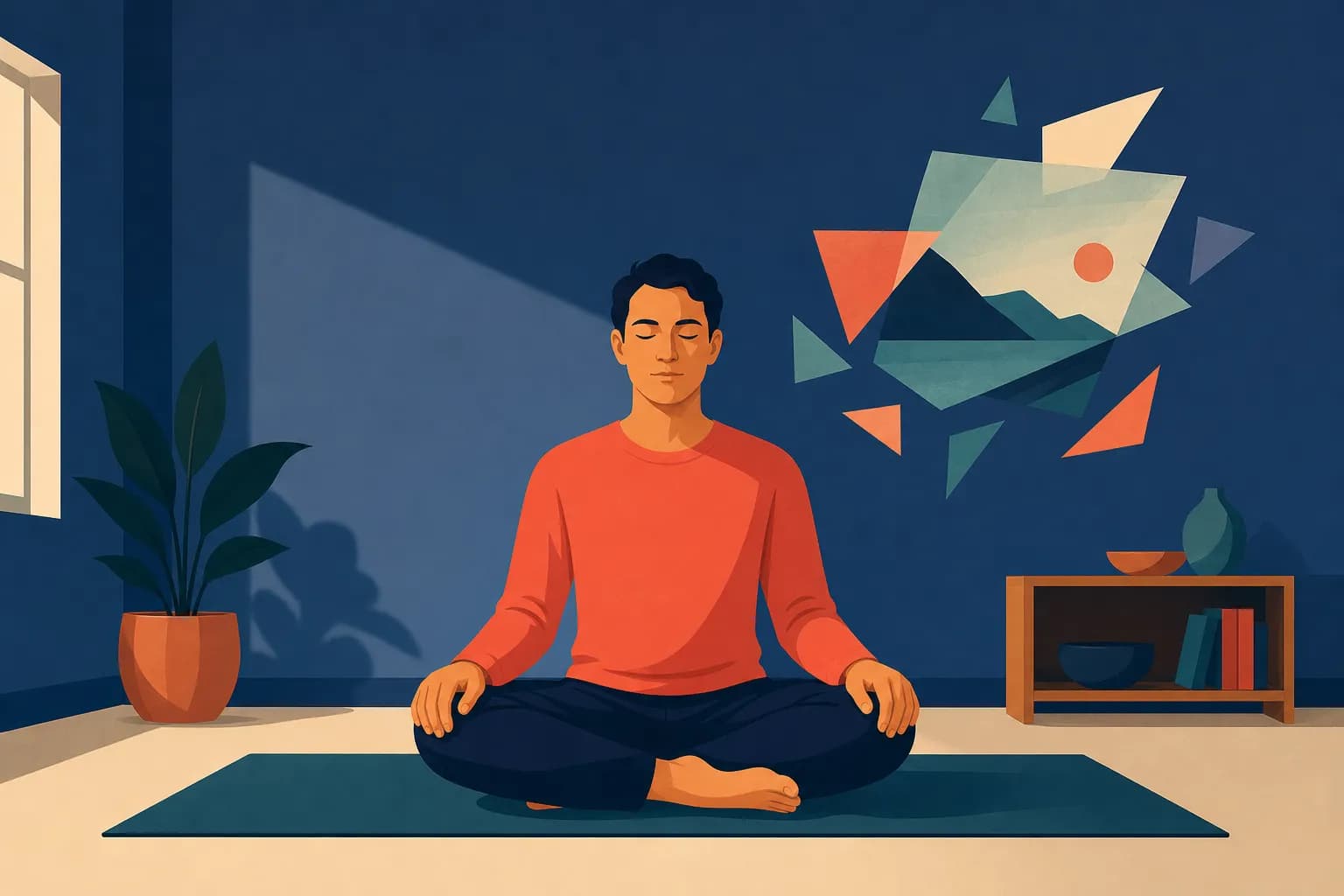
A bright flash, a moving pattern, or an almost cinematic scene can turn out to be more interesting than the breath you intended to observe. But images during meditation, by themselves, are not a reliable measure of spiritual progress. If the purpose of your practice is to keep your attention on the breath, you can usually notice a spontaneous image and let it go. It makes sense to intentionally stay with an image when working with a specific image is part of the method itself.
Experiences that seem similar at first glance can arise in different circumstances: during concentration, mind-wandering, or while falling asleep. A scientific explanation and a Buddhist teaching answer different questions here. The first tries to understand how an experience arises. The second offers a way to work with it.
What Ajahn Lee advised about images during meditation
On November 7, 2026, Tricycle magazine published Two Kinds of Vision, an excerpt from Ajahn Lee’s teachings, translated by Thanissaro Bhikkhu. This is a passage from the historical text “The Craft of the Heart,” not a report on new research. Ajahn Lee was a teacher in the Thai Forest Tradition and lived from 1907 to 1961.
His practical advice is not to get carried away by images that arise, and to maintain awareness of the body and mind. An image can capture your attention, stir delight, or prompt you to want to understand what it means. If a practitioner starts following the development of an inner storyline, the original purpose of meditation moves into the background.
The teaching also notes that some people do not experience such visions at all, even though concentration benefits them. So the absence of images should not be taken as a sign of failure. Nor does this perspective imply that every image must be suppressed or that its appearance is inherently dangerous.
This is the approach of a particular teacher. It would be inaccurate to present it as the only Buddhist instruction: different schools and methods assign different roles to inner visual experiences.
Why images arise during meditation
The word “images” can refer to different phenomena. Mentally seeing a familiar room, as in a memory, is one thing. Noticing a flash, a glowing point, or a pattern that feels almost like a visual sensation is another. A third possibility is to notice that a brief scene appeared on its own as you began to fall asleep. Based on a description alone, it is not possible to confidently determine the cause of every episode.
In a qualitative study by Jared Lindahl and colleagues, published in Frontiers in Psychology in 2014, nine of 28 participants independently reported light or luminous visual experiences during meditation. Participants were specifically selected because they had experienced significant, unexpected, or difficult aspects of practice. These numbers therefore tell us nothing about how often such experiences occur among meditators in general.
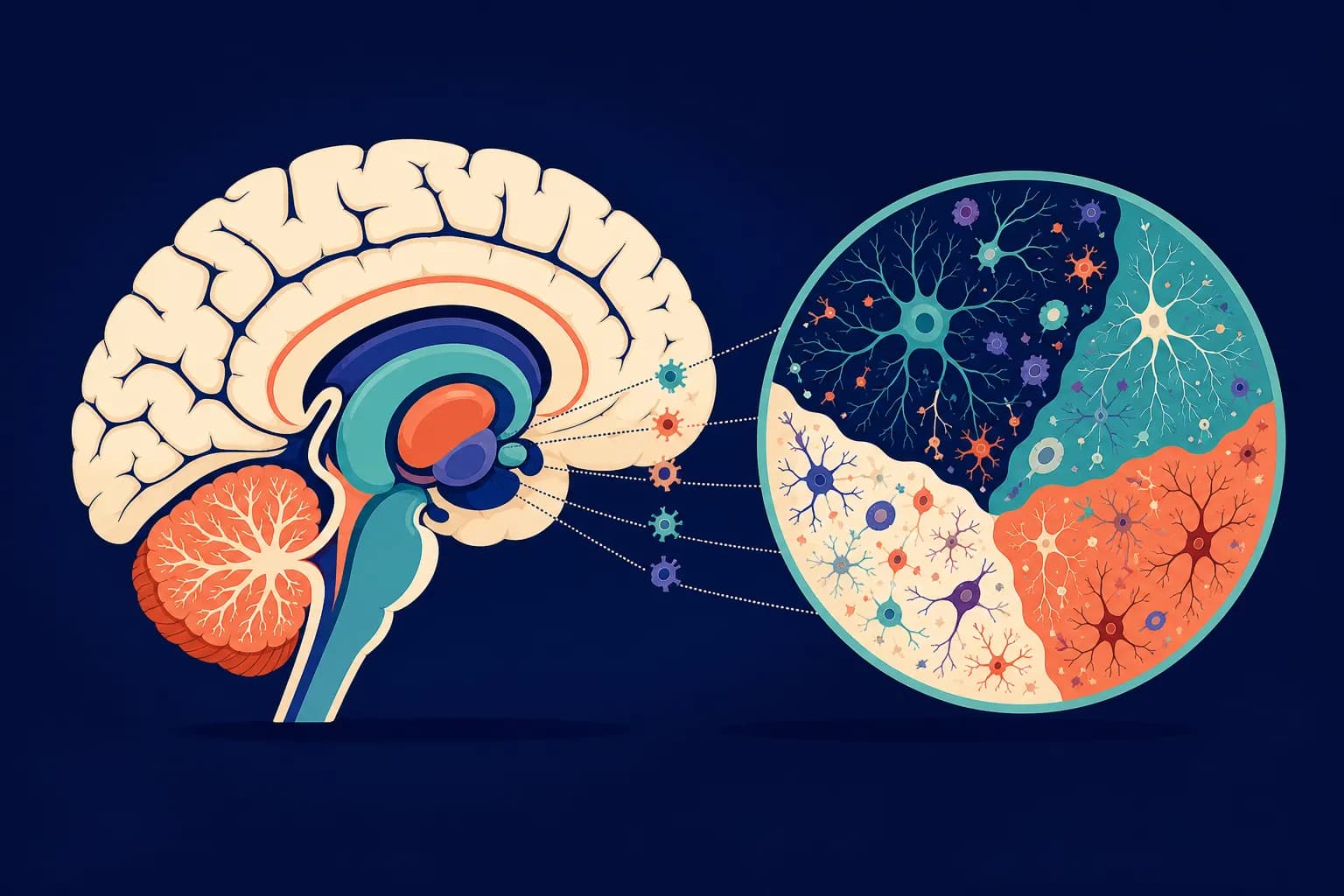
The authors suggested one possible explanation: some types of meditation reduce the flow of external visual stimuli while making attention more selective. These conditions may partly resemble sensory deprivation, which can also give rise to involuntary visual phenomena. This is a hypothesis about changes in sensory processing, not an established mechanism behind every experience. In addition, the study focused primarily on light effects; its findings cannot be extended to every kind of complex scene.
A separate explanation may apply if you are nodding off. A review in the Journal of Sleep Research, first published in 2022, describes hypnagogia: the transition between wakefulness and sleep, during which visual, auditory, and bodily experiences can arise spontaneously. If images come with drowsiness and a loss of focus in your practice, this context is worth considering. However, hypnagogia does not automatically explain all images experienced during wakeful meditation.
It is helpful to distinguish an experience from its interpretation. The inner light may indeed have been vivid and unusual. But its vividness alone does not mean that it tells you something about the future, the nature of the world, or the stage of practice you have reached.
In concentration practice, the object is chosen in advance. An image that arises does not have to become a new focus for meditation.
Should you always let an image go?
The answer depends on the instructions for the practice you are doing. A systematic review in Imaging Neuroscience from 2025 describes focused-attention meditation as sustaining attention on a chosen object, such as the breath, and disengaging from distracting stimuli. In this method, a spontaneous image can serve the same role as a memory of a conversation or a plan for the evening: attention follows it, then returns.
But there are techniques in which an inner image is deliberately created and used as an object of practice. In that case, rejecting every image would run counter to the instruction itself. What matters is that the image is chosen as part of the method, rather than deemed significant simply because it appeared unexpectedly.
There is also a subtler distinction. Some Theravada guides describe nimitta, literally “sign”: an inner object that may be used to deepen concentration at a certain stage. Lindahl and colleagues’ review shows that attitudes toward such phenomena differ even within Buddhist traditions. Some teachings assign them a technical role, while others advise against paying them special attention.
That is why advice from different methods can seem contradictory when taken out of context. There is no basis for deciding on your own that every flash is a nimitta and that you should now hold on to it for as long as possible. If your method involves such a transition, ask your teacher how it is identified and what exactly you should do.
How to assess progress in meditation
Image vividness has not been established as a universal, scientifically validated measure of progress. The word “progress” also needs clarification: someone may be training steadiness of attention, learning to notice emotional reactions, or following a specific religious practice. These goals cannot be reduced to a single scale of how unusual an experience is.
For attention practice, it is more useful to notice how well you can follow the instruction you have chosen:
Do you notice when your attention has moved away from the object?
Can you return without struggling with the distraction for a long time?
Can you distinguish the experience itself from the story you begin telling yourself about it?
If your goal relates to everyday life, are you noticing changes beyond meditation, such as being able to pause before reacting out of habit?
These are practical points of reference tied to the aims of your practice, not a test of spiritual attainment. It makes more sense to assess them over several weeks than after one particularly good session. Fatigue, lack of sleep, and life circumstances can all affect the quality of attention from day to day.
There is no need to turn meditation into a constant check on your results, either. If you look for proof of progress every time you sit, the evaluation itself becomes another activity that draws your attention away from the instruction.
What to do if images are distracting
For a regular breath-observation practice, a short sequence may help. It requires neither deciphering the image nor trying to make it disappear.
Notice the shift in attention. You can briefly label what is happening as “an image.” There is no need to describe the scene in detail during the practice.
Recall the purpose of the practice. If you were observing the breath, return to a sensation you can feel: the movement of your abdomen or the air passing at your nostrils. Choose what fits your instructions.
Don’t keep checking whether the image has disappeared. Checking keeps your attention on it again. The image may remain at the edge of your experience for a while.
Check how alert you feel. If you are getting sleepy, you can end the session, change the time you practice, or try a more upright posture. If your method allows, open your eyes slightly.
Clarify the method if difficulties keep recurring. When talking to your teacher, it is more useful to explain when the images appear, whether you feel drowsy, and what happens to your attention than simply to recount the vision’s content.
You do not need to extend a session or intensify your practice just to make an interesting episode happen again. Anticipating the next image changes the purpose of the practice: instead of observing, you begin looking for a particular state.
If an image feels pleasant, you do not have to fight the pleasure. You can notice both the image and the desire to keep it, then continue with the practice you chose. Letting an experience go means no longer developing it; forcing it to disappear immediately is usually not part of the instruction.
When to take a break
A brief unusual experience during meditation does not, by itself, amount to a mental health disorder. What matters more is its impact and whether the person remains able to understand what is happening.
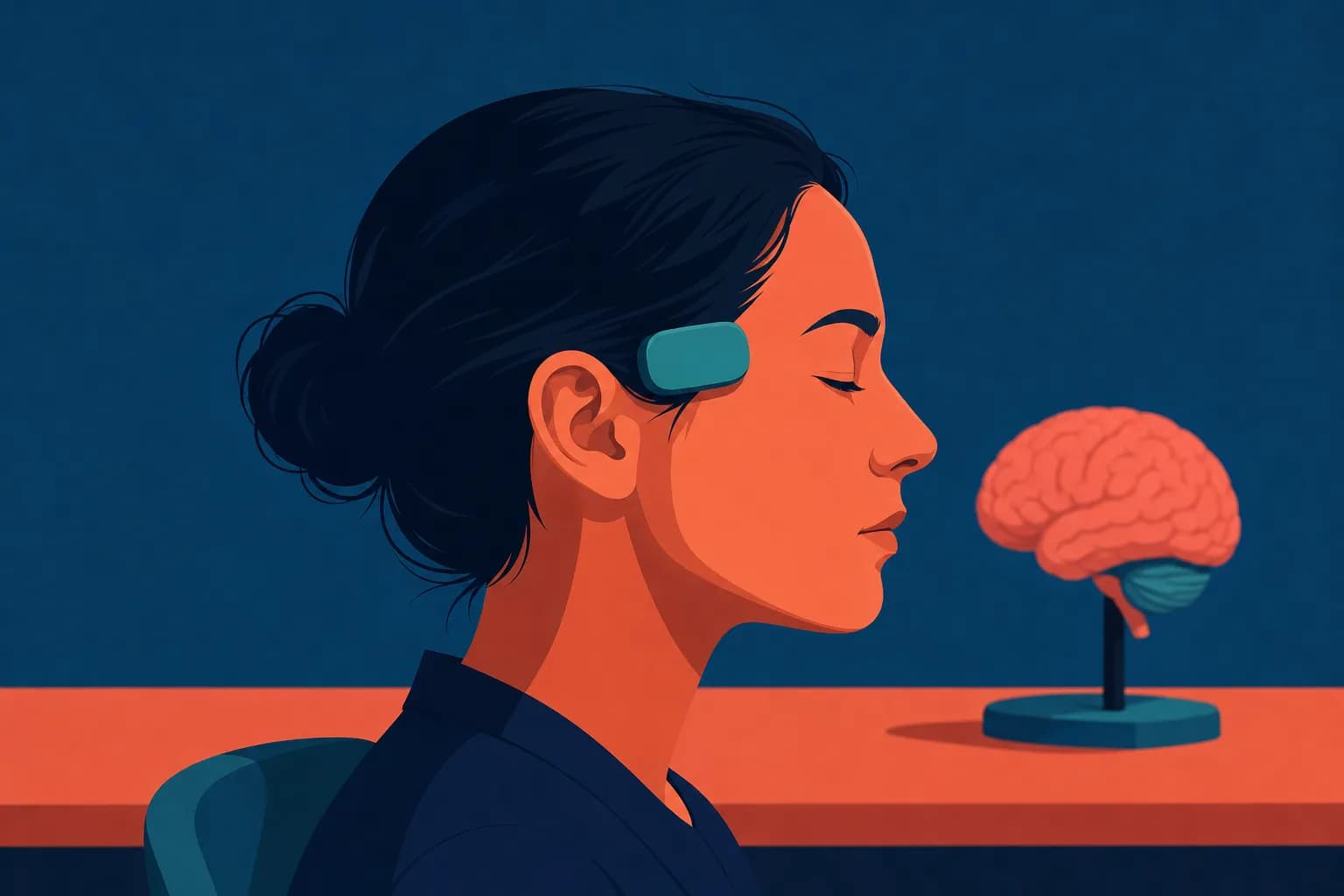
In the study Progress or Pathology, published in Frontiers in Psychology in 2020, the authors examined the criteria practitioners and teachers use to assess difficult experiences. These include the degree of distress, control over the state, its duration, the person’s ability to question their experience, and its impact on daily life. This is not a diagnostic test, but it is a useful way to shift attention from how unusual an experience is to whether support is needed.
A professional assessment is warranted if experiences cause growing fear, interfere with sleep, work, or relationships, continue outside practice and disrupt your sense of what is happening, or make it difficult to consider that what you saw might be an inner experience. If these changes occur, it is sensible to pause intensive practice and contact a mental health professional. If you suddenly lose touch with reality or cannot keep yourself safe, seek urgent medical help.
The study’s authors suggest considering the question of what help is needed separately, rather than reducing it to a debate over whether an experience was spiritual or pathological. You do not need to settle on an explanation for the images before seeking support. Their religious significance to you and the need for medical assessment can be considered at the same time.
Should I look for symbolic meaning in what I saw?
There is no obligatory interpretation for such images. You can explore your personal associations if you find that interesting, but a single image is not enough to conclude that you saw a prediction, an accurate memory, or a hidden truth about yourself. A personal interpretation remains an interpretation.
Is it worth writing down images after meditation?
You can, if writing helps you understand the circumstances of the experience and does not intensify the urge to chase it. It may be useful to briefly note the time, how sleepy you felt, the length of the session, and how you felt afterward. This information may help when talking with a teacher or a professional; a detailed catalog of scenes is not necessary.
What if the instructions call for visualization, but no images appear?
Ask what result the instructions are aiming for and how important visual clarity is. Avoid turning the exercise on your own into an attempt to see something as vividly as an external object. A teacher of that particular method can explain whether mentally identifying the object is enough or whether it would be better to choose another practice.