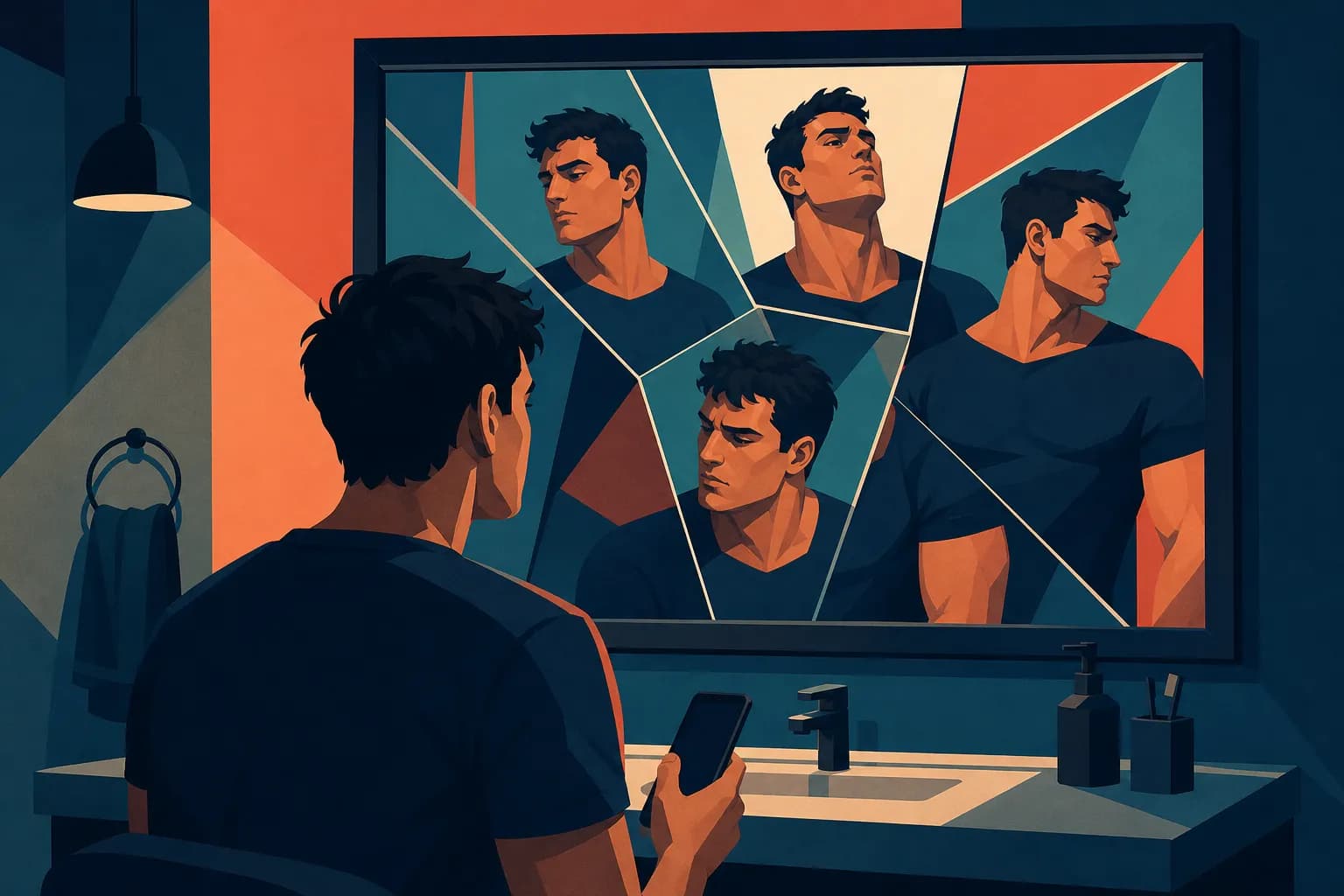
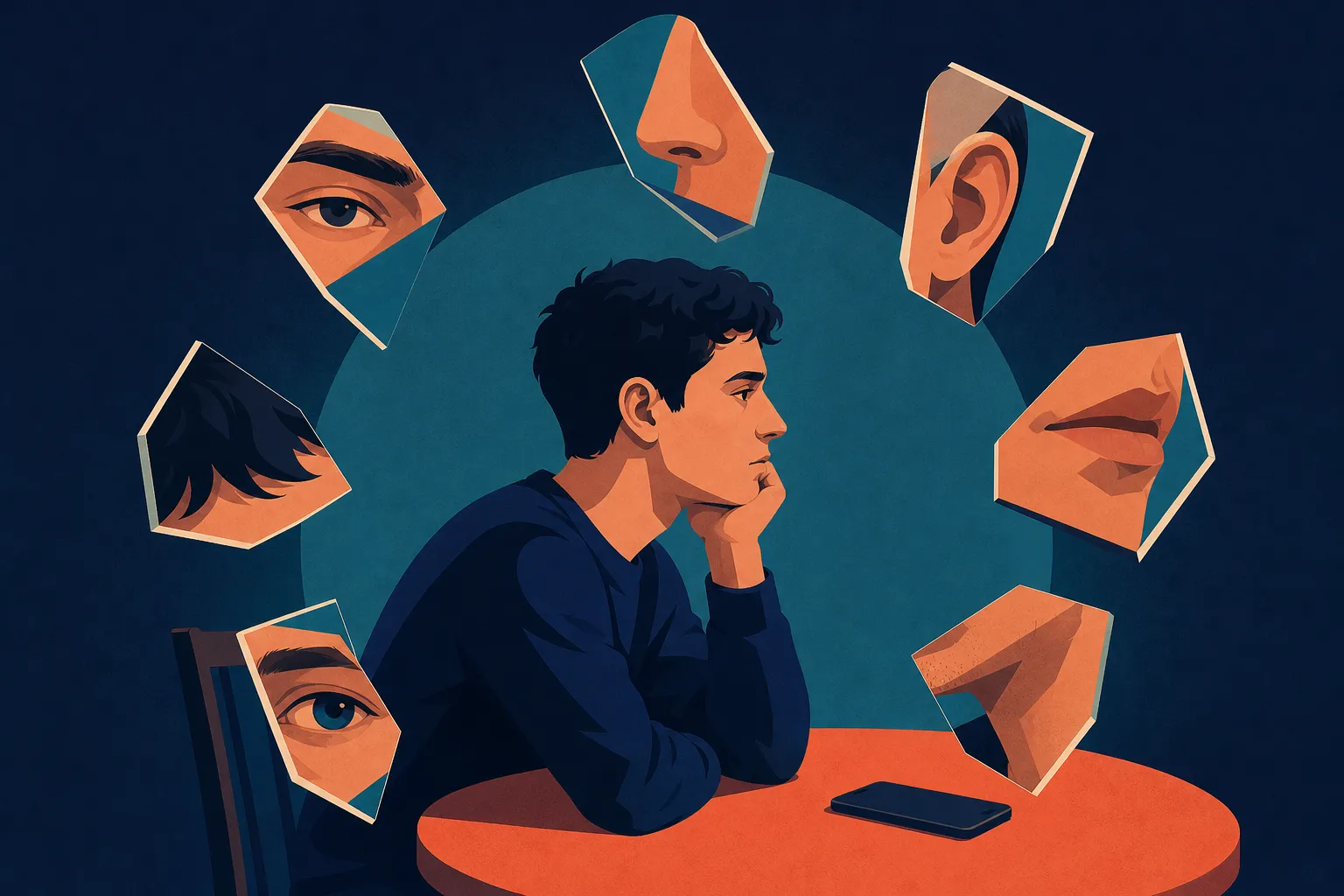
On forums about men’s appearance, a negative rating of someone’s photo can come alongside a recommendation to undergo surgery to increase their height. The dangerous side of these communities has once again attracted attention thanks to the documentary series Get Huge: Looksmaxxing to Death. According to the official Hulu announcement, the three-part series is set to premiere on November 10, 2026.
Shortly before that, on November 2, the STRIPED program and Harvard Chan’s Department of Social and Behavioral Sciences held a discussion on looksmaxxing and young men’s mental health. The central question was: how does the desire to become more attractive turn into a willingness to risk one’s health? Studies of individual communities help explain this mechanism, although they do not yet show how often online advice leads to real-world interventions.
What is looksmaxxing?
Looksmaxxing means trying to improve one’s appearance as much as possible. The term covers a wide range of actions: skincare, changing one’s hairstyle, working out, as well as using substances and undergoing surgery.
An interest in attractiveness is not, by itself, a sign of a psychological problem. The danger arises when people are encouraged to see appearance as the main measure of their worth, and medical risk as an acceptable price to pay for a higher rating.
This distinction matters: choosing a haircut does not inevitably lead to using an unapproved injectable product. But in the same online space, they may be presented as neighboring steps in self-improvement, even though their consequences are not remotely comparable.
How online communities make risk seem normal
Sociologist Michael Halpin and his co-authors studied 8,072 comments from one looksmaxxing forum. The paper was published on March 11, 2025, in Sociology of Health & Illness. In every discussion thread they analyzed, at least one participant insulted the person who started it, unfavorably compared him with other men, or encouraged him to harm himself.
Ratings of appearance came with recommendations for interventions, including leg-lengthening surgery. A pattern emerged: first, someone was told they had a supposedly unacceptable flaw; then they were offered a way to fix it.
This way of thinking shifts the frame of reference. The question “Do I need a medical intervention?” gives way to “Am I willing to do enough to fix myself?” When people around someone discuss surgery as if it were an ordinary purchase, its risks can seem like standard costs. The person seeks approval from the same group that intensifies his dissatisfaction with his body.
The researchers analyzed popular discussions on a single forum and could not independently verify participants’ accounts. The study describes the content of these exchanges, but does not show how many men actually followed the advice.
On the forum studied, negative ratings of appearance were linked to recommendations for medical interventions.
The risks of steroids, unapproved peptides, and surgery
In an article dated August 24, 2026, Johns Hopkins Medicine lists anabolic steroids for muscle growth and experimental peptides purchased online among the practices promoted by looksmaxxing influencers. Behind the general promise to “improve yourself” lie different medical risks.
Anabolic steroids
These hormones stimulate muscle growth, but their effects are not limited to muscle tissue. In a Danish cohort study published in Circulation, nearly 1,200 men sanctioned for anabolic steroid use at fitness centers were compared with more than 59,000 men in a control group.
Over an average follow-up period of about 11 years, heart attacks were recorded in around 1% of the first group and 0.3% of the second. The adjusted relative risk was about three times higher among steroid users. The study was observational: the authors did not know the doses or duration of use and could not rule out the influence of other substances or lifestyle factors. It also did not study looksmaxxing participants separately.
Unapproved peptide products
Peptides are chains of amino acids. Some are approved medications, so the word itself does not mean a drug is dangerous or prohibited. What matters is the specific substance, its form, indication, and regulatory status in the country where it is used.
However, sellers’ promises can go far beyond the available evidence. In a review of six popular compounds published in The American Journal of Sports Medicine on August 11, 2026, most of the publications identified were animal studies. Existing human trials have not confirmed the claimed benefits for musculoskeletal recovery and physical performance.
The product’s contents are a separate concern. NSW Health warns that unapproved peptide products may contain unknown or harmful substances, be mislabeled, or differ in concentration from what is claimed. The uncertainty extends both to the expected benefits and to what is actually in the vial.
Surgery to change body proportions
Surgery to increase height affects the function of the entire limb. Hospital for Special Surgery, which performs these procedures, identifies restricted joint movement due to muscle tightness as the main risk. A recommendation on a forum is no substitute for an individualized assessment of the indications, consequences, and recovery process.
What changes should concern loved ones?
It is more useful to pay attention to how much anxiety, time, and restriction a person’s concern about their appearance involves. The Butterfly Foundation lists persistent criticism and checking of one’s body, excessive use of products to change it, spending hours researching cosmetic procedures, and compulsive workouts even when ill or injured among the warning signs.
Parents and partners can start a conversation by asking about specific changes: how the person feels after browsing forums, why they think an intervention is necessary, and where they get information about safety. Mocking their appearance or interests can reproduce the pressure they may already be experiencing.
An interest in looksmaxxing alone is not enough to diagnose body dysmorphic disorder. But if thoughts about appearance interfere with school, work, or relationships, or are accompanied by risky behavior, there is reason to consult a mental health professional. It is possible to discuss these concerns before making a decision about a drug or surgery.
Can you assess whether an intervention is safe based on “before and after” photos?
No. Photos do not show complication rates, long-term consequences, or the experiences of people whose results were worse than expected. Even a genuine photo of a successful result is no substitute for research data.
Should someone tell their doctor about products bought online if they consider them ordinary skincare?
Yes. It is helpful to list all the products being used and show their packaging or information from the seller. The American Academy of Dermatology warns that complications can be difficult to identify because patients may not consider looksmaxxing practices medical or potentially harmful.
Does the fact that a peptide is sold online prove it is approved for human use?
No. A product’s availability does not confirm that it is approved for medical use. Check the specific product and indication against official information from the regulator in your country; a doctor or pharmacist can help clarify its status.