High blood pressure often requires lifelong treatment. Millions of people take medication every day to manage hypertension and reduce their risk of heart attack and stroke. But what if, in some cases, the effects of treatment could last even after the medication is stopped?
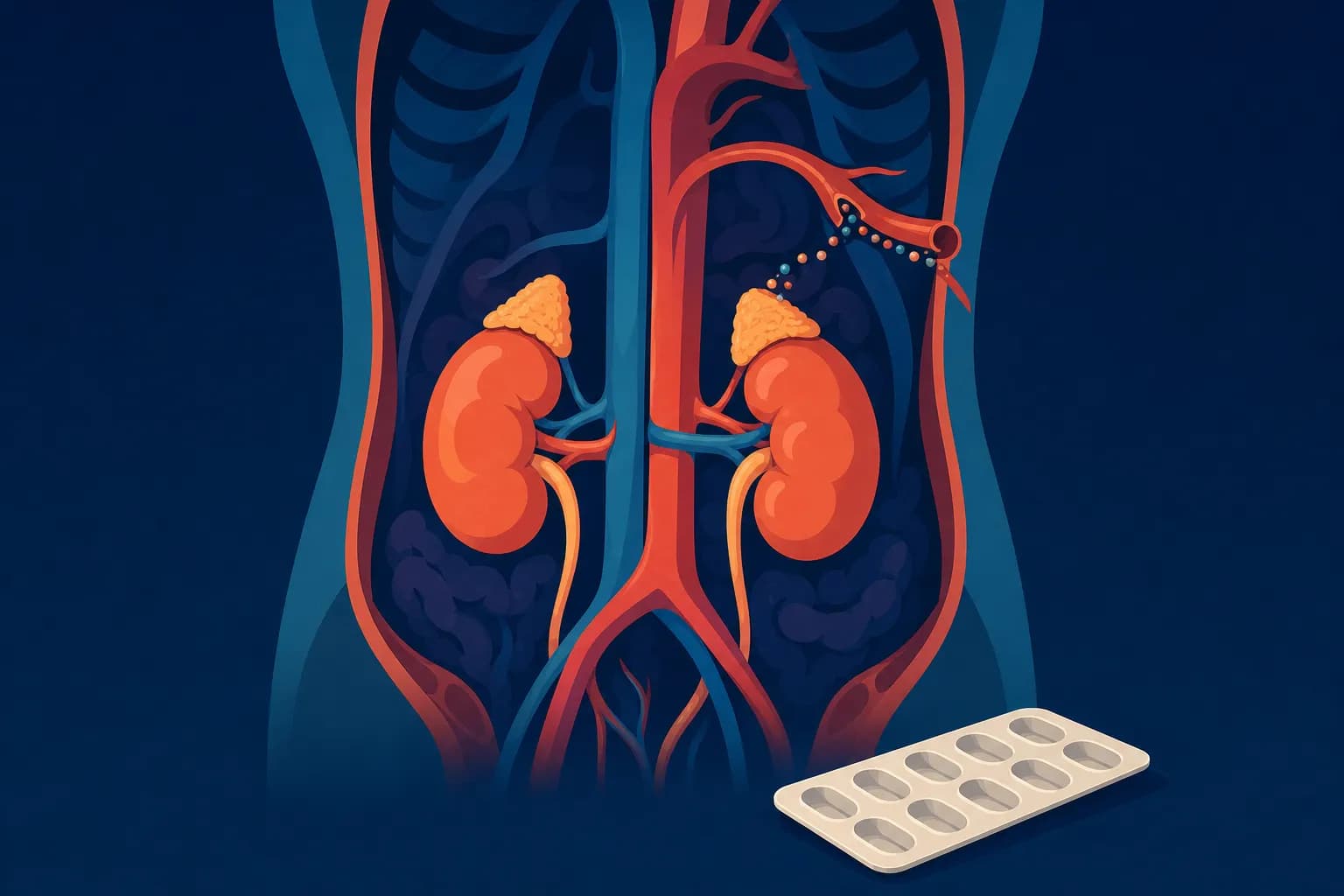
Researchers at Queen Mary University of London have reported promising results from the use of baxdrostat, a drug that suppresses the production of aldosterone, a hormone that regulates the body’s sodium and water balance and affects blood pressure.
In patients with primary aldosteronism–a hormonal disorder in which the body produces too much aldosterone–improvements in blood pressure and hormone levels persisted for up to two years after the treatment course ended.
The results suggest that targeting the hormonal mechanisms behind hypertension may, in some cases, have effects that last longer than the period of time a person takes the medication.
However, the study included only 14 patients, and just a small number of them were able to manage without other blood-pressure-lowering medications. It is therefore too early to talk about curing hypertension or being able to stop ongoing treatment. In addition, the results apply to a specific hormonal form of the condition, not to everyone with high blood pressure.
What happened after baxdrostat was stopped
The study was published on November 7, 2026, in the New England Journal of Medicine. According to the university’s announcement, the follow-up included 14 patients treated at eight centers in the United States. The course of treatment to suppress aldosterone production lasted from six to twelve months.
After treatment ended, the researchers observed a sustained reduction in excess hormone production and partial or complete resolution of hypertension. The university reports that, during follow-up, blood pressure was about 25 mm Hg lower on average than at baseline.
Some participants’ blood pressure remained normal without antihypertensive treatment. Others continued taking medication. This is an important distinction: stopping baxdrostat did not mean that everyone in the group stopped treatment for hypertension.
Two years is the longest reported duration for which the effects persisted. It does not mean that every participant went without treatment for that entire period.
What is primary aldosteronism?
In primary aldosteronism, one or both adrenal glands produce too much aldosterone. This hormone helps the kidneys regulate sodium and potassium balance. Excess aldosterone increases sodium retention, which in turn causes the body to retain water. The volume of fluid in the bloodstream increases, raising blood pressure.
This form of hormonal hypertension is more common than it might seem. According to an estimate from the Endocrine Society, primary aldosteronism affects 5–14% of patients with hypertension in primary care. This is a range of estimates for a specific clinical setting, not a proportion of all people.
For these patients, a treatment that could bring about lasting changes in excess hormone production is of particular interest. The new follow-up concerns this specific cause of high blood pressure. The results cannot be generalized to all forms of hypertension.
How baxdrostat works
Baxdrostat blocks aldosterone synthase, an enzyme needed to produce aldosterone. This reduces the production of the hormone itself. Another approach already used to treat primary aldosteronism is to block mineralocorticoid receptors, through which aldosterone acts on tissues.
What makes this finding unusual is that the improvement persisted after the enzyme was no longer being suppressed. The researchers are exploring the possibility that longer-lasting changes occur in the adrenal cells that produce excess aldosterone.
The suggestion that the number of these cells may decrease is based in part on experiments in mice. It has not yet been established in humans that baxdrostat causes these cells to disappear. The explanation for the lasting effects therefore remains a hypothesis that needs to be tested separately.
How close are we to lasting remission of hypertension?
The most encouraging part of the results is that both blood pressure and hormone levels remained improved. This gives researchers reason to explore the possibility of remission: a lasting reduction or disappearance of symptoms after a course of treatment has ended.
But observations of 14 people, based on measurements in routine clinical practice, are no substitute for a large controlled study of stopping the medication. Reports on the study do not describe a parallel control group for this period. It is therefore difficult at this stage to reliably assess the effects of baxdrostat alone, separately from other changes in treatment and the course of the disease.
Questions remain that will determine the practical value of this approach: who will experience lasting effects, how long they will last, and who will need repeat treatment. To investigate the long-term effects, researchers are conducting a larger prospective study, ELIXIR, using molecular imaging of the adrenal glands.
What this finding means for patients now
Baxdrostat can no longer be described as entirely experimental. In the United States, it was approved in 2026 under the name BAXFENDY for use alongside other blood-pressure-lowering medications in adults whose blood pressure is not adequately controlled. This is reflected in the official prescribing information. What remains experimental is a limited course of treatment intended to achieve subsequent remission of primary aldosteronism. Approval for blood-pressure control does not validate this use.
For someone with hypertension, the practical question now is whether they have been tested for a hormonal cause. The Endocrine Society’s 2025 guidelines conditionally suggest screening everyone with hypertension for primary aldosteronism by measuring aldosterone and renin and calculating their ratio. Discuss testing and interpretation of the results with a doctor.
There are already treatments for confirmed primary aldosteronism. For bilateral disease or when surgery is not possible, mineralocorticoid receptor antagonists are used. For unilateral disease that is suitable for surgery, removal of the affected adrenal gland may be recommended. The new study does not yet provide grounds for replacing these approaches with a finite course of baxdrostat.
The medication itself requires laboratory monitoring: it may cause high potassium and low sodium levels in the blood. Do not stop prescribed medication on your own because of this news. For now, the most reliable benefit of this finding for patients is that it offers another reason to investigate the cause of high blood pressure: the cause determines the choice of treatment today.
Can primary aldosteronism occur when potassium levels are normal?
Yes. Normal potassium levels do not rule out primary aldosteronism. To detect it, aldosterone and renin are assessed, and the results are interpreted in light of the testing conditions and medications being taken.
Do I need to stop taking my medication before an aldosterone and renin test?
Change your treatment before testing only in consultation with a doctor. Some medications affect the results, but stopping them can raise blood pressure. Your doctor will determine whether your treatment needs to be adjusted and how to prepare for the test safely.
Does baxdrostat’s approval in the United States mean it is available in Russia?
No. Approval in the United States does not confirm that the medication is approved or available in Russia. These are separate matters that should be checked against Russia’s state register of medicines and discussed with your doctor.