Why Motivation Disappears: Dopamine Neurobiology
We analyze how dopamine controls anticipation and movement, why the flow of incentives lowers sensitivity, and how to practicaly restore motivation

⋄5 min read

Guilty pleasure is an activity, food, music, or habit that genuinely delights you while also causing shame or awkwardness because of other people’s or your own rules. The pleasure itself is usually normal if it remains a choice, does not harm your health, finances, or relationships, and does not become the only way to cope with anxiety. In Russian, the expression is often written as “guilty pleasure” phonetically, and in conversation it may be shortened.
Have you ever found yourself unable to stop watching a reality show at three in the morning: “just one more episode, then I’ll go to sleep,” while wrapping yourself in a blanket and rustling a bag of chips? Or perhaps you have a song you would call “not really my thing” in front of friends, but as soon as you put on your headphones, you sing along from the first line to the last?
There is nothing unusual about this, and certainly no reason to immediately try to correct yourself. Sometimes the word guilty conceals a genuine conflict with your own values. And sometimes it is simply a habit of being ashamed of anything simple, loud, sweet, or “not intellectual enough.”
Guilty pleasure literally means something that brings pleasure accompanied by guilt. It describes something that makes a person happy but seems too “lowbrow,” unserious, harmful, or unsuitable for their self-image.
Everyone has their own list, and it does not necessarily involve a show with terrible dialogue. People call many different things guilty pleasures.
Food and drinks: a late-night burger, instant noodles, sugary soda, chocolate straight from the refrigerator, ordering delivery instead of cooking.
Content: romantic comedies, soap operas, reality shows, fan fiction, unboxing videos, and “Reddit stories” until two in the morning.
Music and style: 2000s pop hits, Eurodance, songs you have known by heart since school, glittery clothes, and a collection of cute trinkets.
Small rituals: canceling plans for an evening under a blanket, rereading the same novel, playing a simple mobile game, or watching memes instead of having a productive morning.
Embarrassment often appears where there is an imagined observer. It is as though someone is standing nearby, watching your choice and rating it: is it useful, beautiful, intelligent, and grown-up enough?
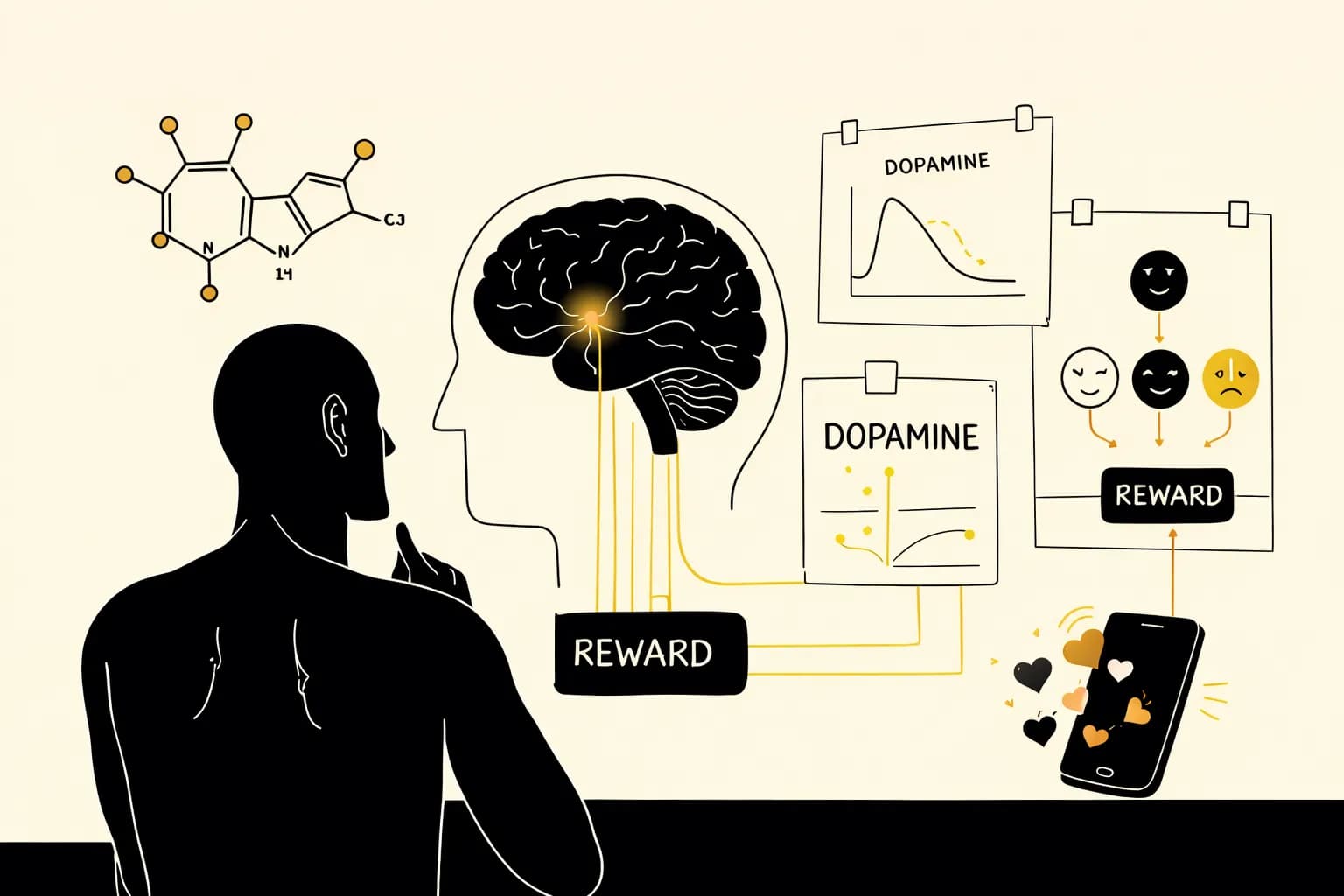
Pleasant actions become reinforced quickly: the brain remembers that a particular song, flavor, show, or game provided relief, pleasure, or a sense of familiarity. Dopamine, a neurotransmitter associated with reward anticipation, motivation, and learning, participates in this system. It does not issue cultural verdicts. It does not care whether you turned on a lecture or the fourth episode of a dating show.
The forbidden quality adds strength as well. The phrase “I shouldn’t” creates inner tension; allowing yourself to break a rule for a minute can feel especially intense. That is why the same chocolate bar may feel different after a difficult day and at a family celebration.
There is also an effect of predictability. After a conflict-filled call, a traffic jam, or an endless list of tasks, we want content where everything is clear in advance: the characters will make up, the song will reach its familiar chorus, and the game will have another level. Short videos easily pull us into this mode: more about how scrolling through short videos works can be found separately. It is a way to reduce the load on your mind for a short time.
Neuroscientists Kent Berridge and Terry Robinson propose distinguishing between two components of the reward system—wanting and liking. There is an entire study of these reward systems. Liking is the pleasure we directly experience. Wanting is the motivational “I want” that makes us seek the reward again.
And dopamine is important here. Popular culture often calls it the “pleasure hormone,” but that is an oversimplification. Dopamine systems are particularly important for motivation, reward-based learning, and turning reward-related signals into attractive stimuli.
That is why the familiar sound of a notification, a bag of chips on the table, or the “next episode” button can trigger desire before we have time to decide whether we really want to continue.
Sometimes a paradox emerges:
wanting grows even though liking hardly grows anymore.
The first episode genuinely relaxed you. The third was pleasant. By the sixth, your eyes are tired and you want to sleep—but your hand still starts the next one.
This is one reason why the useful question after a guilty pleasure is not “How strongly did I want it?” but:
“How good did I actually feel while I was doing it?”
The difference between these two answers says a lot about whether pleasure remains pleasure or gradually turns into an automatic way of regulating your state.
Emotional eating does not begin with chocolate. It begins with the function food performs.
We may eat because we are hungry, because something tastes good, or because we have gone out to dinner with friends. But we may also use food to quickly change our emotional state: reduce anxiety, dull boredom, comfort ourselves after a conflict, or stop feeling something for a while.
Psychologist Michael Macht described eating as one possible way of regulating emotions. Modern research develops this idea: in negative states, attention may shift more strongly toward immediate food rewards, especially high-calorie and highly palatable food.
This creates a short loop:
unpleasant state → food → relief → the brain remembers the solution.
The problem is not the relief itself. If you occasionally eat ice cream after a terrible day, that alone says nothing about your relationship with food.
What matters more is whether food becomes your standard response to an emotion.
1. Am I physically hungry?
Physical hunger usually builds gradually. Emotional desire may appear suddenly and focus on a very specific food.
2. What happened 10–30 minutes before I wanted to eat?
A conflict? An anxious email? Boredom? Loneliness? Fatigue?
3. Does the food bring pleasure or only relief?
These are different states.
4. Can I stop after I am full?
If the goal is not to become full but to stop feeling an unpleasant emotion, the feeling of fullness may be a weak reason to stop or continue eating.
The main indicator, therefore, is not “I eat sweets.”
It sounds different:
“When I feel bad, how often does food become the first way I try to feel better?”
Guilt rarely comes from the burger or pop song itself. It is fueled by learned rules: “you have to eat perfectly,” “an intelligent person reads only serious literature,” “you have to earn rest,” and “adults should not like this.” Some of these rules come from our families, some from school, and some are collected as we scroll through other people’s flawless breakfasts and workouts.
It is useful to distinguish guilt from shame. Guilt sounds like this: “I did something that contradicts my principles.” Shame is harsher: “Something is wrong with me because I like this.” The latter often attaches itself to completely harmless pleasures—for example, an adult’s love of young-adult novels.
Ask yourself: whose voice inside you is saying, “Ugh, how can anyone like that”? If it is the voice of a strict parent, former partner, or random internet commenter, you do not have to turn it into your own law.
Pizza on Friday, dancing in the kitchen to a 2009 hit, or spending Sunday with a TV show do not, in themselves, require correction. The line is determined by consequences and by how freely you choose. Consider these signs:
You regularly plan to spend “half an hour” but lose several hours of sleep, work, or study and cannot stop.
You spend so much on the habit that you lack money for essential expenses, incur debts, or have to hide your purchases.
Afterward, instead of brief satisfaction, you experience prolonged physical deterioration: pain, severe fatigue, sleep problems, or a flare-up of an illness.
You cancel plans, avoid intimacy, or lie to people so you can be alone with the activity.
It is almost the only available way to feel relief, joy, or escape from anxiety.
Trying to take a break causes intense panic, irritation, or the feeling that the day is impossible to get through.
One item does not give you a diagnosis. It points to something worth examining honestly. With recurring overeating, insomnia, excessive spending, or dependence on alcohol, gambling, or substances, it is best to discuss the situation with a psychotherapist, psychiatrist, or relevant physician, depending on what is happening.
Indicator | Ordinary pleasure | Reason to take a closer look |
|---|---|---|
Choice | You can postpone it without intense tension. | You feel compelled: “I have to do this.” |
Time | The activity fits into your rest and plans. | It regularly consumes sleep, work, or important commitments. |
Consequences | You are left with pleasure or a neutral feeling. | Health, financial, or relationship problems keep recurring. |
Role in life | It is one way to relax. | Other sources of joy and support have nearly disappeared. |
Start with precise wording. Instead of “I slipped up again and watched something stupid,” try: “I chose an easy show because I was tired.” This sentence contains a fact and a reason, but no self-condemnation.
Next, check whether you are violating your own values or someone else’s expectations. If you genuinely want to protect your health but eat stressfully every evening until your stomach hurts, guilt is pointing to an important mismatch. What you need here is not shame but another way to support yourself: eat a proper meal earlier, call a friend, go for a walk, or make an appointment with a specialist. If the only “violation” is loving a silly comedy, perhaps there is nothing to change at all.
Sometimes it helps to give pleasure a place in advance. Choose an evening for a movie, buy your favorite ice cream and eat it from a beautiful bowl, or play that particular song loudly without an ironic disclaimer. When joy stops being a secret escape, it is less likely to grow into a marathon.
A favorite “shameful” pleasure does not, by itself, describe your character or reveal a hidden diagnosis. It may suggest what you are lacking right now. Reality shows can sometimes provide a sense of company, a familiar movie can offer safety, sweets can create a quick pause, and loud pop music can give you permission to be less composed.
After such an episode, try writing down three short answers: what did I choose, what did I feel beforehand, and what did I actually want? For example: “I scrolled through TikTok for an hour. Before that, I was anxious about an email. I wanted to postpone an unpleasant reply and switch off my mind.” Next time, another option will be available: set a 15-minute timer, draft the email, and then open the feed without feeling that you have lost the day. Read more about why procrastination can sometimes be connected with irritation in the article “Why procrastination sometimes starts with anger.”
This evening, choose one small pleasure and do it intentionally. If it is an episode of a show, decide in advance how many episodes you will watch. If it is music, turn it up and do not apologize. And if you notice that an exhausting anxiety is hiding behind your guilty pleasure, name it out loud, at least to yourself. That is much more honest than scolding yourself for eating chips.
Four episodes in a row are not necessarily worse than one. A study of binge-watching (Alexander Orth, Dominik S. Wirtz, and Andreas Fahr, 2021, Addictive Behaviors Reports) shows something interesting: it is not only the amount watched that matters, but also the reason a person continues watching.
You can spend Saturday watching a series, enjoy it, and return to ordinary life on Sunday. Or you can start the next episode every evening because anxiety, loneliness, or thoughts about work return too quickly without it.
The behavior looks the same on the outside. Its psychological function is different.
Instead of looking at the number of episodes, consider five signs:
Control. Am I choosing the next episode, or automatically pressing play?
Pleasure. Am I still enjoying the show, or do I simply not want to stop?
Cost. Do I regularly sacrifice sleep, work, exercise, or social contact to watch?
Function. Am I watching because I want to watch the show, or because I do not want to be left alone with my thoughts?
State afterward. Have I recovered, or merely postponed fatigue and anxiety for a few hours?
Thus, five hours of Netflix may be genuine rest.
And twenty minutes of TikTok may be avoidance.
The boundary is not defined by a timer. It is defined by the function, control, and consequences of the behavior.
Yes, if you love the music but feel embarrassed by it because it is labeled “not serious” or “out of fashion.” A pop hit, chanson, K-pop song, or soundtrack from a teen movie does not become worse because of someone else’s taste.
Shame often comes from a rule you have absorbed: rest must be productive, and food must be perfect. Check the real consequences of the choice and separate them from the automatic internal prohibition.
First, notice the connection: hunger, fatigue, or anxiety—then the show—then food. Try eating dinner before watching, putting a portion on a plate, and deciding whether you will continue watching afterward; if episodes of overeating recur and distress you, consult a psychotherapist or doctor.
A warning sign is loss of control and noticeable harm to your life: you cannot stop, and you sacrifice sleep, money, work, or relationships. Assessing addiction requires a specialist, especially when alcohol, substances, gambling, or medication are involved.
No, if the habit does not harm you and remains a free choice. Strict prohibitions often intensify obsessive thoughts about food or rest; clear limits and an honest attitude toward your needs are usually more sustainable.
You can answer directly: “I like this, and I do not want to justify harmless relaxation.” If the person continues to pressure you, set a boundary: tastes can be discussed, but mocking you is not acceptable.
How was this article?
Share