“The Bare Minimum”: Should You Judge Your Partner by a TikTok List?
Published on: ⋄5 min read
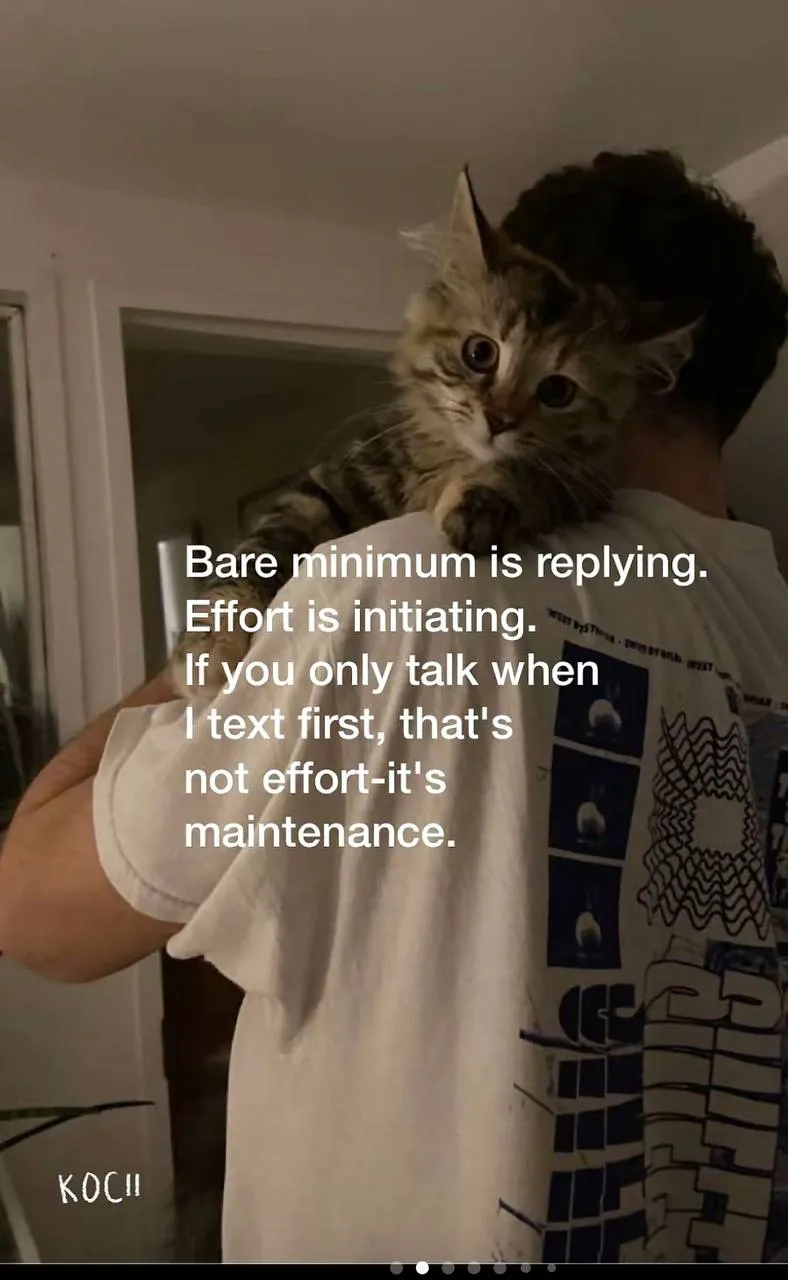
Lists of “the bare minimum” in relationships are gaining popularity on social media: a set of things a partner should do without being asked or reminded. Texting first, asking how you’re feeling, bringing flowers for no particular reason, planning dates, remembering important dates, taking initiative, and offering support during difficult times. Some creators add financial support to the list, while others include emotional availability, faithfulness, and the ability to talk through conflicts.
These lists promise a simple way to tell healthy relationships apart from ones where you have to settle for less. But where is the line between basic needs, personal expectations, and excessive demands? And can a universal checklist really determine the quality of a relationship?
Lists of the "bare minimum" in relationships
How other people’s relationships shape the way we judge our own
When people compare their relationship with a video, they are weighing different amounts of information. They know a lot about their own relationship: everyday arrangements, tiredness, arguments, and making up. On screen, they see a carefully chosen moment. It can become a new benchmark, even though viewers don’t know the broader context of that relationship.
But the formula “saw someone else’s relationship, raised your expectations, and became less happy” is too simple. In a study by Ines Buxtens and colleagues, published in Social Science Computer Review, 605 young adults were surveyed. Among participants who were in relationships, more frequent exposure to idealized content was associated with lower satisfaction with their own relationship. However, the researchers found no link with higher expectations of a partner.
What’s more, among participants in relationships, higher expectations were positively associated with relationship satisfaction. So these findings do not suggest that you should lower your expectations to feel more at ease.
The survey was conducted at a single point in time and relied on self-reports. It cannot establish the direction of the relationship: perhaps people who are dissatisfied with their relationships are more likely to notice idealized images of other couples. On this basis, it would be wrong to declare social media the cause of dissatisfaction.
What research says about care in relationships
A fuller picture comes from research into how people perceive their relationships as a whole. In a 2020 analysis by Samantha Joel and colleagues, published in PNAS, researchers combined 43 datasets from 29 laboratories. The factors most consistently associated with relationship quality were a partner’s perceived commitment, appreciation, sexual satisfaction, perceptions of a partner’s satisfaction, and conflict.
This is about the broader experience: whether a person feels that their partner values the relationship, appreciates them, and is happy with their life together. A single thoughtful gesture can be part of that experience, but on its own, it doesn’t describe the whole relationship.
Even an analysis of this scale could not reliably predict how relationship quality would change over time. Its findings can help you choose a topic for discussion–for example, whether each of you feels appreciated and knows that the other is invested in the relationship. They don’t offer a ready-made test of love.
How to distinguish a need from a gesture in a video
Let’s say that after watching a video, you want your partner to text you during the workday ( this is a hypothetical example, not something featured in TikTok videos). Different desires might be behind this request: feeling close, getting reassurance that your partner is thinking of you, or simply having a pleasant daily ritual.
If closeness is what matters, a relaxed conversation in the evening might meet that need, too. If a brief check-in during the day is important in its own right, you can explain that as well. The distinction matters: in the first case, there are more ways to meet the need; in the second, your partner needs to understand why that particular action matters to you.
To start, it can help to ask yourself three questions:
What exactly am I missing: attention, appreciation, involvement in our shared life, or a specific thoughtful gesture?
When do I notice this absence, apart from when I’m watching other people’s relationships?
Could a different action give me a similar sense of being cared for?
These are questions to help you have a conversation, not a psychological test of whether your desire is “genuine.” If you hadn’t thought about it before, that doesn’t automatically mean it was imposed on you. A video might give a name to a longstanding dissatisfaction. It might also spark a passing desire to recreate an appealing scene. You can’t tell which is the case based only on where the expectation came from.
It’s more useful to consider what place this desire has in your life: do you think about it when you’re not scrolling, how do you feel when it isn’t met, and why does it matter to you in particular?
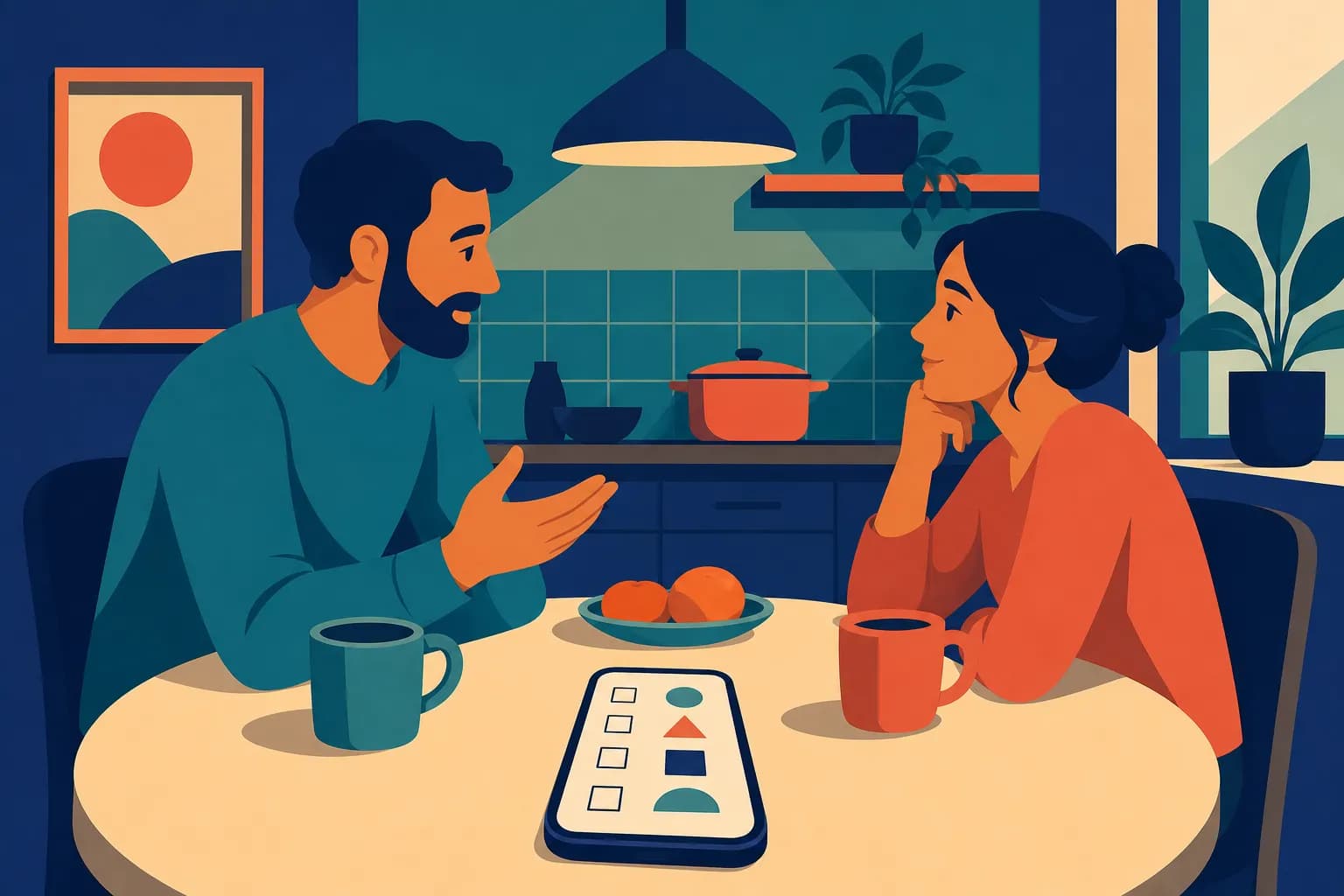
How to talk about expectations without turning love into a test
The phrase “it’s the bare minimum; everyone does it” points to an external standard but tells your partner very little. A more specific way to put it might be:
“When we don’t talk all day, I miss feeling connected. I’d like to get a quick message from you. Would that work for you?”
This kind of conversation lets you discuss both what the request means and what’s realistically possible. Your partner may not be able to reply at work. That’s different from a situation where your wishes are routinely mocked. It’s worth considering the context and recurring patterns of interaction, including whether both of you are willing to listen and find a way forward.
An agreement doesn’t mean giving up everything that matters to you. If an important need remains unmet, differences in expectations deserve a separate discussion–even when your partner ticks many other boxes on a hypothetical list. At the same time, humiliation, coercion, and abuse cannot be excused as “different ideas about care.”
A TikTok list can serve a useful purpose: it can give you the words for a request you’ve struggled to put into words. From there, the two of you will need to work out your own agreement. That’s what will show whether a particular gesture works for these two people and what they’re willing to do for each other.
Should I send my partner the video itself?
Yes, if you explain what you want to discuss. Point to the specific moment and explain what it means to you. Without an explanation, the other person may be left guessing whether you’re making a request or criticizing them.
Do I need to return care with exactly the same gesture?
No, reciprocity doesn’t require identical gestures. People can show care in different ways. The question is whether both of you are comfortable with how the effort is shared and whether each of you feels the other’s involvement.
What if my partner can’t afford the gesture I want?
Talk about an affordable alternative and what the request means to you. If what matters is spending time together or feeling that your partner is attentive, that doesn’t necessarily require an expensive gift or date. Be direct about financial limits rather than turning spending into proof of someone’s feelings.