Can Spirulina Be Considered a Reliable Source of Vitamin B12?
Spirulina may contain compounds resembling B12, but they are often useless to humans. We explain why green powder does not replace a proven supplement.

⋄7 min read
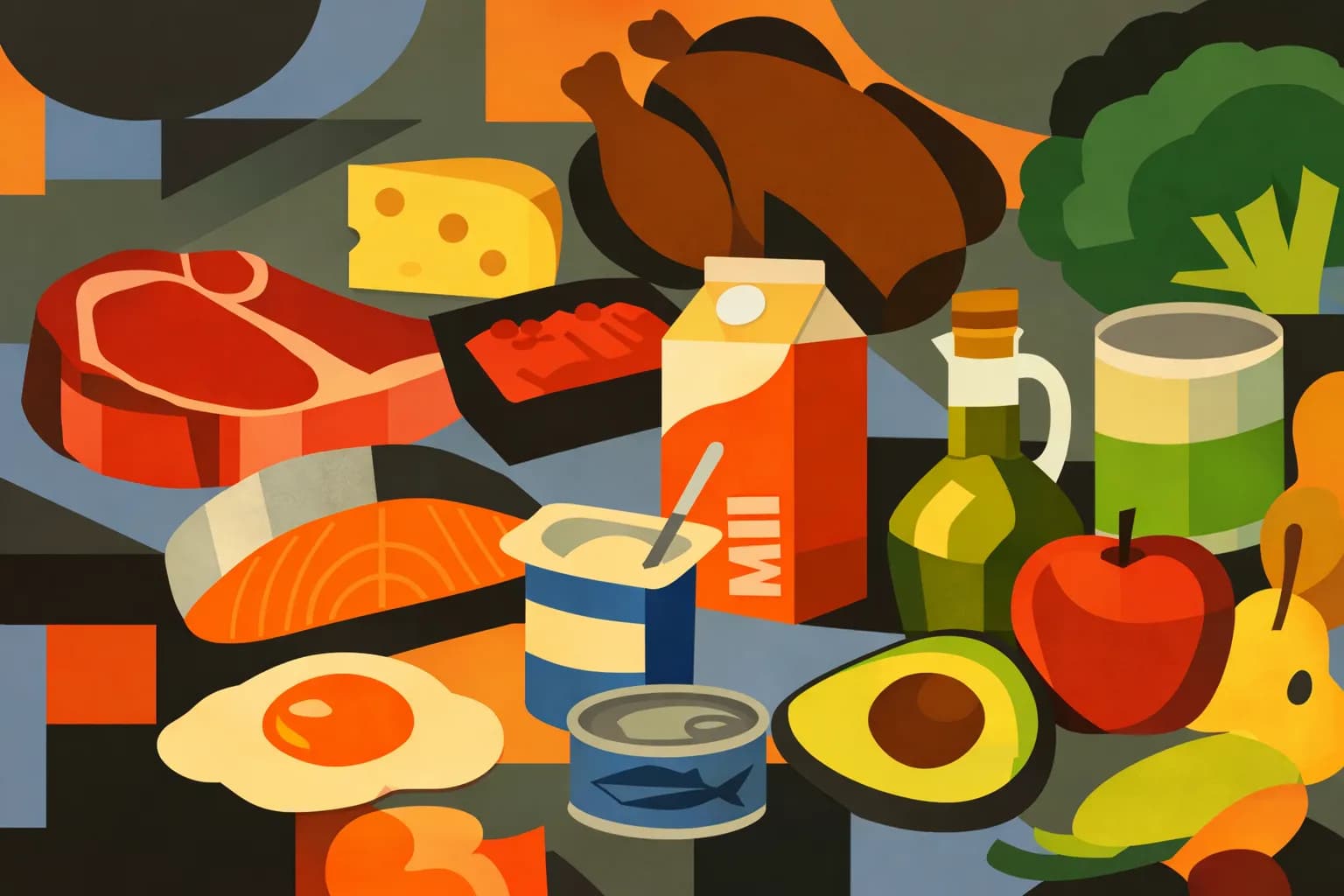
The updated dietary guidelines of the Trump administration became the most radical overhaul of government nutrition policy in decades.
By shifting the focus to whole, natural products — instead of ultra-processed foods, added sugars, and refined carbohydrates — these guidelines restore common sense and scientific logic to public health policy.
Food is once again viewed not as a source of calories, but as a key tool for preventing chronic diseases and promoting health throughout life.
The U.S. Department of Health and Human Services (HHS), together with the Department of Agriculture (USDA), unveiled the new Dietary recommendations for Americans for 2025–2030. They rejected the MyPlate model and returned the food pyramid, but inverted with an emphasis on proteins, healthy fats, and natural foods. The update was released on January 7, 2026, under the leadership of Secretary Robert F. Kennedy Jr.

“My message is extremely clear: eat real food,”
— said on Wednesday at a White House briefing by Health Secretary Robert F. Kennedy Jr., adding that he is “ending the war on saturated fats.”
50% of Americans have prediabetes or diabetes.
75% of adults report at least one chronic disease.
90% of healthcare spending in the United States goes toward treating chronic diseases — a large portion of which is related to diet and lifestyle.
The new Dietary Guidelines finally raised the protein intake norm compared to the previous 2020–2025 guidelines. The previous norm of 0.8 g of protein per kg of body weight per day (minimum to prevent deficiency) was raised to 1.2–1.6 g per kg.
For a person weighing 68 kg (150 pounds), this amounts to 82–109 g of protein daily. For an average-weight adult man (about 90 kg), the norm increases to 108–144 g, which is close to the average American intake (about 100 g).
Emphasis is placed on animal proteins (meat, fish, eggs, poultry), dairy products, as well as beans and nuts; the goal is to support muscle mass, satiety, and the microbiome. It is recommended to distribute protein evenly across meals for better absorption.
Legumes – a primary source of plant-based protein and dietary fiber. Plant-based protein is associated with better health and longevity outcomes in a number of large studies in various countries, including the United States. Fiber from legumes has pronounced protective effects, including reducing the risk of colon cancer.
The abandonment of total demonization of fats and the return to whole foods is not a step backward, but a correction of low-fat era mistakes, the consequences of which we see in statistics on diabetes, obesity, and cardiovascular diseases.
Olive oil, avocado, and macadamia nuts are rich in monounsaturated fatty acids (MUFA), which, as shown in large randomized trials, reduce the risk of heart disease and all-cause mortality within a Mediterranean-style diet.
Fatty fish and walnuts are rich in omega-3 fatty acids, which are necessary for lowering cholesterol, provide systemic and vascular anti-inflammatory protection and, in intervention studies, slow biological aging — in combination with vitamin D.
The new inverted food pyramid places whole grains at the base (smaller share of the diet), reducing their priority compared with proteins and fats.
Strongly limited are refined and ultra-processed carbohydrates (white bread, tortillas, crackers, ready-to-eat cereals) to lower inflammation and disease risk. The goal is “real food” instead of processed grains.
The focus of the old recommendations (2020) was on calorie percentages, fat-free dairy products, and abstract nutrient norms. MAHA moves away from calorie counting to a more practical nutrition logic.
Protein is now calculated not as a share of calories (5–35% of daily energy) but based on body weight, which is physiologically more accurate.
Dairy products: moving away from a universal recommendation of fat-free and low-fat options for everyone over two years old. Allowed are whole dairy products without added sugar.
Ultra-processed foods and added sugars are restricted more strictly than in previous versions of the guidelines.
Alcohol: the recommendation to reduce consumption remains without softening.
MAHA dietary guidelines document a shift from abstract nutrient norms to biological realities of the person: body weight, food quality, and metabolic health.
The government’s nutrition policy for the first time in a long time directly acknowledges: ultra-processed foods and added sugars are a systemic cause of the epidemic of chronic diseases, not just a private lifestyle choice problem.
In the long term, MAHA can be seen as an attempt to break the link between nutrition and chronic disease — and to return food to its original function: to support health, not to treat the consequences of dietary mistakes.
How was this article?
Share