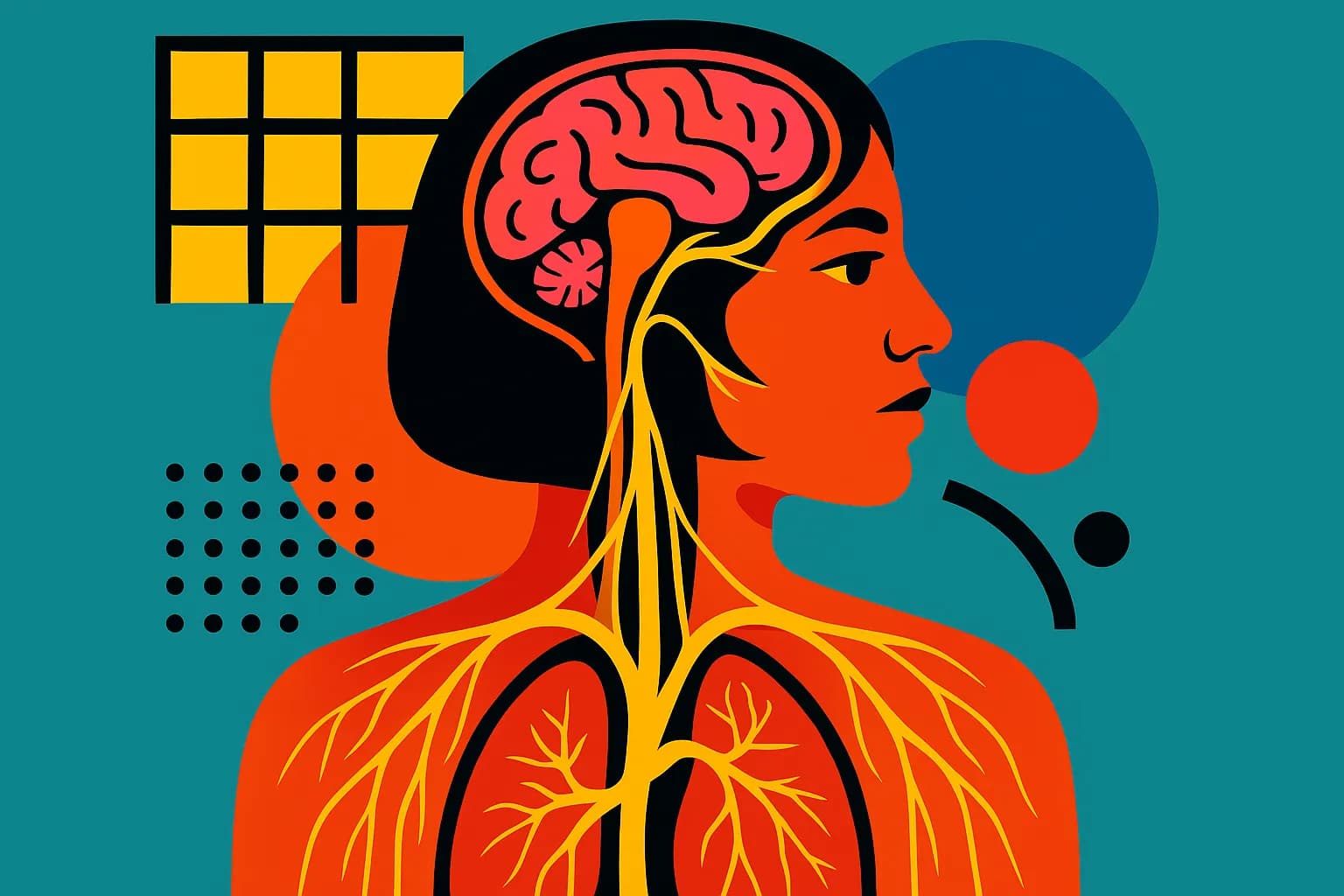
Between facial yoga and cold plunges, a new wellness trend has sneaked in, which actually has a scientific basis. We explore why the vagus nerve has become the main character of TikTok and what to do about it.
If your social feed over the past few months is full of videos of people massaging their ears, buzzing like bees, or applying ice to the face — welcome to the era of the vagus nerve. The hashtag #VagusNerve has over a billion views, and #NervousSystemRegulation has become a mantra for a generation burned out from constant stress and endless advice to “just relax.”
But here’s what’s interesting: unlike many wellness trends built on pretty packaging and promises, the vagus nerve story truly traces back to neurobiology. And perhaps that is why it resonates so strongly.
We live in a state of permanent “fight or flight.” Notifications, deadlines, a news feed that generates anxiety faster than we can process it. Our sympathetic nervous system — the one responsible for the stress response — is worn out. And the parasympathetic, which should calm us and restore, simply can’t engage fast enough.
Why the Vagus?
The vagus nerve is the longest cranial nerve in our body, extending from the brain to the intestine, while also connecting with the heart, lungs, and almost all major organs. It is the main channel of the parasympathetic nervous system, our built-in mechanism for returning to calm. When it is active and functioning well — we can regulate emotions, digest food normally, and recover after stress. When its tone is reduced — we get stuck in chronic tension.
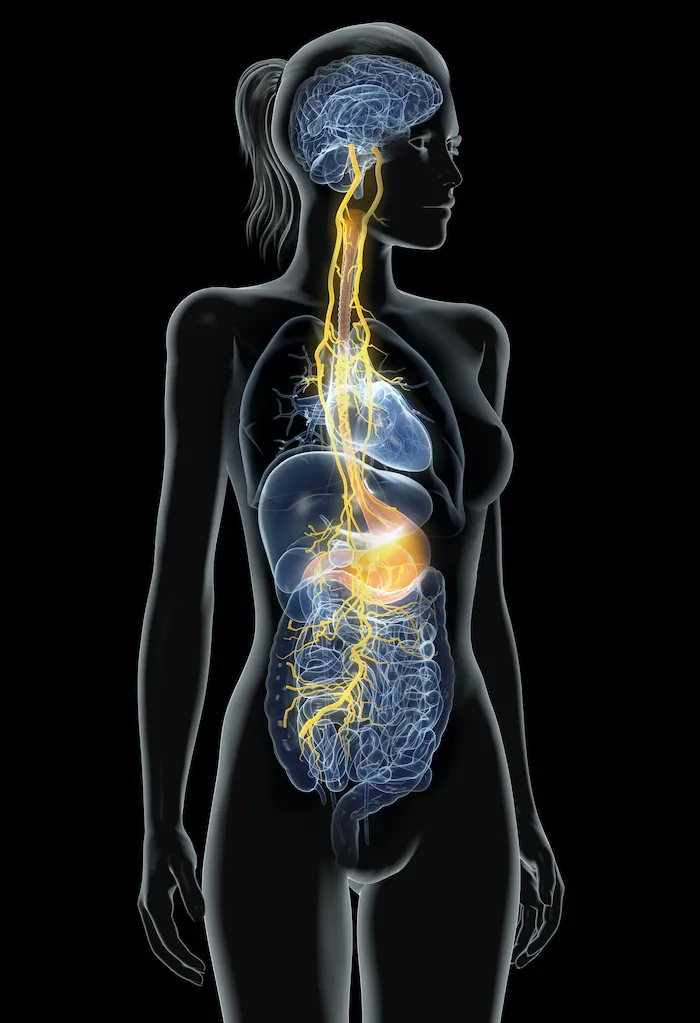
Approximately 80% of the vagus nerve fibers run from the body to the brain (Craig, 2002). This means: our state is more often shaped by internal sensations than by thoughts.
The vagus regulates:
• heart rate
• breathing
• vocal cords
• GI tract function
• inflammatory responses
• emotional reactivity
When its tone is high — the body returns to balance more quickly. Low tone is associated with anxiety, depression, and low stress resilience (Thayer & Lane, 2000; Kemp et al., 2010).
Why talk about this now?
The pandemic radically changed our attitude toward mental health. We no longer pretend that stress is normal and that anxiety is a sign of weakness. At the same time, distrust of pharmacological solutions grew and the desire to find tools that work here and now, without a prescription or side effects, increased.
The concept of nervous system regulation gave people what was missing: an understanding of the mechanism and a sense of control. It isn’t an abstract “breathe and calm yourself,” but a concrete physiology. You can literally feel your heart rate slow down after certain practices. It is measurable and tangible.
What really works?
Here is where things get interesting. Scientific research confirms that certain practices can really increase vagal tone and help the nervous system switch into recovery mode.
What actually works for regulation?
It’s not about trendy rituals, but about physiological levers that stimulate the vagus. Simplicity matters here — the body loves predictable safety signals.
1. Slow diaphragmatic breathing
Slowing to 5–6 breaths per minute increases heart rate variability (HRV), a marker of vagal tone (Lehrer & Gevirtz, 2014). Slow diaphragmatic breathing directly affects HRV, which is a marker of vagus nerve health.
2. Singing, extended exhale, humming
Activation of the laryngeal muscles affects the branches of the vagus. Vibrations mechanically stimulate the vagus nerve. It’s no accident that after a good concert or a gathering with friends we feel rebooted. Studies show that singing lowers cortisol and sympathetic activity (Fancourt et al., 2016).
3. Cold stimulation
Submerging the face in cold water or taking a cold shower activates the so-called “diving reflex,” which stimulates the vagus nerve and slows the heart rate (Journal of Applied Physiology, 2018).
4. Slow movement (yoga, somatics)
Soft proprioception + breathing → increased HRV (Pascoe & Bauer, 2015).
5. Social safety
A warm gaze, a calm voice, physical softness — all of this reduces the level of threat in the nervous system.
Porges calls this “neuroception of safety.” The body calms not because we “convince ourselves,” but because it receives sensory signals: I am safe.
6. Massage and touch — especially around the ears, neck, face. Warm hugs, by the way, are also on this list.
With the development of Stephen Porges’s polyvagal theory, the vagus has become central to mental health pop culture. Porges calls this a “neuroception of safety.” The body calms not because we “convince ourselves,” but because it receives sensory signals: I am safe.
What the theory says:
• the nervous system isn’t simply “on” or “off”; it filters the world through a sense of safety;
• the vagus helps us move from threat mode to social engagement mode;
• precisely the body’s state determines the ability to be calm, creative, and empathetic.
The dark side of the trend
As with any wellness trend, there is a risk of turning a useful concept into another list of mandatory practices that only add stress. “I must take a cold shower every morning, otherwise my vagus nerve won’t be in tone” — that’s over the top.
There is another problem: the industry rapidly monetizes the hype. Expensive devices “for vagus nerve stimulation” have already appeared, along with dubious courses and coaches who promise to “reboot your nervous system in 21 days.” Critical thinking here is a must-have.
Conclusion
The trend toward the vagus nerve and nervous system regulation is a symptom of a deeper shift. We are moving away from viewing the body and mind as separate entities. We are looking for ways to influence our state through understanding physiology, not against it.
Choose one or two practices that resonate with you, and include them in your routine not because you “should,” but because they truly make you feel good. After all, nervous system regulation is not an Instagram performance; it is an act of self-care that no one else will see or appreciate. And that is the essence.