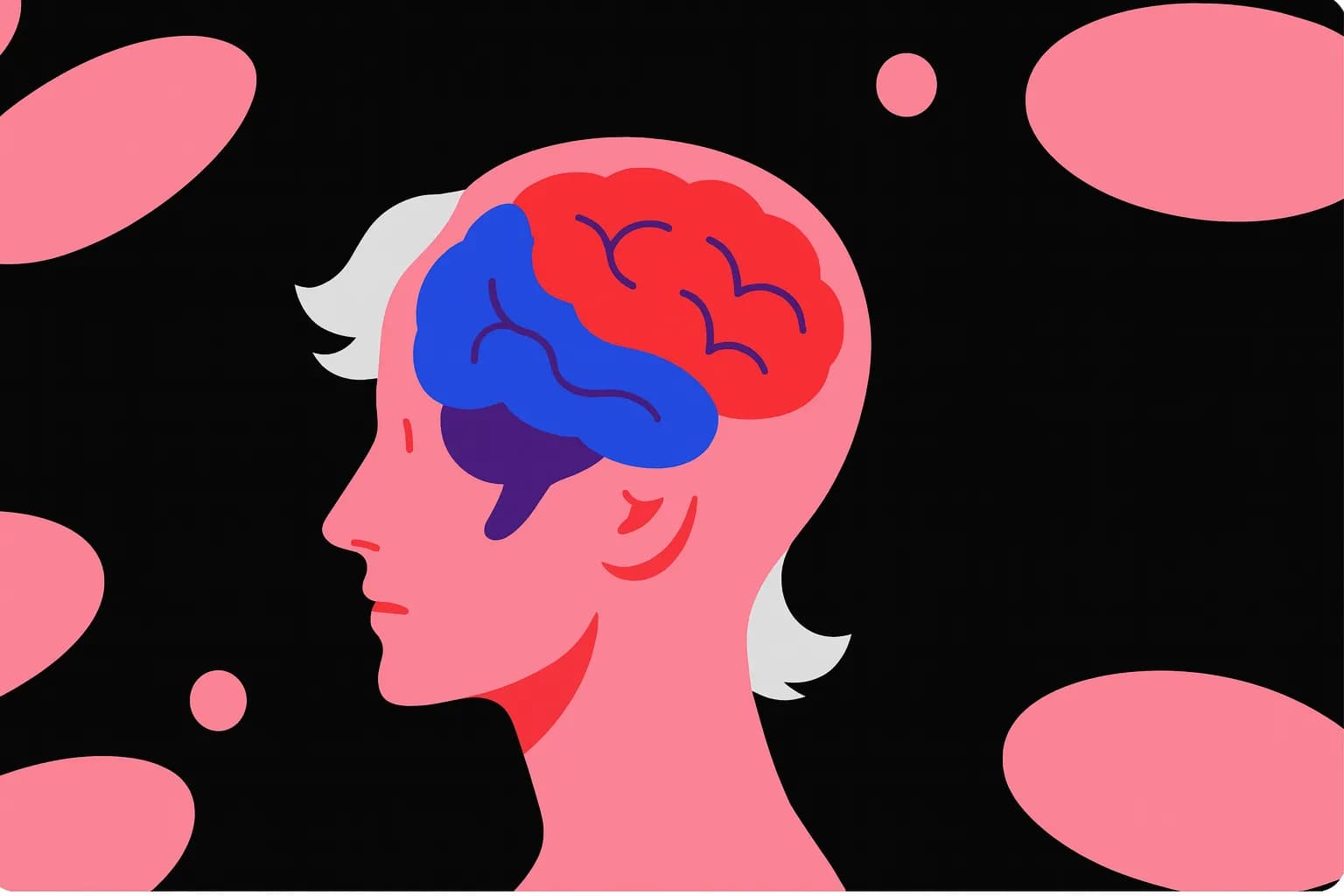
The reptilian brain plays a role in how a person responds to stress and threats, which is expressed in physiological and behavioral reactions. This is the basic setting of a person and the foundation of their temperament onto which life experience and the chemistry of neurotransmitters such as dopamine, serotonin and others are layered.
The idea of Paul MacLean's triune brain (reptilian/limbic/neocortex) is popular but, according to neurobiologists, an outdated model. At the same time, genetic contribution to temperament is ~40–60%, the rest is the environment (care, stress, experience, sleep, nutrition). Therefore, let us consider how the reptilian brain still influences a person’s temperament.
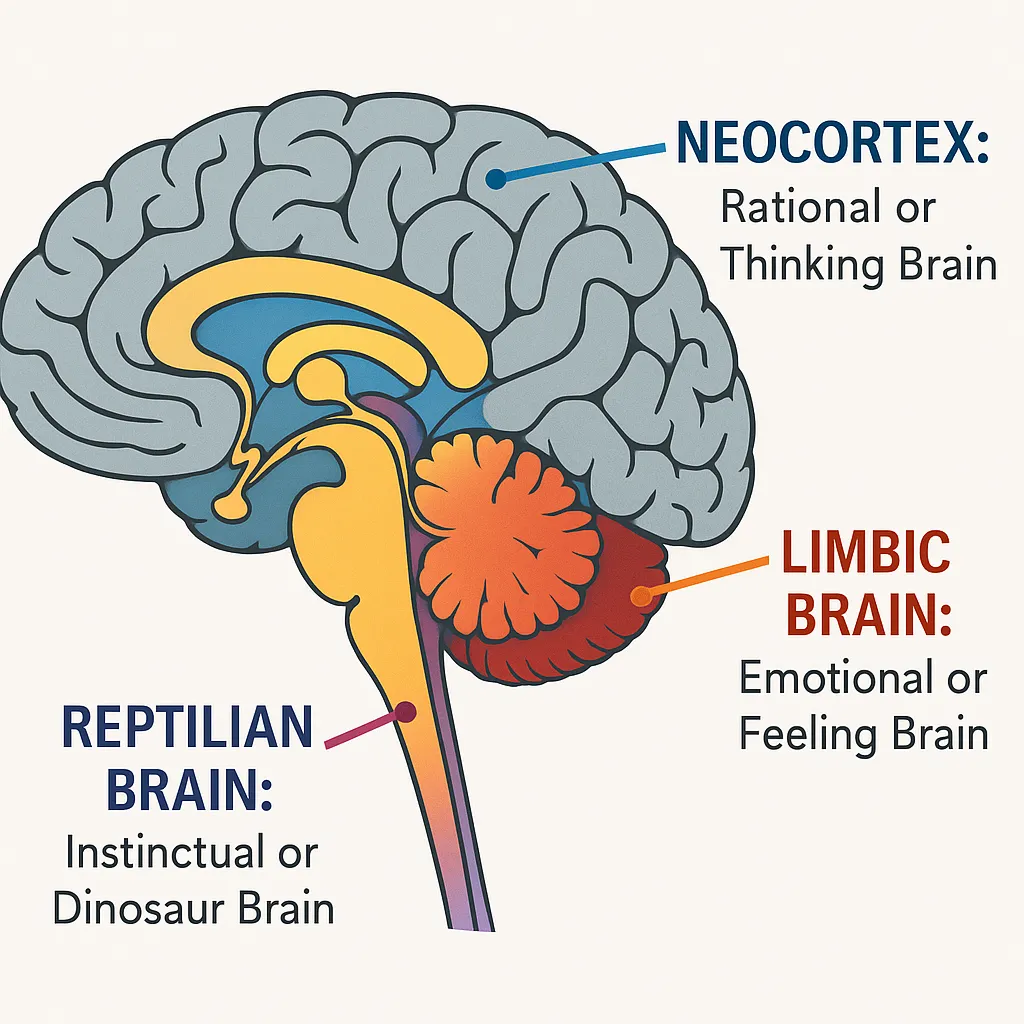
What are the main instincts embedded in the reptilian brain?
Temperament is connected to the reptilian brain through its role in controlling basic instincts and survival responses. The reptilian brain, according to Paul MacLean’s triune brain theory, is the oldest part responsible for primitive instincts such as “fight, flight, freeze,” as well as for maintaining vital functions (breathing, heart rate, etc.) and forming behavioral stereotypes. Its activity influences such basic aspects of behavior as aggression, the drive for power, and territory defense, which is linked to certain temperament types manifested in emotional reactivity and impulsivity.
The reptilian brain plays a role in how a person reacts to stress and threats, which is expressed in physiological and behavioral responses. For example, rapid activation of “fight, flight, freeze” is associated with emotionally impulsive temperament traits. Due to its ancient genetic program, it forms instinctive reactions and influences a person’s tendency toward certain behavioral patterns, which can manifest in temperament as stable traits.
Thus, temperament also reflects the activity and characteristics of the reptilian brain, which controls basic, often automatic, bodily reactions and behavior under threat or stress. The older parts of the brain (limbic system and neocortex) are responsible for emotions, thinking, and planning.
“Studies show that a person makes more than 50% of decisions on autopilot.”
Reinforcement Sensitivity Theory (RST) is a neuropsychological model of temperament (D. Gray; revision Gray & McNaughton, 2000) describing the brain’s sensitivity to rewards and threats. According to the theory, three core systems were identified — FFFS (fear/defense: fight-flight-freeze), BIS (anxiety-related vigilance/conflict resolution), BAS (reward-seeking/approach).
1. Defensive reactions (FFFS)
Fight – a person responds with active avoidance of threat and seeking cover. Also noted is high anxiety and avoidance of conflict and public responses.
Freeze – a person responds with slowed reaction and cautious scanning to assess risk. A state of stupor and word-finding difficulty is observed.
Fight – a person responds with defensive aggression, irritability, and bursts of anger when threat to status or boundaries is present.
Note: other protective behaviors occur as well — submission/appeasement and social cooperation under stress. They are not the “core” of the RST, but occur as social safety strategies.
2. Behavioral Inhibition System (BIS)
A person responds with caution and a long weighing of decisions, a slow start to actions. They may procrastinate due to risk assessment and doubt.
3. Reward/Approach System (BAS)
A person responds with sensitivity to rewards and motivation. They have a lot of energy and ideas, easily start new things. They are characterized by optimism and impulsivity with weak control.
Structure of temperament types
How these reactions influence sensitivity profiles and form the basic settings of a person’s temperament:
Pros: energy, creativity, entrepreneurial drive.
Risks: impulsivity, mistakes due to overestimation of rewards, obsessive need to perform certain actions.
High BIS, moderate FFFS — “anxious-conflicted” temperament
Pros: caution, thorough and long risk assessment.
Risks: getting stuck in analysis, procrastination, GAD spectrum.
High FFFS — “fear/avoidance” in temperament
High BAS + BIS — “approach under strong internal conflict”
Pros: ambition, many ideas.
Risks: emotional lability, swings between “start–stop.”
Low BAS and BIS/FFFS — “low reactivity/apathy” in temperament
Pros: stability, low stress.
Risks: low motivation, lack of initiative.
How to balance the systems
High FFFS/BIS: gradual exposure to something “scary,” breathing in cycles (4 inhales - 6 exhales), cognitive reappraisal, training Effortful Control (goal-directed self-regulation of reactions).
High BAS (impulsivity): set goals before executing plans, consider risk options in plan implementation and what actions will be taken. Also helps the rule of 10 minutes to think before decision, delaying rewards and external deadlines.
Conclusions
This article aims to help a person understand their basic genetic settings. The structure of the temperament system gives you an understanding of how you respond to critical situations and helps self-regulate them for adaptation in the external environment.