Narcissistic Personality Type: Self-Love That Destroys
We explore how self-love turns into a fear of criticism and ruins close relationships. We consider the causes and signs of narcissistic personality disorder.

⋄7 min read
Have you ever felt that after talking with your partner you somehow lost all your energy? Or noticed that you constantly justify your partner's actions to friends? Maybe you already intuitively know the answer, but are afraid to admit it. Let’s honestly talk about what happens when love turns into toxicity.
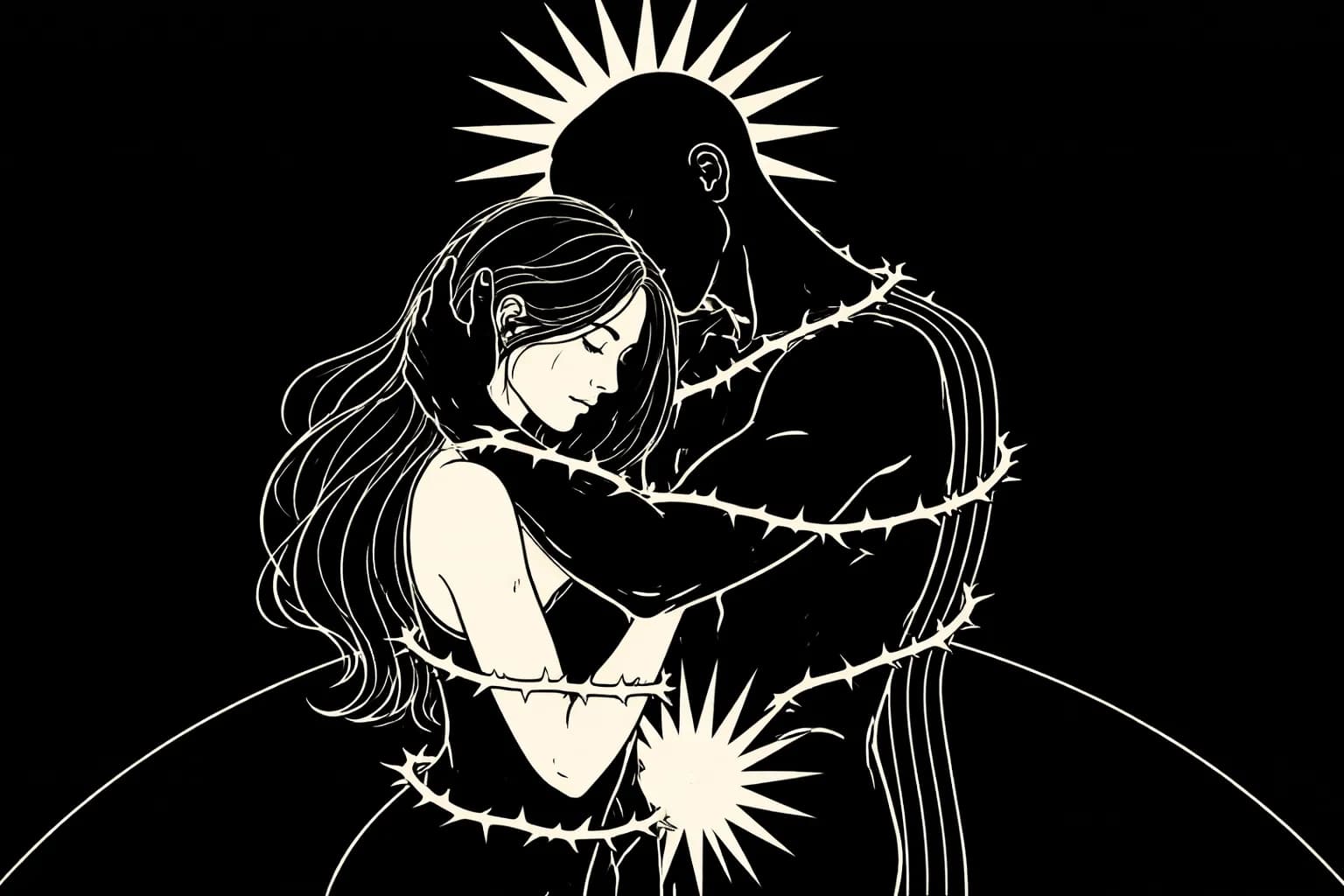
Toxic relationships are not just fights or disagreements. This is a situation where the connection with a person systematically hurts you, destroys your self-esteem, and saps your strength. Healthy relationships provide support and inspiration; toxic ones slowly drain your life, making you doubt your own adequacy.
The most insidious thing about toxic relationships is that they rarely start badly. Usually everything is wonderful at the start, and changes happen gradually, almost imperceptibly. You don’t wake up one morning in hell. You slowly get used to what should not be normal.
Constant criticism and devaluation. Your partner regularly points out your flaws, mocks your dreams or achievements, makes snide remarks about your appearance, intelligence, or abilities. At the same time, the criticism is often masked as "care" or "constructive advice". "I just want you to become better," they say, but for some reason you feel smaller and smaller. The relationship does not expand you; on the contrary, it diminishes your personality.
Control and isolation. The partner wants to know where you are, with whom, what you are doing. Checks your phone, questions friends, shows up unexpectedly to "just drop by." Gradually your circle of communication narrows — sometimes a meeting with a friend is canceled, sometimes going to a family event feels "unwanted". After a while you realize you are almost alone, and the only close person is the one who isolated you.
Gaslighting and manipulation. You remember a situation in one way, and your partner convinces you that it was completely different. "You’re imagining things", "I didn’t say that", "You have a bad memory", "You’re too sensitive". Gradually you start to doubt your own perception of reality and feel crazy.
Emotional roller coasters. Today he is gentle and attentive, tomorrow cold and angry. You walk on eggshells, not knowing what mood you’ll face. Honeymoon periods after fights create the illusion that "everything will be fine again", but the cycle repeats again and again. This unpredictability keeps you in constant tension and anxiety. The emotional swings are also caused by unhealthy attachment styles.
Lack of responsibility. In toxic relationships, you are always to blame. The partner never apologizes sincerely, shifts responsibility for their actions, finds excuses. "You pushed me to it", "If you hadn’t..., I wouldn’t...", "You caused it". You start to believe that you truly deserve this treatment.

Toxic relationships have their own special atmosphere. You are constantly anxious, even when your partner is not nearby. You rehearse conversations in advance, trying to anticipate the reaction. You feel relief when he leaves or is delayed. You have become a different person — more withdrawn, insecure, tired.
Often you find yourself justifying your partner’s behavior to others. "He’s just tired", "She had a difficult childhood", "Deep down he’s a good person". You explain to friends and family why you cancel meetings again or why you have a bruise. You defend the person who is destroying you.
Your self-esteem is zero. You no longer recognize yourself in the mirror, not literally, but metaphorically. Where did the confident, lively, laughing version of you go? Why did you stop engaging in your favorite hobby? When was the last time you felt truly happy?
Toxic relationships affect not only the psyche but the body as well. Constant stress manifests as headaches, stomach problems, insomnia, chronic fatigue. You get sick more often. Your immune system is suppressed by constant tenseness. The body screams what the soul tries to ignore.
If everything is so bad, why do people stay? There are many reasons. Fear of being alone. Hope for change. Financial dependence. Shame to admit that you "were mistaken about the person". Children. Society’s opinion. Or simply exhaustion — you have no more energy to change anything.
Toxic partners often alternate cruelty with tenderness, creating traumatic attachment. Those rare moments of "how it was before" give hope and hold you in the relationship more firmly than any chains. You think: "Here he is, real, it’s coming back". But it doesn’t last long.
Acknowledging the problem is already half the journey. If you are reading this article and see yourself in the description, this is an important moment. You are not crazy. You are not to blame. You do not deserve such treatment. Nobody does.
Talk to someone you trust. See a psychologist. Find support groups. Start rebuilding connections that were broken. Write down your feelings and observations — it will help when you are again persuaded that "everything is fine".
Remember that love should not cause pain. Healthy relationships are a place where you grow, not wither. It is a space where you are valued, not used. Where disagreements are resolved through dialogue, not humiliation.
Leaving toxic relationships requires incredible courage, but you are stronger than you think. And the life that awaits you beyond this toxicity is worth every difficult step. You deserve a love that heals, not destroys.
How was this article?
Share